
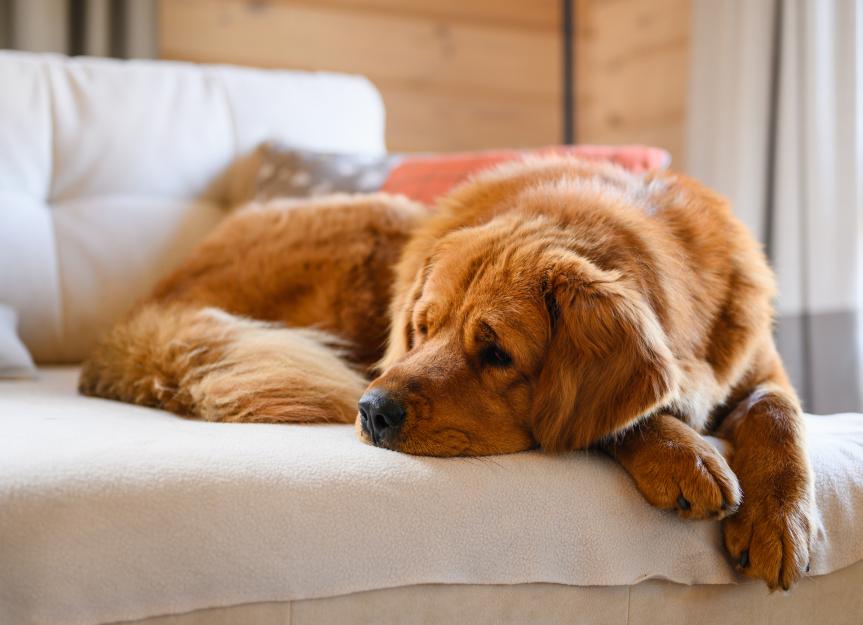
If your dog accidentally ingests weed or any other product from the cannabis plant, it is normal to be concerned about possible toxicity. According to Pet Poison Helpline, marijuana is one of the 10 most common toxins reported by pet parents each year.
If your dog has eaten grass, contact your veterinarian or Pet Poison Helpline to determine what next steps make sense, based on the amount ingested and the clinical signs he is currently exhibiting.
However, while it is common for a dog to accidentally ingest weed, the prognosis for marijuana poisoning is good to excellent when medical care is provided, with a full recovery expected within three days.
The good news? Marijuana poisoning is rarely fatal and has no lasting effects on your pup.
Although it is rarely dangerous for your dog, that doesn't mean a dog eating grass is risk-free. Your dog may experience some pretty serious side effects that may require a veterinarian's attention.
Key takeaways
- Dogs can become intoxicated by ingesting or inhaling THC.
- There is no specific toxic dose of marijuana for dogs.
- Dogs are more sensitive to THC than humans and clinical signs should be monitored after ingestion.
- Contact your veterinarian or Pet Poison Helpline for advice on how to manage and provide supportive care for your dog.
- If your dog eats one, edible products that may contain chocolate or xylitol are considered medical emergencies. Contact an emergency veterinarian immediately.
Can dogs get high?
Yes. Dogs can become intoxicated by ingesting or inhaling cannabis, just like humans.
When it comes to how a lot the herb is actually toxic to dogs, there is no specific toxic dose. Dogs are more sensitive to THC than humans due to the increased number of THC receptors in their brains. This means that even if your puppy has only ingested a small amount of grass, he may still develop symptoms that require treatment.
What is marijuana poisoning in dogs?
Marijuana, also commonly known as weed, Mary Jane, THC, delta-8, delta-9 and cannabis, comes from Cannabis (most often C. sativa or C. indica) plants.
There are over 100 different chemical compounds in cannabis plants, but the two most well-known are THC (tetrahydrocannabinol) and CBD (cannabidiol).
THC affects the brain and nervous system and can be toxic, while CBD can be used to improve sleep, decrease inflammation, and reduce anxiety. CBD has almost no effect on the brain and nervous system and therefore presents virtually no toxicity problems.
In the United States, marijuana is legal under state laws and is available in various forms such as:
Sometimes when animals ingest CBD products, they may show signs of THC poisoning due to the possibility of THC contamination. There is currently little regulation on the manufacturing of CBD products, so traces of THC may still be present.
What happens to a dog when it ingests cannabis?
When THC is ingested, it is easily absorbed through the gastrointestinal tract and lungs. THC binds to receptors in the brain that regulate motor function, mental activity, pain perception, and temperature regulation.
This usually results in changes to these receptors causing lethargy, weakness, decreased pain perception, and low body temperature. Sometimes this can cause stimulation of the nervous system (agitation) and high body temperature.
THC also causes direct irritation to the stomach, which can lead to vomiting. Clinical signs appear within an hour and often last up to a day.
Common Signs Your Dog Has Eaten Grass
If your dog ingests any type of cannabis, common signs may include:
What to do if your dog ate grass
If you think or know that your dog has ingested grass, please call your veterinarian or Pet Poison Helpline at 855-764-7661.
If possible, locate the product packaging to indicate the brand name and ingredients. The more information you have about the type of cannabis and how much your dog may have ingested, the better you will help your veterinarian determine next steps.
Your dog will likely begin to show clinical signs within an hour of ingestion, but it may take up to four hours for clinical signs to be fully evident. Keep in mind that some symptoms, such as low body temperature and low blood pressure, cannot be easily identified or treated at home. If your dog allows it, take his temperature and monitor it regularly. A dog's normal body temperature is 100.0 to 102.5 F. If its temperature exceeds or falls below, contact your veterinarian.
Many cannabis products are made with chocolate or xylitol. Chocolate and xylitol are extremely toxic to dogs, especially in large quantities. If your dog has ingested any of these ingredients, seek emergency veterinary attention immediately.
Does my dog need medical intervention?
In many cases, dogs do not need veterinary care if they have only mild symptoms, because there is no antidote for marijuana poisoning in dogs. Pet parents are often advised to monitor their dog for any clinical signs of concern and to let them sleep after ingestion.
However, it is always ideal to contact your veterinarian or the Pet Poison Helpline to discuss the amount ingested and the symptoms they are experiencing to ensure they do not need medical intervention. If your dog is having trouble breathing, won't sit or stand, is having a seizure, or can't swallow normally, take him to a veterinarian as soon as possible.
Home Remedies for a Dog That Ate Grass
There are no home remedies for marijuana poisoning because there is no antidote to treat a dog that has ingested weed. If your veterinarian determines that your dog can be treated at home while waiting for the THC to wear off, treatment will focus on supportive care.
At home, your dog may become less active or have difficulty walking. These animals should be kept in a safe, contained environment where they cannot fall off furniture, fall down stairs, or bump into objects. If they like to spend time in their cage, keep them separated with a comfortable bed or blanket while they rest there.
Some animals may become agitated and, as a parent, you may try to console or hold your pet. However, with THC, your pet may not recognize you and become more agitated and try to bite.
If your pet doesn't like crates, keep him in a separate room with access to food and water and let him rest. Contact your veterinarian if your dog begins to exhibit worrying symptoms.
Preventing Marijuana Poisoning in Dogs
Edibles containing THC can be particularly tempting to a dog, especially if they are chocolate. To keep your pup safe and prevent cannabis toxicity in the home, avoid leaving any type of edible marijuana in plain sight; store them in a closed, raised cabinet or locked drawer.
Never smoke or vape in the same area or even the same house as your pet. Harmful chemicals can be released into the air, which can impair your dog's cognitive functions and cause other health problems. If you cannot leave the area to smoke or vape, keep your dog in a separate, well-ventilated area until the smoke or vapors have cleared.
FAQs About My Dog Ate Grass
Should I take my dog to the vet if he ate grass?
It is recommended that you take your dog to the vet if he has eaten grass, as each animal reacts differently. Your veterinarian will be able to determine if your dog needs to stay for medical treatment or if it would be safe to monitor him at home.
Should I let my dog sleep if he eats grass?
You can let your dog sleep if he has eaten grass, but you should be able to wake him up and get him to sit, stand, and walk around. If you are unable to wake him up and get him moving, your dog will need immediate medical attention.
What should I do if my dog ate grass?
Call your veterinarian or Pet Poison Helpline immediately so they can help you evaluate the next steps needed for your dog.