
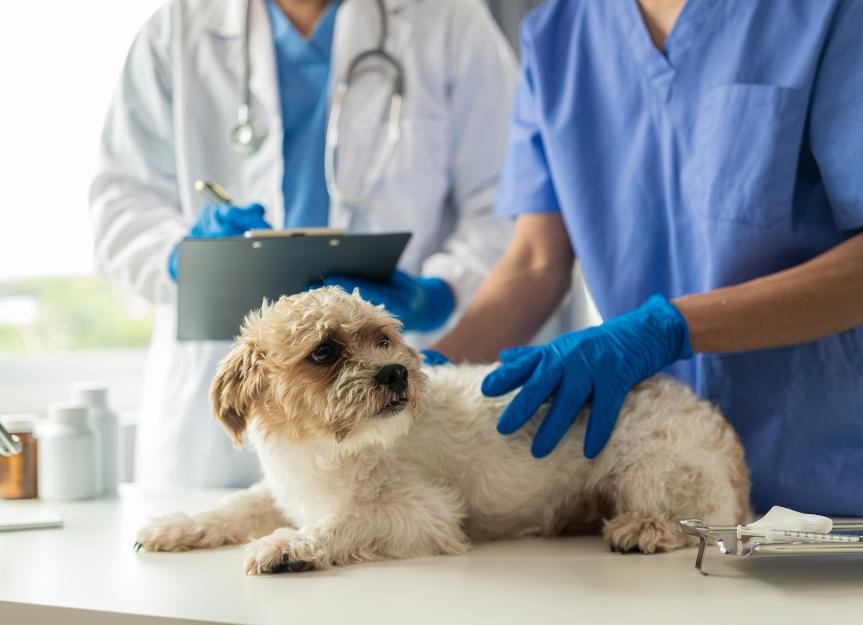
What is myasthenia gravis in dogs?
Myasthenia gravis (MG) is an autoimmune disease in dogs that causes varying degrees of muscle weakness.
MG interferes with your dog's nerves and how those nerves must communicate with muscles to ensure normal body movements and normal muscle contractions.
Nerves transmit signals to muscles. However, with MG, they do not reach the muscle properly.
The immune system produces antibodies that destroy and block nerve signal receptors (called acetylcholine receptors). Due to this failure, the nerves cannot do their job, which is to contact the muscles for body movements.
In addition to muscle weakness, this condition can also affect a dog's mental state as it can be quite debilitating. If your dog shows any changes in his physical or mental condition, he should be seen by his veterinarian as soon as possible.
Key takeaways
- Myasthenia gravis in dogs is an autoimmune disease that disrupts communication between nerves and muscles, causing weakness.
- Dogs can develop generalized, focal, or fulminant forms of the disease.
- The diagnosis is confirmed by a blood test that measures antibodies against acetylcholine receptors.
- Although there is no cure, many dogs can achieve remission with early and consistent treatment.
Symptoms of Myasthenia Gravis in Dogs
There are three forms of MG in dogs:
- Generalized MG. This form affects 57% of dogs with acquired myasthenia gravis and symptoms can include:
- Exercise-induced stiffness that goes away with rest
- Tremors
- Weakness, both extreme and progressive
- Excessive fatigue
- Megaesophagus
- Focal MG. Symptoms may include:
- Weakness of the muscles of the face, throat and esophagus
- Bark change
- Weakness in a specific part of the body
- MG fuming. Least common form of MG; symptoms may include:
- Sudden decrease in muscle tone
- Megaesophagus
- Rapid progression of paralysis of the muscles that control a dog's breathing
If you think your dog is exhibiting any of the symptoms above, contact an emergency veterinarian immediately.
Causes of Myasthenia Gravis in Dogs
Myasthenia gravis can be both hereditary (genetic) or acquired. Acquired MG is more common than hereditary MG in dogs.
MG doesn't just occur in dogs and cats; it can also affect humans. Neuromuscular disease is caused by a deficiency of acetylcholine receptors present on the surface of muscle cells.
This deficiency causes signals between nerves and muscles to be interrupted, leading to muscle weakness in different areas of the body. Muscle weakness then leads to extreme fatigue in the dog.
The following breeds are predisposed to inheriting congenital MG, meaning they are born with the condition:
Dogs with hereditary MG are born with fewer receptors and tend to be diagnosed when they are less than a year old.
Acquired MG is more often seen in older dogs, including:
Acquired MG can occur due to environmental, infectious, or hormonal influences.
These influences negatively affect the immune system and cause the production of antibodies against the receptors, thereby preventing muscle movement.
This immune response is usually seen in dogs with thoracic tumors (thymoma) and may be associated with hypothyroidism.
How Vets Diagnose Myasthenia Gravis in Dogs
Veterinarians diagnose myasthenia gravis in dogs using blood tests that measure antibodies against acetylcholine receptors, as well as clinical signs and additional diagnostic tests.
If your dog shows any changes in his physical or mental abilities, he should be seen by his veterinarian as soon as possible.
It's also a good idea to take a video of your dog's behaviors to show your veterinarian in case your pup can't show the signs during their appointment, such as exercise-induced symptoms.
To diagnose myasthenia gravis and check for associated complications, your veterinarian may perform the following tests:
- Complete physical exam
- Blood tests, including thyroid hormone levels
- Tensile test
- Chest x-rays
Elevated blood levels can confirm a diagnosis of MG and the results are also used to monitor your dog's response to treatment. Because this blood test must be sent to a specialized laboratory, it may take a few days to a few weeks to get the results.
If MG is suspected by your veterinarian based on the puppy's clinical signs and/or the dog's breed, a Tensilon test may be ordered while awaiting the results of the blood test.
A Tensilon test involves an IV injection that temporarily and immediately improves weakness and other symptoms in affected dogs. Unfortunately, this injection and symptom relief only lasts a few minutes.
Chest x-rays are also important to look for megaesophagus, aspiration pneumonia, or cancer. Aspiration pneumonia is secondary to regurgitation and throat muscle weakness.
Treatment of myasthenia gravis in dogs
MG in dogs cannot be cured, but it can be treated and managed successfully. Treatment will depend on the type of MG your dog is diagnosed with and the symptoms associated with their MG type.
If your dog has been diagnosed with MG, the most common medication used for treatment is pyridostigmine bromide.
This medication will improve your puppy's muscle function by increasing the length of time acetylcholine stays in muscle cell receptors to coordinate movements.
Prednisone or other steroid medications may also be used because they help suppress the immune system, thereby suppressing the response that causes MG. If your dog is diagnosed with associated hypothyroidism, levothyroxine sodium will most likely be prescribed for the rest of his life to manage the condition.
Dogs with megaesophagus must be fed in a very special way. They should be fed in a raised food bowl, off the ground or in a special “Bailey chair” to keep them upright. This chair helps prevent inhalation of their food, which could lead to aspiration pneumonia.
It is recommended that puppies with this condition receive small meals more frequently during the day instead of two large meals. Dogs with megaesophagus should also be kept upright on their hind legs or in a special chair for 20 to 30 minutes after eating.
If the dog has a thymoma tumor, surgery may be an option to remove it if he is healthy enough for the operation.
Recovery and Management of Myasthenia Gravis in Dogs
The prognosis for myasthenia gravis in dogs varies depending on the type of MG, the underlying causes, and whether there are complications such as aspiration pneumonia.
A diagnosis of MG is usually serious and some dogs require lifelong treatment. However, if detected and treated early, remission in dogs with myasthenia gravis can be achieved after several months.
Dogs with aspiration pneumonia have a less favorable prognosis, especially if they have respiratory complications or thoracic tumors.
Prevention of myasthenia gravis (MG) in dogs
There is currently no known way to prevent myasthenia gravis in dogs.
Frequently Asked Questions About Myasthenia Gravis in Dogs
How long can a dog live with myasthenia gravis?
Depending on the underlying cause of your dog's MG, your dog can live for many years with proper medical management and monitoring. Dogs with thoracic tumors have a less favorable prognosis.
What triggers myasthenia gravis in dogs?
MG can be hereditary or genetic. It can also be acquired and triggered by hypothyroidism or a tumor in the chest cavity such as a thymoma.