
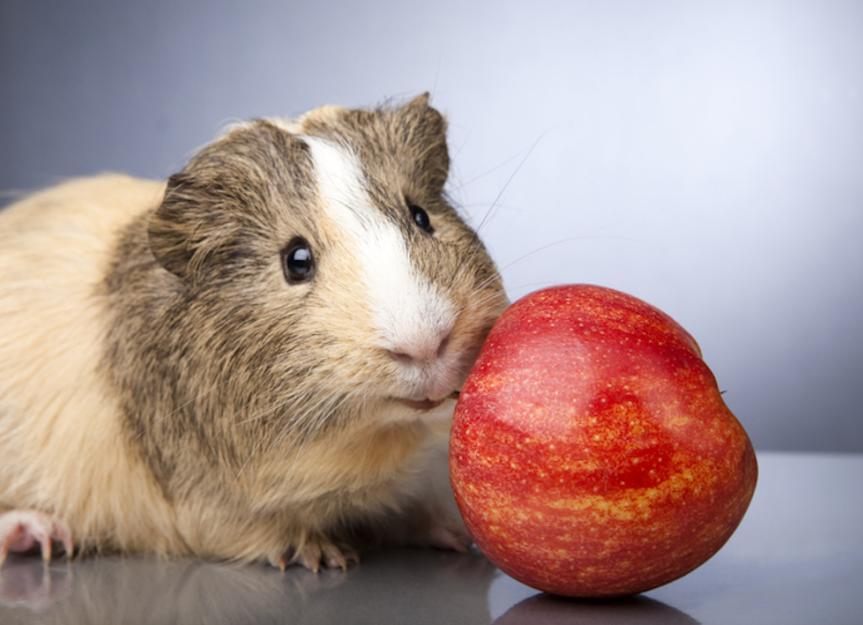
Guinea pigs can eat apples, but only in moderation, as an occasional treat.
A healthy diet for guinea pigs should primarily consist of hay, grasses and leafy green vegetables, which provide the nutrients needed for good digestion and overall health. Fruit can be offered occasionally, but it should not replace basic foods.
Key takeaways
- Guinea pigs can safely eat apples, but only in small quantities as an occasional treat due to their high sugar content.
- Plain fresh apples (seedless) are the best option, while processed, dried, or sweetened apple products should be avoided.
- A ½-inch cube serving twice a week is a reasonable amount.
- The basis of a guinea pig's diet should always be timothy hay and leafy greens, with fruit making up only a small portion.
Are apples good for guinea pigs?
Apples can be a nutritious treat for guinea pigs when fed in small quantities.
They contain beneficial nutrients such as:
- Vitamin C
- Fiber
- B vitamins
- Antioxidants (flavonoids)
However, apples are also high in natural sugar, which can be harmful if eaten too frequently or in large quantities. For this reason, apples should never be a regular part of your guinea pig's daily diet.
The basis of a healthy diet for guinea pigs should remain:
- Timothy hay (main food source)
- Leafy green vegetables
- Small amounts (1 to 2 tablespoons) of timothy guinea pig pellets
Can guinea pigs eat apples with the skin on?
Yes, guinea pigs can safely eat the skin of apples, and it contains many of the fruit's essential nutrients.
The skin is particularly rich in fiber and potassium, which contribute to the overall health benefits of apples.
However, some guinea pigs may not like the texture or taste of the skin. In these cases, peeling the apple is an option, but keep in mind that this removes a lot of the fiber and reduces some of the nutritional value.
If your guinea pig refuses apples with the skin on, you can try offering them a small, peeled piece, but leaving the skin on is usually the most nutritious choice.
Can guinea pigs eat apple seeds?
Apple seeds should be removed before giving apples to guinea pigs.
The seeds may pose a choking hazard and contain small amounts of cyanide, which can be harmful in large quantities. Although accidental ingestion of a small, well-chewed seed is unlikely to be a problem, it is safest to remove all seeds before offering apples to your guinea pig.
Can guinea pigs eat cooked apples?
Cooked apples are safe for guinea pigs if no added ingredients are included.
Baked or stewed apples can be offered provided they are plain and without sugar, cinnamon, nutmeg and other additives.
However, cooking reduces the nutritional value of apples. For this reason, cooked apples should be considered an occasional treat rather than a regular part of your guinea pig's diet.
Can guinea pigs eat wild apples?
Guinea pigs can eat most varieties of apples, including wild apples, with some precautions.
Many wild apples are more tart and acidic, which can be less appealing to guinea pigs and cause mouth irritation if eaten in excess.
If you have access to a sweet, pesticide-free apple tree, you can safely offer small amounts of fruit.
Apple tree branches are also beneficial for guinea pigs. They enrich chewing, support dental health and provide mental stimulation.
The leaves can remain on the branch and be eaten as an additional snack.
Can guinea pigs be allergic to apples?
Apple allergies in guinea pigs are very rare, but food intolerances are more common.
Instead of a true allergy, some guinea pigs may have difficulty digesting apples. This can lead to:
If your guinea pig shows any of these signs after eating apples, immediately stop feeding him apples (and other fruits and vegetables) and increase his intake of timothy hay, which helps support digestion.
Mild digestive problems often resolve quickly with this adjustment. However, if the diarrhea lasts more than 24 hours or your guinea pig appears lethargic or ill, contact your veterinarian immediately. Diarrhea in guinea pigs can be life-threatening.
If your guinea pig doesn't tolerate the apple well at first, you may be able to try a smaller portion in the future to see if it is better tolerated.
How many apples can a guinea pig eat?
Guinea pigs should only eat small amounts of apple as an occasional treat due to its high sugar content.
A typical serving is about one ½ inch cube, up to twice a week, provided your guinea pig tolerates it well and does not develop diarrhea.
Guinea pigs benefit from a variety of fresh foods, but these should be introduced gradually. Fresh fruits and vegetables can total about ½ cup per day, but only once your guinea pig gets used to them.
To keep your guinea pig healthy:
- Introduce new foods slowly
- Monitor digestive disorders
- Remove all uneaten fruit after 24 hours
- Always provide new replacements
Remember that the basis of your guinea pig's diet should always be timothy hay and grasses.
How to Safely Feed Apples to Your Guinea Pig
The safest way to give apples to your guinea pig is to offer small, fresh, plain pieces.
Before feeding your apple cavities, be sure to wash them thoroughly.
Some guinea pigs, especially those who are sick, may enjoy a small amount of homemade applesauce, but it should not contain sugar, spices or flavorings.
Another fun option is to make a little “apple salad” by combining leafy greens (like spinach or kale) with small pieces of apple and other safe vegetables like carrots or celery.
Just be sure to limit fruit servings and avoid overeating.
What to avoid
Guinea pigs should not be fed:
- Baked goods (like muffins or cakes)
- Apples or dried fruit (choking hazard and high sugar content)
- Store-bought applesauce, canned apples, or pie fillings (often contain additives)
- Frozen or processed apple products with added ingredients
What other foods can guinea pigs eat?
Guinea pigs are herbivores and require a diet primarily composed of hay and fiber-rich plant foods.
In the wild, guinea pigs eat grass and other fibrous vegetation, and their digestive systems are not designed to handle large amounts of sugar, carbohydrates, or even excess pellets.
For optimal health, your guinea pig's diet should consist primarily of timothy hay and grasses.
To provide a balanced diet, you can also include:
- Small amounts of timothy-based pellets
- Fresh vegetables and fruits (introduced gradually)
If your guinea pig is not used to fresh foods, introduce them slowly over several weeks, working up to about ½ cup per day of fruits and vegetables combined.
Leafy greens can be fed in larger quantities, including:
- Kale
- Romaine lettuce
- Green and red leaf lettuce
Other safe foods include:
- Blueberries
- Green pepper
- Pumpkin
- Tomato
- Squash
- Broccoli
- Cauliflower
- Endive
- Carrot tops
- Beet greens
- Kiwi
- Pear
- mango
- Strawberries
- Asparagus
- Melon
- Coriander
- Zucchini
- Oranges
Offering a variety of vegetables and fruits helps maintain a balanced diet, but foods high in sugar should always be consumed in moderation.
Frequently Asked Questions About Apples and Guinea Pigs
Can guinea pigs eat apples every day?
No, guinea pigs should not eat apples every day. Apples are high in sugar and should only be given occasionally, about 1-2 times a week, in small portions.
What happens if a guinea pig eats too much apple?
Too much apple can cause digestive upset, including diarrhea and bloating. If symptoms appear, stop feeding fruit and increase hay consumption. Contact a veterinarian if symptoms persist beyond 24 hours.