
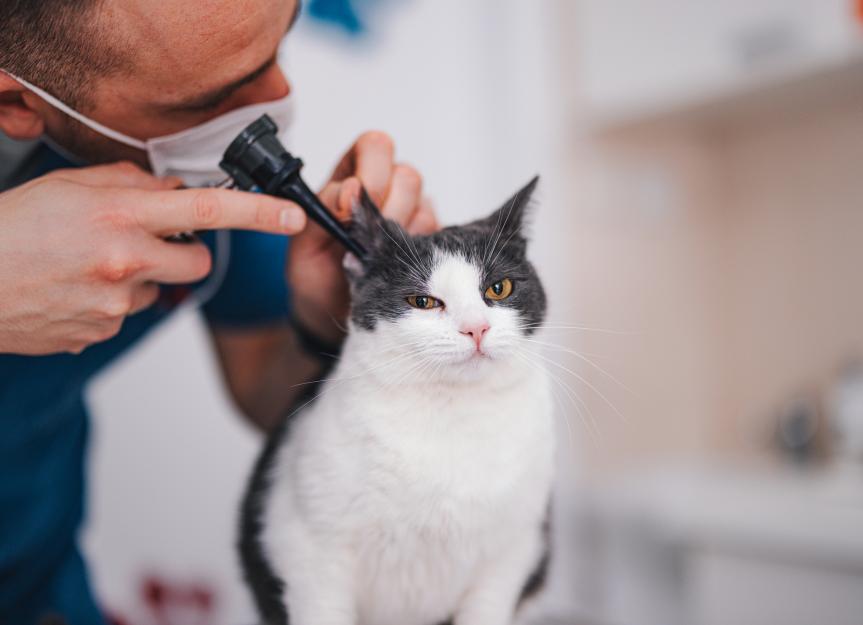
If you've recently noticed your cat scratching his ears or shaking his head, he may have an ear problem.
A wide variety of ear problems in cats cause them discomfort, such as ear infections or ear mites. Getting the correct diagnosis from a veterinarian is the first step in helping your feline recover.
Key takeaways
- Cat ear problems can include conditions such as mites, infections, allergies, polyps, hematomas, foreign bodies and even cancer, all of which can cause discomfort and require veterinary care.
- Common symptoms of ear problems in cats include head shaking, ear scratching, discharge, odor, swelling, and sometimes balance problems or hearing loss.
- Treatment depends on the underlying cause and may include medications, ear cleaners, parasite prevention, allergy management, or surgery in more severe cases.
Types of Cat Ear Problems
Ear problems refer to any condition that negatively affects any part of the cat's ear. Their severity can range from mild to severe, and they all require treatment by a veterinarian.
Here are some of the most common cat ear problems that pet parents should be aware of.
Mites
Ear mites are microscopic parasites that live in and around a cat's ear.
They cause intense itching, dark ear debris that looks like coffee grounds, and hair loss around the ear. Mites are common in kittens, outdoor cats, and cats in close contact with each other, such as in shelters or multi-cat households.
Ear infections
Although this disease is relatively rare in cats compared to dogs, felines can get ear infections from bacteria or yeast.
Infections cause a bad odor in the ears, thick discharge, and itching. If left untreated, ear infections can get worse and affect hearing.
Allergies
Cats can develop allergies to ingredients in their food or environmental allergens, such as pollen or dust. Typically, allergic cats will have irritated and inflamed (swollen) ears, as well as changes in the skin and coat, such as hair loss.
Allergies can lead to ear infections.
Ear polyps
Ear polyps refer to small bumps that develop in a cat's ear canal. These bumps are not cancerous but cause headaches and increase the risk of ear infections.
They can occur in any cat, but kittens are most commonly affected.
Hematoma
When cats shake their heads too much or scratch their ears (due to infections or allergies), a blood pocket can form in the outer part of the cat's ear.
This causes a swollen ear to appear and can be painful.
Foreign objects
Cats can have foreign objects, like grass or insects, stuck in their ear canals. This can cause discomfort and symptoms such as head shaking and pawing the ear to try to get rid of the object.
Ringworm
Cats can also get a fungal infection called ringworm on the tips of their ears. This causes red, crusty skin and itching. Ringworm can affect any cat, but it is most common in kittens.
Cancer
Cats can get cancer in and around the ears, although this is rare. The most common types affecting cats are squamous cell carcinoma and ceruminous gland adenocarcinomas.
Ear cancer causes pain and bleeding and can lead to hearing loss.
Symptoms of Cat Ear Problems
The most common symptoms of cat ear problems include:
Causes of Cat Ear Problems
There are various underlying reasons why cats have ear problems, and they vary in severity. Some of the most common causes of cat ear problems include:
How Veterinarians Treat Cat Ear Problems
Treatment for cat ear problems varies greatly depending on the underlying cause. For this reason, an accurate diagnosis by a veterinarian is important before starting treatment.
Potential treatment options include:
-
Topical ointments, such as Animax, to treat infections and inflammation
-
Oral antibiotics, such as Clavamox, to treat bacterial infections
-
Oral antifungals, such as itraconazole, to treat yeast infections and ringworm
-
Corticosteroids, such as prednisolone, to reduce inflammation
-
Antihistamines, such as cetirizine, to treat allergies
Pet parents can help their cats during their recovery by closely following their veterinarian's instructions to achieve the best treatment outcome.
A cone, like The Comfy Cone, may be necessary to prevent recovering cats from scratching their ears.
How to Prevent Cat Ear Problems
Pet parents can take important steps to reduce the risk of cat ear problems, including:
Cat Ear Problems FAQ
What can I do if my cat's ears bother him?
There are many reasons why your cat's ears may bother him. If your cat starts scratching its ears or shaking its head, it's important to see a veterinarian to get the correct diagnosis.
What are common ear problems in cats?
Common ear problems in cats include infections, mites, tumors, polyps, allergies and foreign bodies. Treatment for these problems varies depending on the underlying cause.
How do I treat my cat's ear infection at home?
When a cat has itchy ears and you suspect an ear infection, it is important to consult a veterinarian before giving your cat any over-the-counter treatments or home remedies. A veterinarian can provide an accurate diagnosis so that the appropriate treatment can be prescribed to resolve the problem.