
By Sarah Wooten, DVM
A dog is supposed to have 42 adult teeth. If your dog has fewer than 42 teeth and no adult teeth have been extracted, what does this mean? While it is possible that your dog is simply missing teeth (they never developed at all), it is also possible that a missing tooth is not missing at all, but is not erupted or is impacted under the gums.
When a tooth fails to erupt, sometimes nothing happens and the tooth recedes or remains dormant, never causing problems. In other cases, however, an unerupted tooth may develop an oral cyst. Left untreated, oral cysts can cause pain and irreversible damage to the surrounding teeth and jawbone. The good news is that oral cysts, also called dentigerous cysts, can be prevented if they are detected and treated before they cause disease.
Although oral cysts can be seen in all dog breeds, small breeds, brachycephalic breeds like Pugs and Shih Tzus, bulldogs and boxers seem particularly prone to developing oral cysts. The reason oral cysts are more common in these breeds is due to dental crowding: there simply isn't a lot of room in the mouths of short-nosed breeds, which can lead to problems.
What are oral cysts in dogs?
In a dog, an oral cyst is a fluid-filled sac that surrounds the enamel of an undrilled tooth. Oral cysts are considered benign in the sense that they do not invade local tissues. However, as the sac expands, it puts pressure on the surrounding teeth and bones. In a remarkably short period of time, oral cysts can destroy teeth and weaken the jaw enough to cause a pathological fracture. This is why early detection and treatment is so important.
Oral cysts usually form in the premolars of the lower jaw, although any tooth can be affected. If a cyst becomes large enough, it can be seen with the naked eye as a bluish swelling of the gums. The problem with oral cysts is that by the time they grow large enough to see, they cause pain and irreversible damage to the jaw and surrounding teeth, and surgical repair can be extensive.
Treating Oral Cysts in Dogs
Treatment for oral cysts is surgical in nature and requires complete surgical removal of the entire oral cyst. If all of the cyst lining is not removed, the cyst will likely return. Your veterinarian may recommend that the cyst be biopsyed to rule out life-threatening oral melanoma or other conditions such as radicular cysts, periapical cysts, granulomas, or abscesses. All surrounding teeth will be evaluated at the time of surgery. If the surrounding teeth are not vital, then they will need to be extracted or treated with a root canal. If the oral cyst has caused bone loss, your dental surgeon may recommend bone grafting to regrow the bones and stabilize the jaw.
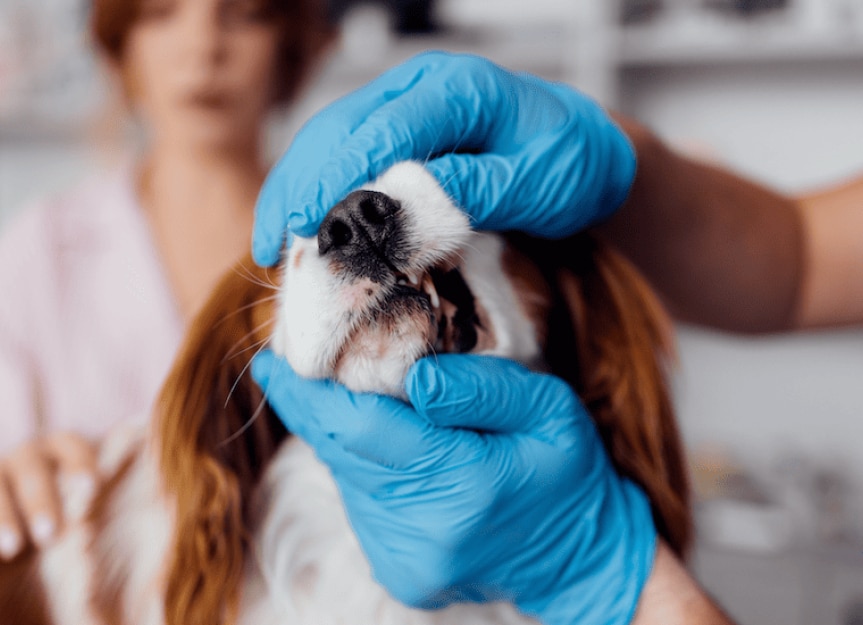
The best treatment for oral cysts is to detect them before they even start. In puppies and young dogs, multiple physical exams including complete oral exams and tooth counts are an important part of ensuring your dog is not suffering from an undiagnosed oral cyst.
Preventing the development of dental problems is another reason why regular puppy visits and exams with your local veterinarian are so important. If you take your puppy to a vaccination clinic for vaccinations or get vaccinated at a feed store, your puppy is not receiving the care he needs to have the best health possible throughout his life.
Missing Teeth or Intact Teeth in Dogs
If your veterinarian notices that your dog has unexplained missing teeth and recommends intraoral dental x-rays under sedation or general anesthesia, schedule them as soon as possible. If it is a young dog that still needs to be spayed or neutered, x-rays may be taken at the time of surgery. The good news is that if your veterinarian tells you that your dog's teeth have developed normally and are all present, there is no longer any concern about developing an oral cyst.
If an intact tooth is detected in a young dog, have it removed as soon as possible to avoid the risk of an oral cyst. If you have an older dog (7 to 8 years or older) who has an intact tooth detected on dental x-rays without evidence of cyst formation, follow your veterinarian's recommendations. He or she may recommend removal of the tooth or annual monitoring of the tooth with x-rays.
Boxers can sometimes have supernumerary teeth, meaning more than 42 teeth. If you have a young Boxer with a normal number of teeth, talk to your veterinarian about their recommendations. You may want to err on the side of safety and have the teeth x-rayed at the time of spay or neuter to rule out the possibility of undetected and undrilled supernumerary teeth.