
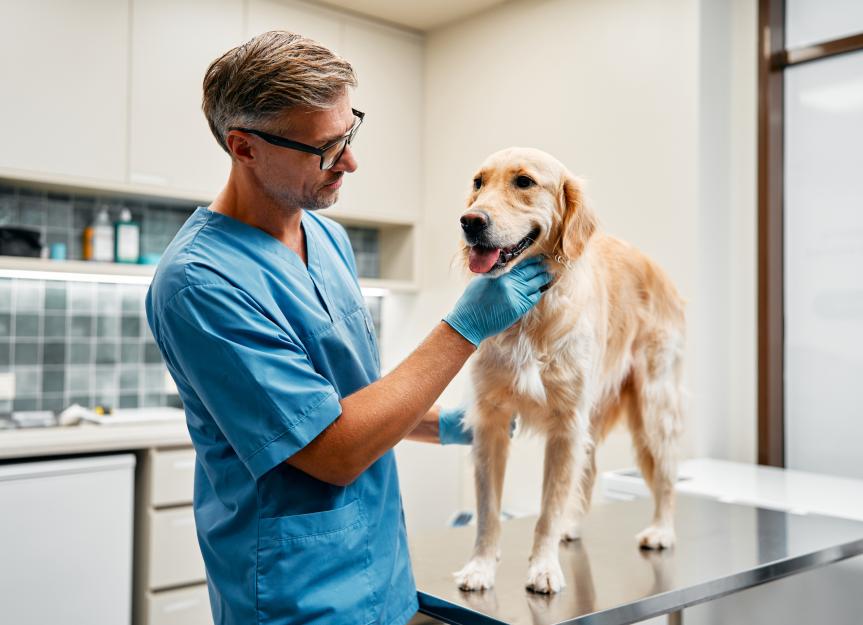
Although blood tests and x-rays are helpful, sometimes additional information is needed to know what's going on inside your pet.
Veterinary endoscopy is a tool that allows the veterinarian to see what is happening in the body without having to resort to surgery.
Let’s explore animal endoscopy in more detail.
Key takeaways
- Veterinary endoscopy is a minimally invasive procedure that allows veterinarians to see the inside of your pet's body and sometimes treat problems without major surgery.
- It is commonly used to diagnose problems or remove foreign bodies, often resulting in faster recovery times than traditional surgery.
- Although generally low risk, endoscopy requires anesthesia and costs can range from approximately $800 to $3,000 depending on the procedure.
What is a veterinary endoscopy?
Endoscopy involves using a small camera to look inside your pet's body. This procedure is considered minimally invasive, meaning your dog or cat does not need major surgery to see inside.
There are two types of endoscopies in veterinary medicine: flexible And rigid.
-
Flexible endoscopes are used to examine the inside of the esophagus, stomach, small intestine, colon, urinary tract and trachea.
-
Rigid endoscopes are used to examine inside joints, reach organs inside the abdomen, or enter the nose, ears, or chest.
Although endoscopy is common in referral centers and many emergency rooms, it is not commonly performed in private practice. Your veterinarian will likely send you elsewhere to have an endoscopy if recommended.
Endoscopy is always performed with the animal under sedation or heavy anesthesia. This helps ensure their safety while the camera moves inside their body.
How does a veterinary endoscopy work?
If your pet is scheduled for an endoscopy, you will likely be asked to fast them (do not offer them food or water) after midnight the day before their procedure.
Anesthesia will be used to ensure that your pet is calm and still during the procedure.
Depending on what part of their body is being explored, an area may or may not be shaved. For animals undergoing endoscopy of their upper or lower digestive tract, the camera is inserted through the mouth or rectum. Likewise, the airways are accessible from the mouth (along the windpipe) or the nose.
If their abdomen, chest or joints are being examined, then part of their body will be shaved and prepared by rubbing the skin before making a small cut to allow the vet to put the endoscope inside.
Once the procedure is complete, your pet will be awakened and allowed to go home.
Why would a pet need a veterinary endoscopy?
Pets may need a veterinary endoscopy for:
Side effects and risks of a veterinary endoscopy
Endoscopy generally has fewer side effects than more extensive surgery.
It is possible for an animal to experience side effects following sedation. The most commonly reported side effect after sedation is gastrointestinal distress (nausea and diarrhea).
Some animals take longer to recover if they are sensitive to sedatives. This is more likely if your dog carries the MDR-1 gene which is common in Collies and some other breeds.
Consider testing MDR-1 before planning elective sedation if possible.
Additional side effects may include post-procedure infections, tissue irritation or injury from the endoscope, or bleeding at the site.
Many of these side effects depend on the type of endoscopy procedure performed. For example, removing a piece of hard bone from the stomach with an endoscope carries a higher risk of irritation to the esophageal lining, while biopsying the liver carries a higher risk of bleeding after the procedure.
Risks are generally considered low for endoscopy.
Be sure to withhold food and water after midnight the day before a scheduled procedure, to reduce the risk of vomiting with sedation.
Benefits of a veterinary endoscopy
The greatest advantage of veterinary endoscopy is that it is minimally invasive.
In the case of a foreign body, where your pet has eaten something it shouldn't, the doctor can potentially remove the object endoscopically without having to cut your dog or cat open. This leads to a significantly shorter recovery period. After the endoscopy, your pet may be groggy for an evening and then return to normal the next morning.
Compare this 12 hour recovery to the recovery time following exploratory abdominal surgery where a dog or cat's stomach is opened. After a gastrotomy (retrieval of a foreign body through the stomach), your pet will need a 10-14 day recovery period, rest, and a bland diet until their stitches are removed.
One study found that endoscopy is successful in removing gastric foreign bodies in 88% of cases, with only a few being too difficult to obtain safely.
When collecting biopsies, the minimally invasive nature of endoscopy greatly benefits some animals. Endoscopy allows a very small cut to be made, whereas a much larger cut is required to access the tissue with the hands.
Some places (such as the inside of the nose or ear canals) are not accessible for a biopsy without an endoscope.
Cost of a veterinary endoscopy
The cost of veterinary endoscopy can vary greatly, depending on the area you live in and the type of endoscopy procedure performed.
Rapid removal of a foreign body can be significantly less expensive than using endoscopy to take a biopsy of an internal organ.
Costs can range from $800 to $3,000.
If finances limit your ability to continue with your pet's procedure, consider exploring financing options. CareCredit is a good way to spread the cost of a visit over several months to a year with little or no interest.
Other options include talking to your veterinarian about local nonprofit organizations that may have resources to help cover the cost of veterinary care.
Preparing for a veterinary endoscopy
For animals scheduled for an upcoming endoscopy procedure, your preparations will begin the day before.
It is ideal to withhold food and water for 12 hours before sedation for the procedure. Collect food and water before midnight the day before and do not allow your pet to eat or drink the morning of their scheduled procedure.
If your pet takes medications regularly, ask your veterinarian if they would like your pet to receive their morning dose before the appointment.
This rule does not apply to dogs or cats who have just eaten something they shouldn't. In this case, the sooner they can get in and get removed, the better the outcome will be. For these animals, take them to the local emergency room or specialized hospital as soon as possible. Removing the foreign body is much easier when it is in the stomach than once it has entered the intestines.
Postoperative care and recovery in veterinary endoscopy
After the endoscopy procedure, you will want your pet to have a comfortable place to rest while they recover.
In some cases, such as dogs who have undergone an endoscopy of a joint (arthroscopy), crate rest may be recommended after the procedure. Consider a crate large enough for them to lie down comfortably, like this Yaheetech crate.
If they are not prone to tearing or eating their bedding, consider an orthopedic bed in their cage to provide more comfort.
Some pets may have mild nausea or upset stomach after sedation or anesthesia. Probiotics, such as Purina FortiFlora or Nutramax Proviable, may be helpful for gut health.
If a small cut was made to insert the endoscope or a biopsy was performed, your veterinarian may prescribe pain medications such as carprofen or gabapentin.
Recovery after endoscopy can be as short as 12 hours (as in the case of a foreign body) to 10 days (if an organ has been biopsied).
Alternatives to a veterinary endoscopy
The most common alternative to endoscopy is general surgery.
This involves surgically opening the affected area to see or fix the problem. This is more common in private practices, where endoscopes are not available.
Veterinary Endoscopy FAQs
How much does an endoscopy at the vet cost?
The cost of endoscopy procedures can range from $800 to over $3,000. This varies by region and difficulty of the procedure.
Do regular veterinarians perform endoscopy?
No, most regular veterinarians do not have an endoscope. The equipment is very expensive and does not make sense for most veterinarians to invest in, as they are not used often enough due to their high cost.
What are the disadvantages of a veterinary endoscopy?
For many pet parents, the downside of endoscopy is its relatively high cost.