
A cat's eye tumor is an abnormal growth in or around the eye that may appear as a color change, freckles, or a visible bump. While some eye tumors are benign and slow growing, others can be malignant (cancerous) and require prompt veterinary evaluation.
If you notice changes in your cat's eyes, it is important to schedule a veterinary exam.
Early detection helps determine if the growth is harmless or if something more serious requires treatment.
Key takeaways
- Cat eye tumors may appear as color changes, freckles, or bumps. Although some are harmless, others can be cancerous and require veterinary attention.
- Early detection is essential because some benign conditions, such as iris melanosis, can progress to more serious cancers over time.
- Most eye tumors are not emergencies, but prompt evaluation is important, especially if symptoms such as vision changes, squinting, or pain appear.
What is a cat's eye tumor?
An eye tumor is an irregular growth of cells in or around the eye. Sometimes it may look like a color change; other times it is an actual bump on the surface or around the structures surrounding the eye.
A tumor is essentially uncontrolled cell growth, meaning cells continue to divide and grow even when they are supposed to stop.
Eye tumors are not considered a medical emergency.
If you notice any changes in your cat's eyes, make an appointment with your regular veterinarian to have their eyes examined. They may refer you to a veterinary ophthalmologist if they notice anything concerning.
Although eye tumors are not medical emergencies, there are other conditions, such as lens dislocation, that can be confused with an eye tumor.
A dislocated lens at the back of the eye is considered a medical emergency and is very painful. If changes in your cat's eyes are accompanied by squinting, stumbling, or signs of sudden blindness, take him to an emergency clinic immediately.
Types of Cat Eye Tumors
Cat eye tumors can be classified into two categories: benign and malignant (cancerous).
Here are the most common benign, non-cancerous eye tumors in cats:
-
Iris melanosis: It looks like a small patch of pigment, like a freckle, on the colored part of the eye. Although iris melanosis is benign and not dangerous in itself, it can develop into a cancer called melanoma.
-
Hidrocystoma: These are benign cyst-like growths that appear on the eyelids surrounding the eye. They are generally dark in color and are more common in Persian and Himalayan breeds.
Here are the most common malignant and cancerous eye tumors in cats:
-
Feline post-traumatic ocular sarcoma (FPTOS): This type of cancer develops after an injury to the eye. If your cat has an eyeball injury, the veterinarian may recommend removal of the eye (enucleation). Cats often develop tumors following a traumatic injury to the eye, so removal of the eye is often recommended to minimize this risk.
-
Lymphoma: Ocular lymphoma usually occurs in cats with systemic lymphoma, which means they have cancer throughout their body. It most often appears that their eye is changing color or that the colored part of the eye is developing a bumpy, thickened appearance.
Symptoms of Cat Eye Tumors
The most common symptoms of cat eye tumors include:
Causes of Cat Eye Tumors
Cat's eye tumors are caused by uncontrolled cell division, meaning that cells in or around the eye continue to divide even when they are not supposed to.
Although it is not yet completely understood why this happens in some cats and not others, we do know that genetics and environment can play a role.
The most common type of eye tumor in cats is uveal melanoma. Let's explore how this cancer can develop because of genetics or the environment.
A cat may be genetically predisposed to having benign freckles related to iris melanosis, meaning they have too much melanin pigment in their eyes. Over time, this can turn into a cancerous process.
Additionally, a cat may be infected with a virus (such as feline leukemia virus or feline sarcoma virus), or have uveitis, and the chronic inflammation (swelling) can also lead to eye cancer later.
Certain breeds of cats may be at higher risk than others for developing specific eye cancers. Himalayans and Persians suffer from hidrocystomas more often than other races.
Domestic shorthair, Maine Coon and Persian breeds are at increased risk of ocular lymphoma.
A particularly dangerous type of eye tumor, post-traumatic sarcoma, occurs in cats who have suffered an eye injury. If your cat has eye trauma, they are at significantly increased risk of contracting feline post-traumatic ocular sarcoma (FPTOS).
Long-term exposure to cigarettes can also increase a cat's risk of developing eye cancer.
How Veterinarians Diagnose Cat Eye Tumors
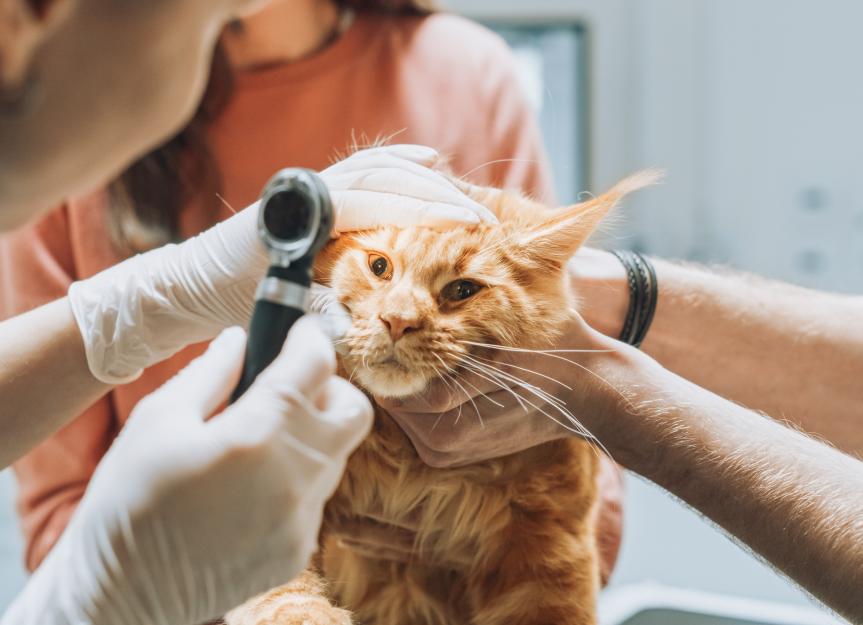
To diagnose cat eye tumors, a veterinarian will start with a complete eye exam. They will use a tool called an ophthalmoscope to examine the inside of your cat's eye.
They may perform a complete eye exam during which they test various eye reflexes, measure your cat's tear production, and test the pressure inside their eye.
You may be referred to a veterinary ophthalmologist if further testing is recommended.
Because the eye is very delicate, it is difficult to collect cells to screen for cancer without removing the eye. If your veterinarian is concerned about cancer, he or she may recommend removing the affected eye.
Treatment of cat eye tumors
While some benign eye tumors require no treatment, other cancerous eye tumors are often treated surgically.
Cats diagnosed with iris melanosis, limbal melanoma, and hidrocystomas are often simply monitored over time. Pet parents may be asked to watch for any changes in color, size, or texture of the mass(es) and closely monitor for any tremors or eye drainage.
If your veterinarian suspects uveal melanoma or post-traumatic sarcoma, he or she will likely recommend enucleation. Enucleation is the name for the surgery that involves removing the eyeball and all surrounding associated tissues.
Sometimes eye medications are prescribed, such as prednisolone or antibiotic eye drops (such as ofloxacin), to keep your cat comfortable before surgery.
If your cat is in pain, pain relievers may be prescribed for long-term use, such as gabapentin, or short-term, such as Onsior.
Ocular lymphoma is usually treated with systemic chemotherapy. This is done under the guidance of a veterinary oncologist.
Recovery and Management of Cat Eye Tumors
Benign eye tumors probably won't go away, but frequent checkups are recommended.
If your cat needs surgery to treat their eye tumor, you can expect 10 to 14 days of recovery.
During this time, it is very important that you prevent your cat from scratching its eyes and rubbing its face.
A recovery cone (such as the Supet Adjustable Cone) is recommended to protect the incision while it heals.
If your cat is experiencing treatment-related side effects, particularly if they are being treated with chemotherapy, then they may benefit from Cerenia, a medication used for nausea.
Probiotics, like FortiFlora, may also be helpful for cats experiencing gastrointestinal distress following cancer treatment.
Prevention of cat eye tumors
Seeking to prevent cat eye tumors is difficult because many factors are involved. But here are a few things you can do:
Cat Eye Tumors FAQ
What does a tumor in a cat's eye look like?
A tumor in a cat's eye may look like a freckle, a change in color or texture in or around the eye, or an obvious bump.
What is the most common eye tumor in cats?
The most common eye tumor in cats is uveal melanoma.
What are the first signs of eye cancer?
The first sign of eye cancer is often a change in eye color.
How do cats behave if they have a tumor?
Many cats behave normally when they have an eye tumor; others may show pain.