
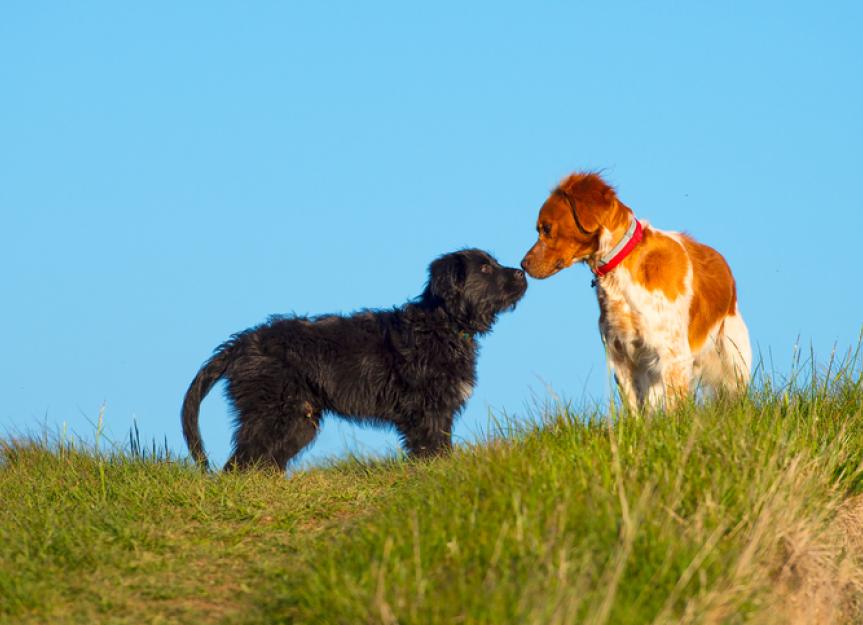
If you've ever seen your dog running to greet another dog in the park, you may have wondered: Does my dog have friends and how do dogs make friends in the first place?
It turns out that dogs are very social creatures and having friends can be a big part of their lives. So the next time they run over to see a familiar face, like that Golden Retriever you always pass on your morning walk, maybe they'll just say hello to their best friend.
Key takeaways
- Dogs can form genuine friendships, often preferring specific dogs and showing the same friendly behaviors towards them.
- Signs of canine friendship include playing, licking, nudging, and choosing to spend time together.
- Dogs bond differently than humans, but still seek closeness, play, and companionship.
- Positive socialization, personality, and past experiences all influence how dogs make friends.
- Not all dogs want friends, and some may be perfectly happy with human company.
Do dogs have friends?
Yes, dogs can genuinely form friendships with other dogs, says Meghan Herron, DVM, DACVB, senior director of behavior, research and education at Gigi's, a shelter in Canal Winchester, Ohio.
It will be clear that your pup has made a friend when he prefers a “specific, familiar dog” over others – and this preference is mutual, says Dr. Herron.
A study on dog social behavior found that dogs could be considered friends when they repeatedly displayed friendly behavior toward each other, such as:
Do dogs experience friendship like humans?
No, dogs don't experience friendship exactly like humans, but Dr. Herron says there are similarities, such as:
And like people, dogs approach friendship in different ways, says Wailani Sung, DVM, DACVB, a certified veterinary behaviorist at Joybound People & Pets in Walnut Creek, California. Some dogs are naturally sociable and have lots of friends, while others are more picky about who they let into their clique.
Dogs who form close bonds may share favorite toys, beds, or food, and they may also become protective of each other. While humans can bond over long conversations, dogs bond through playing, chasing, wrestling, and cuddling.
How do dogs recognize their dog friends?
It depends on the dog. Some dogs may be able to recognize their friend simply by seeing them walking down the street or across a field, while others “may need a combination of sight and smell to discern that it's their friend,” says Dr. Sung.
So how do you know if your dog is approaching another dog he probably considers a friend? Dr. Sung advises looking for a mix of playful greetings, relaxed body language, and excitement. This includes:
In some cases, your dog may recognize another dog but not like them enough to become friends. Dr. Sung says that dogs who feel neutral toward another dog often just “sniff and walk away,” the canine equivalent of a polite nod.
How do dogs make friends?
Like most meaningful relationships, canine friendships are built over time. For dogs meeting for the first time, friendship often begins with a series of polite behaviors, such as:
Over time, repeated positive interactions help dogs develop familiarity and trust. Dogs who see each other regularly are more likely to bond and remember each other's looks and smells.
Friendship can be a little different for each dog, depending on a few factors such as:
Dr. Herron adds that well-socialized dogs can tell when another dog is open to friendship and when another is not, and they back away more quickly when a dog signals disinterest.
As friendships develop, dogs may begin to show more affiliated behaviors like licking, rubbing, snuggling, and choosing to spend time together.
How to Help Your Dog Make Friends
Although some dogs form friendships naturally, you can help your dog have positive social experiences—if he's comfortable with it, of course.
How to help your dog make friends safely and comfortably:
-
Choose the right environment. Start in calm, controlled environments, such as walks or small play groups, rather than crowded dog parks.
-
Use shared activities. Pull ropes, discs, and obstacle courses in the backyard provide dogs with a fun game to play together. Swimming, scent walks, and other shared activities are also great bonding opportunities with dogs.
-
Be consistent. Regular exposure to the same dogs builds familiarity and trust.
-
Observe body language. Look for loose, relaxed movements; Give space if either dog seems uncomfortable.
-
Let your dog set the tone. Positive, intentional interactions (not forced introductions) lead to better friendships.
Why dog friendships are healthy
Friendships aren't just fun and games—they can truly improve your dog's quality of life.
According to Dr. Sung, the benefits of canine companionship include:
Dr. Herron adds that canine friendship can also help dogs develop stronger social skills over time. Dogs who interact regularly with a trusted friend continually train themselves to read body language and respond to social cues, so they are better prepared when meeting new dogs.
When Dog Friends May Not Be Suitable
Not all dogs want or need friends, and pushing your dog to choose a best friend can do more harm than good.
There are several reasons why dogs may not be ready for friendship, including:
-
They are fearful or reactive. These dogs may bark, lunge, or cower when another dog approaches. Talk to your veterinarian or a behaviorist to see if it's best to avoid other puppies.
-
They freeze, turn off or hide during presentations. These dogs are probably overwhelmed, so give them time and space away from their canine companions.
-
Your dog has been attacked. If a dog growls, snaps, or growls when another dog is friendly, it is best to avoid the interactions.
Above all, don't force your dog to make friends. If your dog seems stressed or disinterested, remove him from the situation. Some dogs will always prefer humans to dogs, and that's completely normal.
Dog Friendship FAQs
Do dogs make friends easily?
It depends on the dog. Well-socialized dogs with positive first experiences tend to make friends more easily. Dogs who miss the critical socialization period (ages 3 to 12 weeks) or who have negative social experiences may have more difficulty making friends or prefer not to.
Do dogs have best friends?
Yes. Dogs may repeatedly choose to spend time with specific dogs, what humans might call a best friend. You may notice that your dog is particularly excited about seeing a particular dog while showing less interest in others.
Do dogs miss their dog friends?
Yes. Dogs may miss their friends if they don't see them, and they may even experience grief when they lose a companion. Dogs who are missing a friend may eat less and appear lethargic or disinterested in their favorite toys or activities. Consult your veterinarian if you are concerned about this behavior.
Can only one dog be happy?
Yes, but it depends on the dog. Shy or fearful dogs may find a canine companion stressful, while others will be happier with someone to be around.
Can older dogs still make friends?
Yes, it is possible for older dogs to make friends. Older dogs who have been well socialized their entire lives are most likely to form friendships. Shy or fearful older dogs may prefer human companions, or even a cat.