
What are fungal infections in fish?
Fungal infections in fish typically occur when the fish's immune system is weakened, allowing opportunistic organisms to grow on the skin.
In most cases, these infections develop after injury, stress, or underlying illness, reducing the fish's ability to fight pathogens.
Despite their name, many “fungal” infections in aquarium fish are actually caused by water molds, which are fungus-like organisms commonly found in aquatic environments. These organisms generally remain on the surface of the fish's skin or scales rather than invading deeper tissues.
Healthy fish are generally able to resist these organisms, but when conditions change, such as poor water quality or disease, water molds can attach and grow.
Freshwater fish are more commonly affected because many of these organisms do not tolerate salt well. However, some species can survive in saltwater environments.
In rare cases, true fungal infections, such as branchiomycosis, may occur. These are more aggressive and can affect internal structures like the gills, leading to serious illnesses.
If left untreated, fungal infections can become serious and life-threatening. If you notice signs of infection, contact your veterinarian promptly.
Key takeaways
- Fungal infections in fish are usually a secondary problem caused by stress, poor water quality, or underlying disease.
- Common symptoms include white or fuzzy spots on the body, lethargy, and respiratory changes.
- Treatment focuses on improving tank conditions and reducing stress.
- Maintaining clean water, good nutrition and proper storage levels is the best way to prevent fungal infections.
Types of Fungal Infections in Fish
Several types of fungal infections can affect fish, ranging from superficial growths to rare but serious systemic diseases.
Gill and mouth rot
Gill or mouth rot is caused by the Branchiomyces species, a more aggressive type of true fungus. Although rare in pet fish, it can cause significant damage, particularly to the gills.
Most commonly, external infections caused by water molds can give the fish a mottled or spotted appearance on the skin.
Egg fungus
Fungal growth frequently affects dead or damaged tissue, including unfertilized fish eggs.
Eggs that are not treated or do not hatch quickly are particularly vulnerable to environmental fungi. In breeding establishments, eggs are often cleaned or disinfected shortly after being laid to prevent infection.
Systemic fungal infections
Systemic fungal infections are rare but can be quickly fatal.
These infections are more likely to occur in hot, crowded aquariums and can spread inside the fish.
Common signs may include:
- Fast or difficult breathing
- Lethargy
- Loss of appetite
- Sudden death
Symptoms of a fungal infection in fish
Fungal infections in fish often appear as visible growths on the body and may be accompanied by signs of illness.
These infections are usually easy to spot because they form raised, fluffy, or cotton-like spots on the surface of the fish.
Common symptoms include:
- Fuzzy white to brown spots on body, fins, eyes or gills
- Pale gills
- Increased or rapid breathing
- Decreased appetite
- Lethargy
- Sudden death in severe cases
Fungal growths are usually light in color, often appearing white, beige, or slightly yellow. They can appear cottony or bushy and tend to grow on damaged tissue or weakened areas of the fish.
If you notice any of these signs, early treatment is important to prevent the infection from getting worse.
Causes of fungal infections in fish
Fungal infections of fish most often develop as a secondary problem when a fish is already stressed or weakened.
Healthy fish can generally resist fungal organisms, but when their immune systems are compromised, these infections can take hold.
Common contributing factors include:
- Poor water quality
- Stress from aggressive tank mates
- Physical injuries to the skin or fins
- Infrequent cleaning of the tank or accumulation of waste
- Dead fish left in the aquarium
- Aging or weakened fish
- Overcrowding
Maintaining clean water, proper storage levels and a stress-free environment is essential to preventing fungal infections.
How Veterinarians Diagnose Fungal Infections in Fish
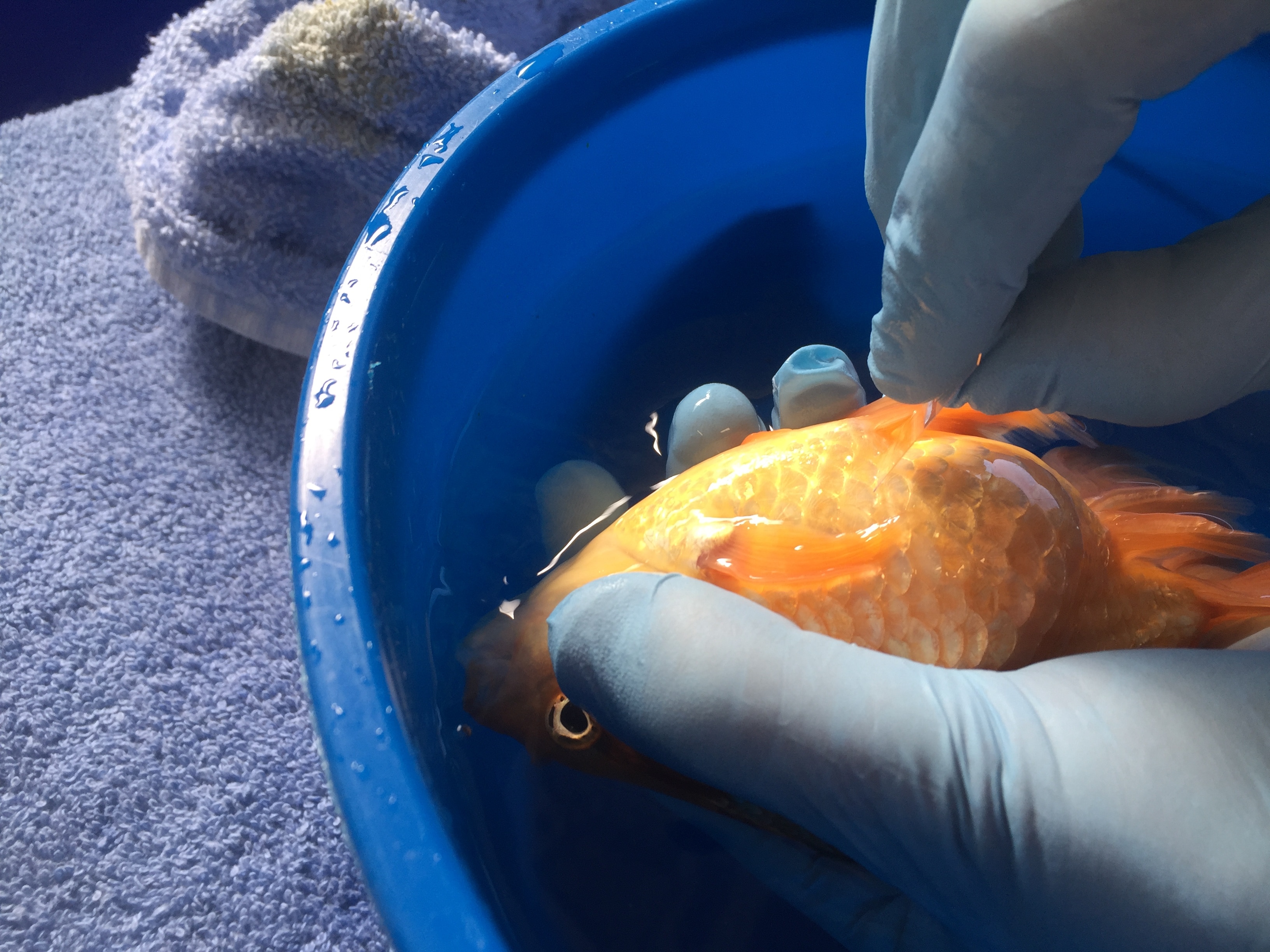
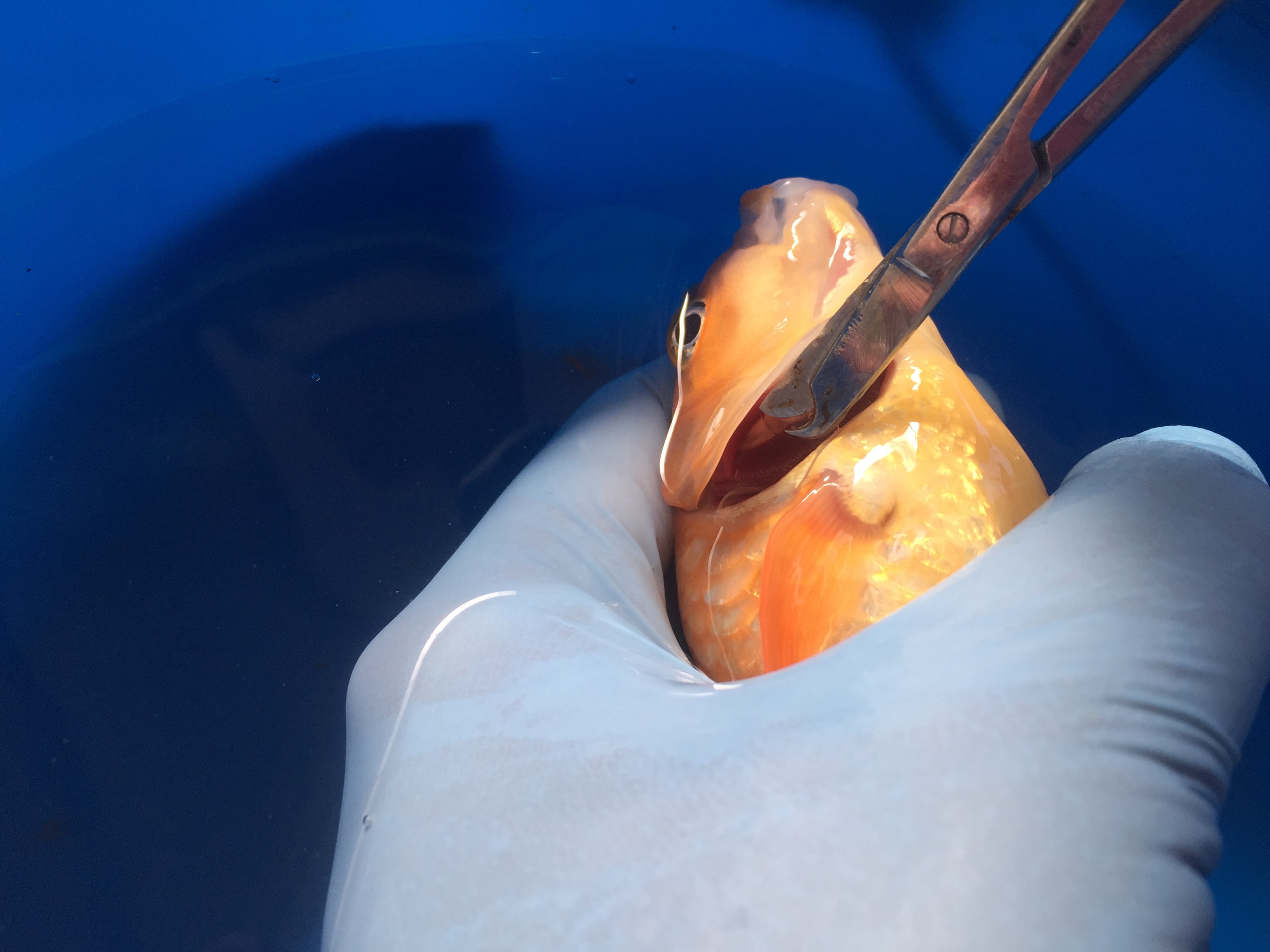
Veterinarians diagnose fungal infections in fish by combining a physical examination with testing of the aquarium environment and microscopic analysis.
Since many fungal infections develop due to underlying stress or poor water conditions, your veterinarian will first assess the overall health of the aquarium or pond, including water quality.
Bringing a distinct water sample (not just transport water) and a history of recent changes, such as new fish, treatments or equipment, can help guide the diagnosis.
To confirm infection, veterinarians usually collect skin scrapings or gill samples non-invasively and examine them under a microscope. This allows them to identify fungal organisms or rule out other causes, such as parasites.
In some cases, samples may be sent to a laboratory for culture testing, which helps confirm the diagnosis and determine the exact type of organism involved.
Treatment of fungal infections in fish
Treatment of fungal infections in fish begins with correcting the underlying environmental stressors.
Since these infections are usually secondary, improving the tank environment is often the most important step. This includes fixing issues like:
- Poor water quality
- Inadequate diet
- Overcrowding
- Aggression of tank comrades
Once these stressors are resolved, mild fungal infections may improve on their own.
For freshwater fish, a common supportive treatment is the careful use of aquarium salt, which helps reduce stress and limit fungal growth. Salt must be measured accurately and maintained consistently, especially during water changes, to keep salinity stable.
More serious fungal infections, especially those caused by aggressive organisms like Branchiomyces, are difficult to treat. In these cases, humane euthanasia may be recommended to prevent suffering and reduce the risk of spreading the infection to other fish.
Recovery and Management of Fungal Infections in Fish
Recovery from fungal infections in fish depends on improving environmental conditions and reducing stress.
Once the underlying problem is identified, consistent tank management can help fish recover and prevent the infection from getting worse.
To support recovery:
- Maintain stable, high-quality water conditions
- Test the water regularly to monitor ammonia, nitrite and nitrate levels.
- Providing a balanced, species-appropriate diet
- Reduce stress by managing aggression between tank mates
- Avoid overcrowding the aquarium
In freshwater systems, careful addition of aquarium salt (1 to 2 g/L) can help reduce fungal growth and promote healing. Salt can also ease the workload on the fish's gills, thereby improving respiration.
Constant monitoring and proper tank maintenance are essential for both long-term recovery and prevention.
Fish Fungal Infections FAQ
How to treat a fungal infection in fish?
Treatment of fungal infections in fish focuses on improving aquarium conditions and using supportive care.
The most common approach is to add a carefully measured salt treatment to the aquarium. Since fungal infections are often caused by stress, it is equally important to identify and correct underlying problems such as poor water quality, overcrowding or aggression.
How do I know if my fish has a fungal infection?
Fungal infections usually appear as white or fuzzy growths on the fish's body.
However, other conditions, such as bacterial infections (like Columnaris) or damaged tissue, can look like this. A veterinary diagnosis is the best way to confirm the cause and ensure appropriate treatment.
Are fungal infections in fish contagious?
Some fungal infections can spread, but the risk depends on the type of organism involved.
Mild infections are less likely to spread, while more aggressive infections, such as those caused by Branchiomyces species, can affect other fish in the same aquarium or pond.
What kills fungus in aquarium?
Fungi cannot be completely eliminated from an aquarium, as they exist naturally in aquatic environments.
Healthy fish are generally able to resist fungal growth. Maintaining clean water, good nutrition and low stress levels is the most effective way to prevent infections.
Can a fish recover from a fungus?
Yes, fish can recover if the infection is identified early and treated properly.
Healing depends on controlling the fungal growth and finding the underlying cause. With proper care and environmental management, many fish can return to normal health.