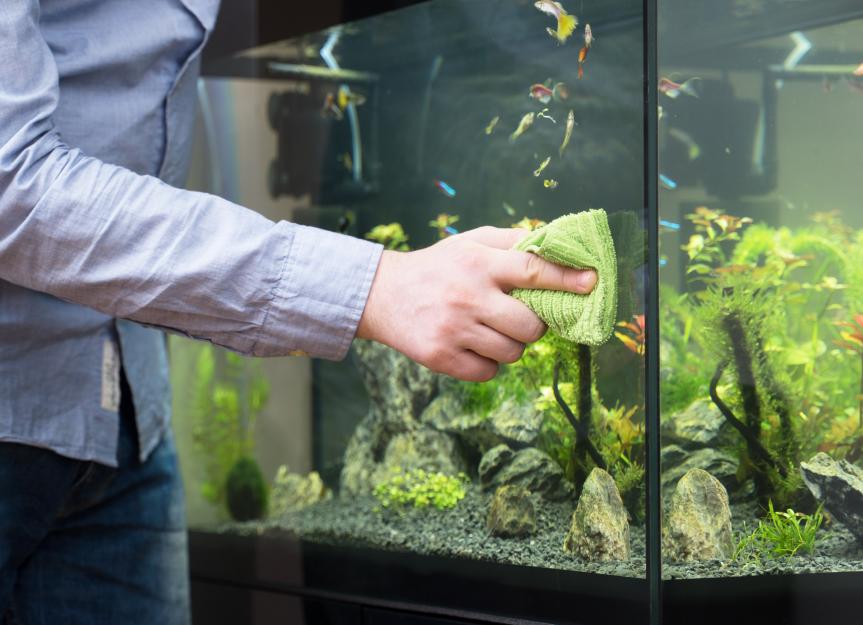
Learning how to properly clean an aquarium is essential to keeping your fish healthy and maintaining safe water conditions.
Here are some key points to consider when cleaning an aquarium.
Key takeaways
- Cleaning an aquarium removes waste and keeps the water safe for fish.
- Most tanks require water changes of 10% per week or 25% every two weeks.
- Never replace more than 50% of the water in the tank at a time.
- Fish should remain in the aquarium during routine cleaning.
- Regular water testing helps determine cleaning frequency.
How to clean an aquarium
To properly clean an aquarium, use dedicated equipment and follow a step-by-step process to remove waste while protecting beneficial bacteria.
Clean your aquarium by following these steps:
- Wash your hands thoroughly before putting them in contact with aquarium water.
- Turn off your filtration, heating and lighting.
- Remove decorations from your aquarium and place them in a separate bucket or on a towel. Scrub the decor using a scrub brush or designated toothbrush.
- Scrub the sides of the aquarium using an acrylic or glass scrub brush.
- Place a siphon in your aquarium and start the flow into a bucket.
- Move the siphon up and down, absorbing a small amount of substrate in each location. Let it circulate briefly, then lift the vacuum to break the siphon.
- Move the siphon all the way to the bottom of the tank.
- Remove the filter media from your tank (sponges, balls, dental floss or stones) and rinse them in the wastewater bucket. Do not replace the filter media unless it collapses.
- Rinse and fill your bucket with fresh tap water. Use a thermometer to make sure it matches your tank temperature.
- Add a water conditioner according to the manufacturer's instructions, treating only the water in the bucket.
- For salt systems, add the correct amount of salt and allow it to circulate for five minutes.
- Slowly add fresh water to the main tank.
- Return the decor to the tank.
- Turn on the lights, heating and filtration. Filtration may need to be initiated – refer to manufacturer's instructions.
- Wash your hands.
How often should you clean an aquarium?
How often you should clean your aquarium depends on the water quality, the size of the aquarium and the number of fish.
Aquariums should be cleaned regularly to remove waste and provide clean water. Cleaning is especially important during the early stages of setting up a tank to complete the nitrogen cycle, but established tanks still require regular maintenance.
The best way to determine if your program is adequate is to test your water chemistry. For established tanks, the basic recommendations are a water change of 10% per week or 25% every two weeks.
If any of the following parameters are above range, perform a water change:
- Ammonia > 0.25 mg/L
- Nitrites > 0 mg/L
- Nitrates > 20 mg/L
Never remove more than 50% of the total water at a time, as this can cause sudden changes in pH and temperature that stress the fish. Always use a water conditioner when adding tap water to remove chlorine.
If you are concerned about water chemistry, contact your fish veterinarian.
Ignoring or performing improper cleanings can result in fish health problems or death. The accumulation of debris, excess food and waste can increase ammonia levels, which are toxic.
Do you take fish out of aquariums when cleaning?
Do not remove fish when cleaning an aquarium as it can cause unnecessary stress.
If you clean an aquarium correctly, your fish will not bother you.
The only reason to remove your fish is if the substrate smells like rotten eggs when disturbed, which indicates the presence of toxic hydrogen sulfide. In this case, you will need to remove the gravel and replace all the water.
Move your fish to a holding tank with filtration to give them plenty of space while you do a deep cleaning.
How to Clean Your Aquarium Safely
To clean an aquarium safely, protect your fish, your equipment, and yourself throughout the process.
During cleaning, your fish should not go up the gravel siphon. If so, quickly raise the siphon above the water line so the water returns to the tank.
Always turn off all electronic components when cleaning. You can always use an air stone if you are concerned about fluctuations in oxygen levels due to heavy plant or algae growth, or if your fish are lethargic or recovering from a gill-related illness.
If your system is equipped with a sump, it may siphon against the flow and overflow. Be sure to break the siphon or close access to the sump during cleaning.
As with any pet, there is a risk of communicable diseases, although few of these are associated with fish. Zoonotic mycobacterial infections are the main concern and can cause non-healing skin lesions.
If you have any cuts or open wounds, avoid contact with the water in the tank.
Do not let children or anyone with a weakened immune system handle wastewater or tank equipment..
Cleaning a freshwater aquarium or marine aquarium
Cleaning freshwater and marine fish aquariums follows the same process, with some additional considerations for saltwater systems.
The main difference is working around live corals and marine species in saltwater tanks. These animals cannot be removed during cleaning and must remain in the tank. You may need to move them gently to vacuum underneath.
What you need to clean an aquarium
To properly clean an aquarium, you need tools that help remove waste, maintain water quality, and protect your fish.
Water quality testing kit
Testing your tank water chemistry tells you when it's time for a water change. Test at least once a week with a water quality test kit and refer to the recommended parameter ranges.
Tap water conditioner
Unless you use bottled spring water or reverse osmosis water, you should treat tap water with a water conditioner to remove chlorine and chloramine, which are toxic to fish.
Reverse osmosis (RO) water is filtered to remove most particles, including ions that affect hardness and alkalinity. Depending on your system, it can also remove chlorine and chloramine.
Gravel siphon
A gravel trap removes waste buildup from the substrate, which is essential for keeping your tank clean. It is not enough to simply stir the substrate.
These tools may require practice to use effectively, so expect a learning curve.
Algae cleaner
Algae growth is normal and can indicate a healthy tank. Use an algae scrubber to clean the tank walls, choosing the appropriate type for your tank material.
Glass tanks can handle more abrasive algae scrubbers, while acrylic tanks require softer sponges to prevent scratching.
Thermometer
A thermometer ensures that the new water matches the temperature of your aquarium to prevent stress in the fish. Infrared thermometers allow quick readings before adding water to the tank.
Refractometer (salt water tanks)
A refractometer measures salinity in salt water systems to ensure proper balance before adding water to the tank. A quick check with a refractometer is essential to ensure your system's salinity stays within limits.
FAQs on How to Clean an Aquarium
How to clean an aquarium without killing the fish?
You can clean an aquarium safely by performing partial water changes, keeping fish in the tank, and avoiding sudden changes in temperature or chemistry.
Can you completely clean an aquarium?
You should not completely clean an aquarium unless there is a serious problem, as this eliminates beneficial bacteria.
What happens if you don't clean an aquarium?
Accumulation of waste can increase ammonia levels, leading to poor fish health or death.
References
Hashish E, Merwad A, Elgaml S et al. Mycobacterium marinum infection in fish and humans: epidemiology, pathophysiology and management; a review. Veterinarian Q. 2018;38(1):35-46.