
What Saltwater Sharks Can You Keep in an Aquarium?
Only a few saltwater aquarium sharks are suitable for captivity and all require expert level care and large tanks.
All shark species should only be kept by experienced saltwater aquarists with years of experience managing marine systems, life support, and multiple species.
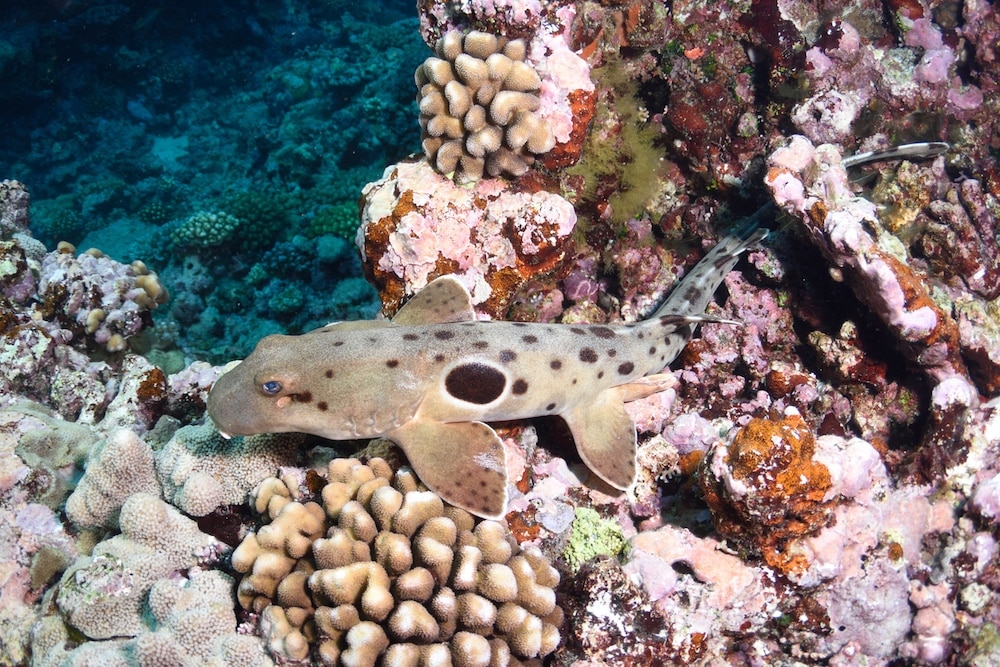
Epaulette sharks (Hemiscyllium ocellatum)
Epaulette sharks are small, bottom-dwelling saltwater sharks native to northern Australia and New Guinea. They have a light tan body with distinctive brown bands and black spots.
This nocturnal species is known for its ability to “walk” along the substrate using its ventral fins. Epaulette sharks can live 20 to 25 years and grow up to 42 inches long.
Although they are one of the smallest shark species kept in aquariums, epaulette sharks still require at least 350 gallons per individual. They can be housed in groups, preferably single-sex groups, in tanks with a sandy substrate, open bottom space and robust filtration.
Cat shark (various species)
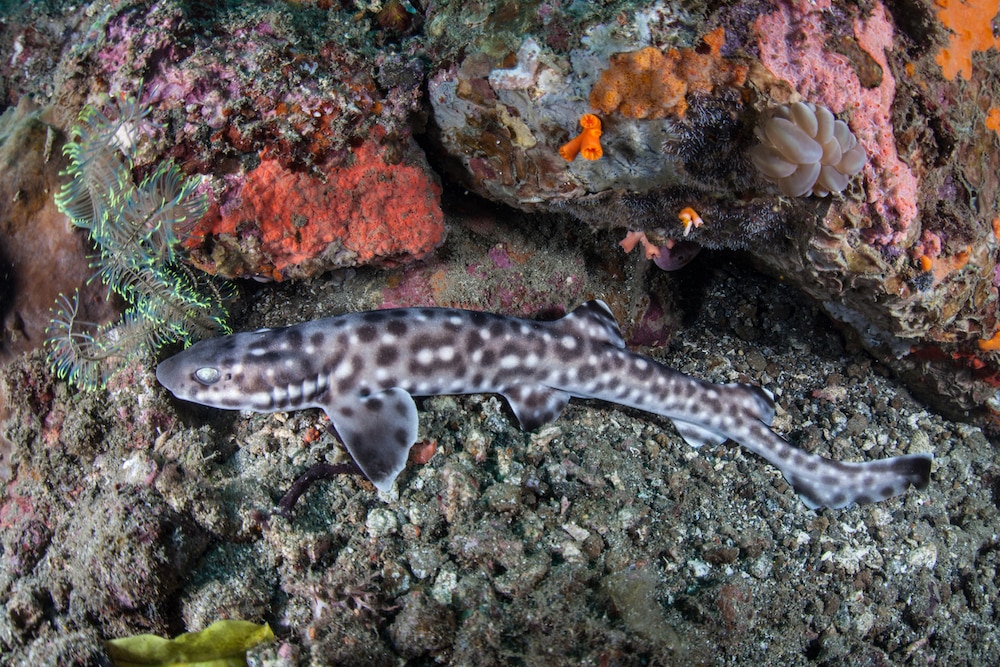
Cat sharks include more than 150 species, making them one of the most diverse groups of saltwater aquarium sharks. Common species include the coral catshark, Australian marbled catshark, and banded sand catshark.
Named for the whisker-like barbels at the front of their mouths, catsharks can grow up to 60 inches long and can require up to 500 gallons for a single shark.
Before bringing a cat shark home, research its specific care needs to ensure you can provide it with a suitable environment and diet.
Horn shark (Heterodontus francisci)
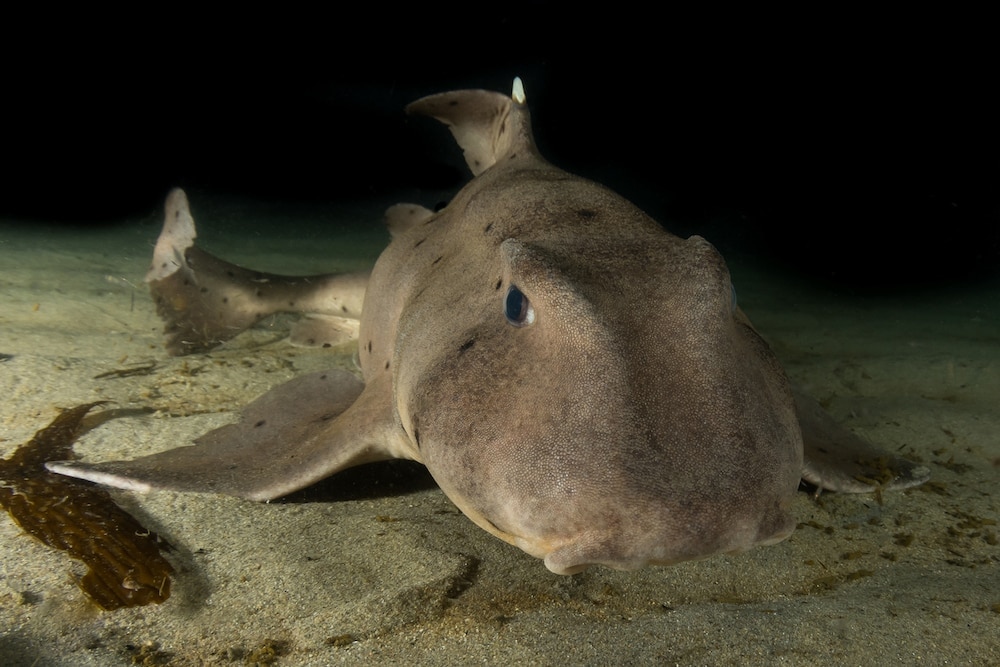
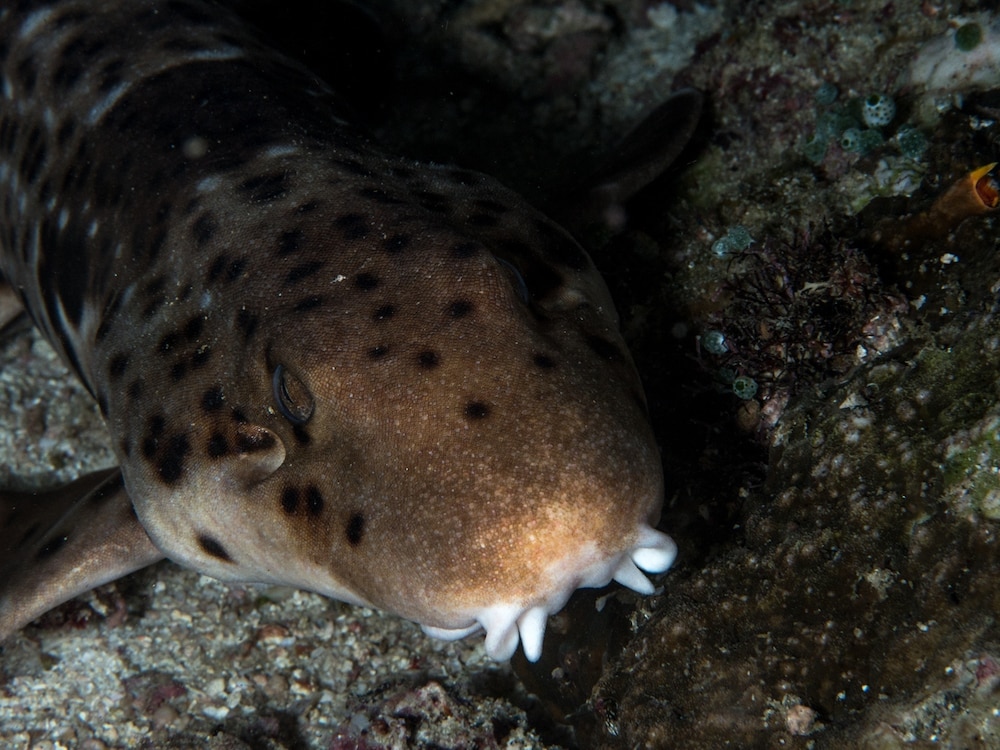
Horn sharks are saltwater aquarium sharks that get their name from the spines on the leading edge of their dorsal fins.
They are usually brown on their backs and tan underneath with dark spots along their bodies. They are primarily nocturnal and hide in caves and crevices during the day.
Horn sharks can be aggressive. Special handling precautions are necessary when dealing with this species of shark.
It is also not recommended to keep more than one horn shark in the same aquarium. Select your tank mates carefully, as smaller species may be consumed.
They can be up to 4 feet long, so the tank needs to be wide enough for them to spin around comfortably. At a minimum, each horn shark requires 500 gallons per fish.
Short-tailed nurse shark (Pseudoginglymostoma brevicaudatum)
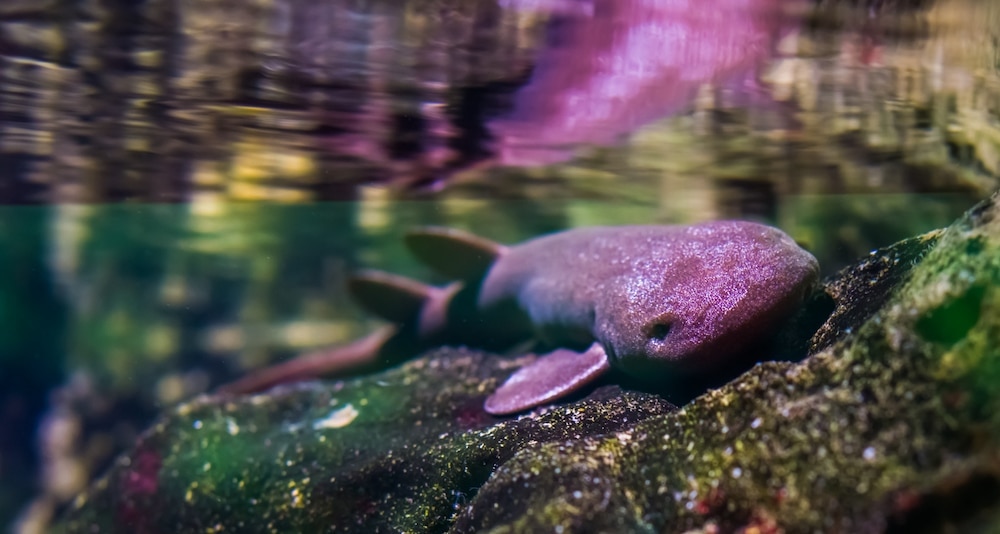
Short-tailed nurse sharks are one of the smallest and most docile saltwater aquarium sharks, making them a more manageable option for experienced keepers.
These sharks are actually the smallest member of the nurse shark family, measuring around 30 inches long.
Short-tailed nurse sharks are native to the western Indian Ocean. They have dark coloring and a shortened fin in front of the tail, which gives them their name.
Plan for a long life with your short-tailed nurse shark: With proper care, these sharks can live over 30 years.
They have been known to occasionally rest on their side, which can be very worrying for new keepers, but is completely normal for them.
Make sure you have enough space for your short-tailed nurse shark with a tank of at least 300 gallons.
Speckled carpet shark (Hemiscyllium trispeculare)
Speckled carpet sharks are bottom-dwelling saltwater aquarium sharks native to Australia.
They have beige and brown bands and characteristic ocelli or “epaulettes” (dark round spot with a light border) behind their pectoral fins.
This species of shark is known to “walk” along the substrate using its small, rounded pectoral and pelvic fins. And although they spend most of their time on the bottom, they also exhibit periods of free swimming.
Speckled carpet sharks have a varied diet including small fish, crustaceans, cephalopods and bivalves.
They can grow up to 31 inches long and can be kept in small groups.
Provide at least 300 gallons per shark, with plenty of bottom space and an open upper water column for swimming.
Saltwater Shark Care Tips
Saltwater aquarium sharks require expert care and stable water conditions to stay healthy in captivity.
Cleaning and Water Quality for Saltwater Sharks
When breeding saltwater sharks, it is essential to maintain pure water quality by cleaning tanks frequently and testing the water daily.
Many smaller species live on the bottom, so use a soft sand substrate that is cleaned regularly and not sucked into filtration systems.
Keeping Multiple Saltwater Sharks
Only certain species of saltwater sharks can be kept together.
Epaulette sharks and short-tailed nurse sharks can be kept in small groups, but this requires a significant volume of water.
It is not recommended to keep multiple horn sharks or speckled carpet sharks in the same aquarium.
Best Diet for Saltwater Aquarium Sharks
Saltwater sharks require a carnivorous diet consisting of whole prey.
Most species eat whole fish and invertebrates like squid. It is important to provide a varied diet, as some sharks can be picky eaters.
Whole prey provides more complete nutrition than fillets, including essential nutrients from the organs.
Shark-specific vitamin and mineral supplements are highly recommended for captive sharks.
How to Feed Saltwater Aquarium Sharks
Feeding methods vary depending on the species.
Bottom-dwelling sharks are usually fed using a feeding pole placed near their mouth.
Intermediate sharks can feed for free, but it is recommended to feed each shark individually to monitor consumption and provide supplementation if necessary.