
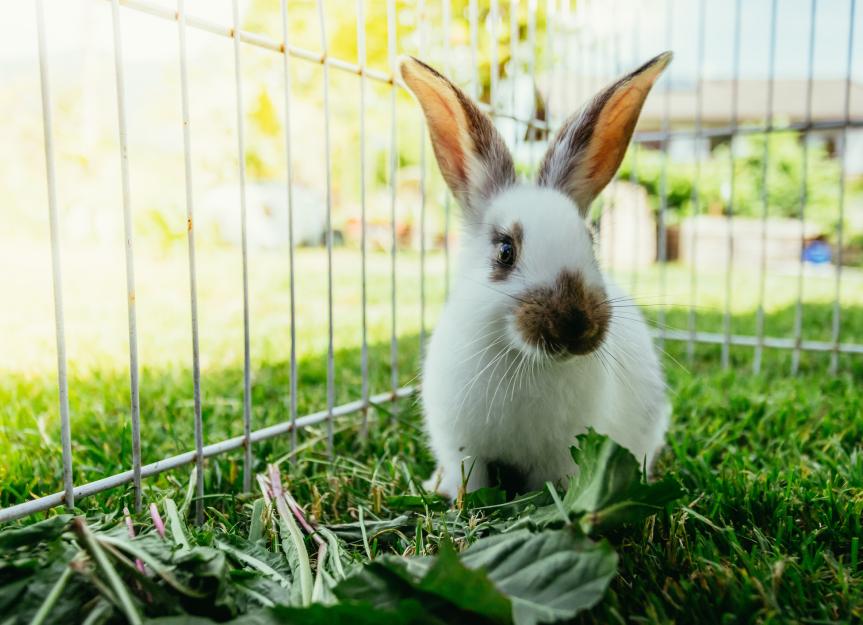
Choosing the right rabbit cage or hutch is essential for your rabbit's physical health, mental stimulation and ability to express natural behaviors.
A well-designed rabbit cage serves as a base for your rabbit, where it can run, jump, dig, eat, go to the bathroom and rest.
Key takeaways
- An appropriately sized, well-designed rabbit cage provides a secure base where rabbits can rest, eat, and express natural behaviors like jumping and hiding.
- Rabbits need more than just a cage: daily exercise, enrichment, and a sheltered space are essential for their physical and mental health.
- Choosing safe materials, maintaining a clean environment, and housing rabbits indoors helps prevent injury, illness, and stress.
Why your rabbit's cage is so important
A rabbit cage is important because it provides its primary shelter: a place to eat, sleep, relax and feel safe. As a prey species, rabbits need a safe haven to hide and retreat from potential stressors or perceived threats in their environment, such as loud noises, other pets, or unfamiliar activity in the home.
Rabbits are also territorial and will mark their space, so having an area that functions as a burrow helps them feel comfortable and secure.
It is important to clean the cage daily and deep clean it weekly to prevent infections from soiled bedding. In addition to serving as a place of comfort and rest, the cage should include enrichment items like toys and chew materials. These help prevent boredom and promote proper wear on their ever-growing teeth.
Ideal size of the rabbit cage
The ideal rabbit cage size should be at least four times as long as your rabbit's cage and large enough for him to jump and stand comfortably on his hind legs.
As a general rule:
For multiple rabbits, double the recommended space per rabbit.
Rabbit Cage Materials and Supplies
Choosing the right materials and supplies is just as important as choosing the cage itself. Place the cage in a well-ventilated area of your home, out of direct sunlight, where your rabbit can interact with you regularly.
The cage should have mesh sides for adequate ventilation and security. The floor covering must be solid (like plastic). If you use a metal-bottomed cage, it should be covered with a fleece liner and a thick layer of paper-based litter to prevent foot injuries.
Wooden materials should generally be avoided, as rabbits tend to chew them.
Rabbit cage supplies may include:
-
Toys and enrichment items, such as apple tree sticks, hay chews, digging boxes, and tunnels.
Rabbit cage exercise area
In addition to their cage, rabbits should receive at least four hours of daily exercise.
Providing a safe area for rabbits of approximately 24 square feet is ideal. Use soft floor coverings such as rugs, yoga mats or pieces of carpet. Daily exercise helps prevent boredom, obesity and behavioral problems while promoting overall health.
Exercise pens are a great option, or you can designate a room rabbit-proof.
To protect a space against rabbits:
Baby or pet gates that are at least 3 to 4 feet high can help keep your rabbit safe.
Indoor Rabbit Hutch vs. Outdoor Rabbit Hutch
Indoor housing is best for rabbits because of the health and environmental risks associated with outdoor hutches.
Rabbits cannot sweat and must be kept at temperatures between 60 and 75 degrees Fahrenheit to avoid overheating and heat stroke.
Outdoor rabbits may also be exposed to predators such as hawks, dogs and raccoons, which may break into hutches. Insects and parasites can also pose health risks to outdoor rabbits. Even well-constructed outdoor hutches do not fully protect against these dangers.
Short, supervised outdoor time can be safe if your rabbit is in a secure, shaded run and always supervised. Avoid pesticide-treated grass and areas frequented by wild rabbits, as these can expose your pet to harmful chemicals or disease.
How to properly clean a rabbit cage
Regular cleaning helps reduce odors and prevent conditions such as urinary burns, pododermatitis (inflammation of the foot), and respiratory problems.
Thoroughly clean the cage weekly by following these steps:
-
Remove your rabbit and place it in a safe playpen or exercise area.
-
Remove litter and litter and throw it away
-
Wash dishes and dishes with lukewarm water and mild soap, then rinse thoroughly
-
Wipe the cage surfaces with a pet-safe disinfectant, diluted white vinegar, or pet-safe soap and water.
-
Rinse the cage thoroughly to remove any residue and allow to dry
-
Replace it with fresh bedding, hay, water, pellets and litter.
Daily cleaning should include removing soiled litter, refreshing food and water, and refilling litter if necessary.
Rabbit Cage FAQs
What type of cage is best for rabbits?
The best cage for a rabbit is well ventilated, has a solid floor, and provides enough space for your rabbit to jump, stretch, and stand.
What is a rabbit cage called?
A rabbit cage is often called a hutch, run, or rabbit cage.
What is the right size cage for a rabbit?
A cage should be at least four times the length of your rabbit's body, with plenty of room for supplies and movement. Bigger is always better.