
If your cat has wheezing or coughing, it may be suffering from bronchitis.
Bronchitis is often associated with feline asthma and can be part of COPD (chronic obstructive pulmonary disease). Bronchitis in cats can usually be managed at home – with your vet's guidance – using medications and some changes to your cat's environment.
Important takeaways
- Bronchitis in cats is a chronic inflammation of the airways that often overlaps with feline asthma and can cause symptoms such as coughing, wheezing and difficulty breathing.
- Common triggers include inhaled irritants such as air fresheners, scented products, mold and dust – avoiding these is essential for long-term management.
- Treatment usually includes steroids (such as prednisolone or fluticasone) and bronchodilators (such as albuterol), given by inhaler or orally, depending on your cat's tolerance and needs.
- Most cats can live comfortably with bronchitis when treated appropriately and supported with environmental changes, a clean air supply and, in some cases, a hypoallergenic diet.
What is bronchitis in cats?
Bronchitis is inflammation of the bronchi, the airways in the lungs.
Imagine a cat's airway as a tree with branches. The trachea, or windpipe, resembles the trunk of a tree, and it branches into the main trunk bronchi, which feed into each lung. Inside the lungs, the bronchi continue to branch smaller and smaller. These small airways are what become inflamed in cats with bronchitis.
When the airways become inflamed, this can cause a wheezing sound when the cat breathes, and sometimes a cough. There is less room for air to travel through the airways, and less oxygen is exchanged, making it harder for them to run, jump and play without getting blown.
This inflammation can become so severe that it is extremely difficult for your cat to breathe.
If your cat is breathing with its mouth open or appears to be struggling to breathe, this is a medical emergency. If you don't already have a rescue inhaler on hand, take your cat to the nearest emergency vet for treatment.
Symptoms of bronchitis in cats
Common symptoms of bronchitis in cats include:
Causes of bronchitis in cats
Bronchitis is most common in young and middle-aged cats.
Siamese have an increased risk of feline asthma and bronchitis. Cats that are overweight or have severe dental disease are also at increased risk.
Additionally, cats that are allowed outdoors and are not on regular parasite prevention are more likely to contract heartworms, which can lead to bronchitis.
Heartworm disease in cats can also inflame the airways, a condition called HARD (heartworm-associated respiratory disease).
Fortunately, many cats' immune systems kill heartworms and eliminate them from the body before they mature into adults in the heart (as they do in dogs). However, immature heartworms can still damage the lungs before the cat's body gets rid of them, leading to inflammation and chronic signs consistent with bronchitis and asthma.
The exact cause of bronchitis is not known, but several things can trigger asthma-like flare-ups. Inhaled irritants can inflame the lining of an affected cat's airways, leading to symptoms.
Inhaled irritants that can lead to flare-ups include:
How vets diagnose bronchitis in cats
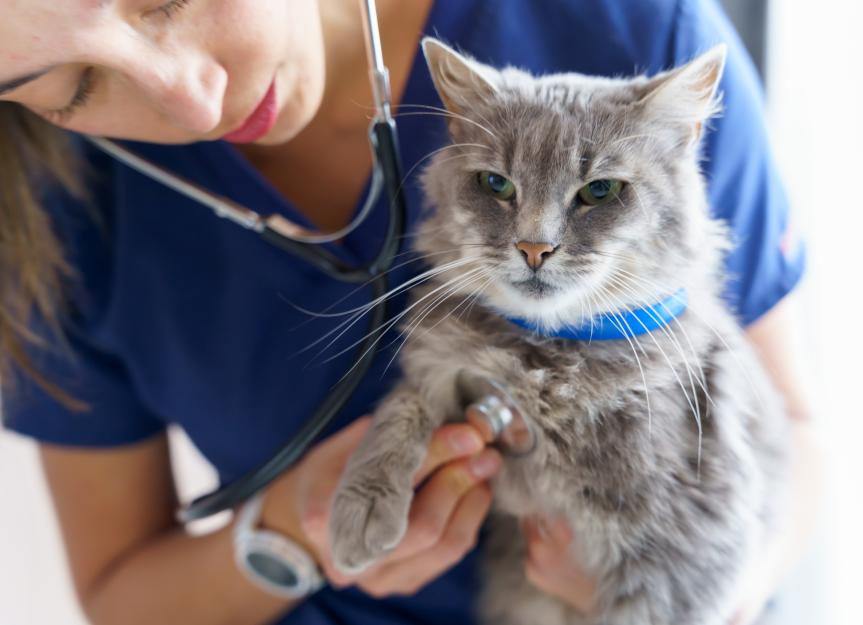
To diagnose bronchitis in cats, your veterinarian will begin by carefully examining your pet's chest by listening to their lungs and airways with a stethoscope.
They will likely want to take X-rays, as they are one of the easiest ways to diagnose bronchitis.
Your vet may recommend additional tests, such as heartworm testing and a fecal float to look for parasites that can affect the lungs. Blood work can be done to screen for signs of infection or an underlying condition, and to make sure your cat's organs are healthy before starting medication.
Talk to your vet before your cat's appointment to find out if your pet needs fasting (withholding food).
When you see your cat coughing or wheezing, try recording a video that you can share with your vet.
Treatment of bronchitis in cats
Most cases of bronchitis are managed rather than cured. Anti-inflammatory steroids are often prescribed to help open your cat's airways and make their breathing easier. Steroids can be prescribed as inhalers or oral medications.
Inhaled steroids are usually more expensive than pills, but they are easier on your cat's body in the long run.
Fluticasone is the most commonly prescribed inhaled steroid. A bronchodilator inhaler such as albuterol (a “rescue medicine”) may also be prescribed to help open the airways during flare-ups.
If your cat cannot tolerate an inhaler or if it is too costly, these medications also come in oral form.
Prednisolone will usually be offered as an oral steroid to manage bronchitis and feline asthma.
Once symptoms are controlled, your vet will guide you to taper to the lowest effective dose.
If your cat does not want to take pills, prednisolone can be mixed into a flavored liquid or a transdermal preparation that you rub on the earlobe. Albuterol can also be given by mouth if needed.
Heartworm-positive cats may benefit from doxycycline, an antibiotic effective against Wolbachia bacteria commonly associated with heartworms.
Research is currently underway to look at the relationship between these bacteria and chronic inflammation in the lungs of affected cats.
Recovery and management of bronchitis in cats
Avoiding known triggers is an important part of managing bronchitis in cats. By using the following tips, you can keep your cat healthy and comfortable:
Some cats diagnosed with feline bronchitis and asthma may benefit from a hypoallergenic diet, especially if food sensitivities are suspected.
Dietary therapy may take time to be helpful in these cats, but reducing allergen exposure may help reduce inflammation.
Examples of a true hypoallergenic diet include Royal Canin HP or Hill's z/d. Always ask your vet which diet is suitable for your cat.
Prevention of bronchitis in cats
While genetics play a role in whether a cat will develop bronchitis, weight control can help reduce the risk. Keep your cat in a healthy state and avoid letting them become overweight.
Consider monthly parasite prevention, especially if your cat goes outdoors. Revolution Plus and NexGard COMBO are examples of products that protect against heartworms, several intestinal parasites, fleas and ticks.
Frequently asked questions about bronchitis in cats
Can cats survive bronchitis?
Yes. With appropriate management, most cats with bronchitis can live long, full, high-quality lives.
Is pneumonia the same as bronchitis in cats?
No. Pneumonia is an infection of the lungs, while bronchitis is airway inflammation. Bronchitis often occurs without any bacterial or viral infections and is more commonly associated with inhaled allergens (as in feline asthma) or chronic inflammation following heartworm exposure.
But cats with pneumonia often have bronchitis as well because the airways can become inflamed as they fight the infection.
What is the fastest way to get rid of an upper respiratory tract infection in cats?
Reducing stress and minimizing inhaled irritants can help speed recovery from an upper respiratory infection. Your vet can prescribe medications if needed.
Can cat litter dust cause bronchitis?
Litter dust can act as a trigger that leads to bronchitis symptoms in susceptible cats.
References
Little, S. Coughing cats: Asthma or heartworm? DVM360. (2010)