
If your cat is coughing and sneezing, you may wonder if he has a cold – or something worse. Cats with these symptoms may be experiencing cat flu. It is common in cats of all ages – especially in unvaccinated cats and kittens – and is caused by a variety of viruses and bacteria
Because cat flu can be fatal if left untreated, it's important to recognize the symptoms and contact a veterinarian for treatment as quickly as possible.
Important takeaways
- Cat flu usually refers to infections of the upper respiratory tract of cats that are most often caused by feline herpesvirus (FHV-1) and feline calicivirus (FCV).
- It is highly contagious to other cats in close contact; prompt veterinary care helps prevent complications.
- Treatment ranges from home care to hospitalization, depending on severity; vaccination (FVRCP) helps prevent or reduce disease.
Can cats get the flu?
Yes. Cats can get the flu, and there are many viruses and bacteria that cause this disease. When we think of the flu, we usually think of the influenza A virus, which includes H1N1.
H1N1 – often called swine flu – is a common seasonal virus in humans and was the cause of a widespread pandemic in 2009.
It is highly contagious and is spread via respiratory droplets when people cough, sneeze or touch contaminated surfaces. It causes typical upper respiratory symptoms such as sneezing and runny nose when a person becomes infected.
While people Can transmit influenza (including H1N1) to cats, this is rare. However, cats that come into close contact with a pet parent who has the flu may experience similar respiratory symptoms.
The symptoms vary from mild to severe and largely depend on the cat's immune status, age, vaccination status and how much virus the cat was exposed to.
Cats are more often affected by cat-specific bacteria and viruses that cause upper respiratory tract infections, such as calicivirus or herpesvirus – often called cat flu.
Cat flu can be fatal if left untreated, especially in immunocompromised cats, unvaccinated cats, or those that are very young or very old.
Is cat flu contagious?
Cat flu is highly contagious to other cats in close contact, such as those living in shelters or living in the same household. Transmission to humans or dogs is considered rare and requires more research.
Causes of cat flu
Cat flu is spread through contact with contaminated surfaces, close contact between cats and respiratory droplets from coughing, sneezing and vocalization. Rarely, cats can be infected by contact with a sick pet parent.
Many viruses and bacteria can cause cat flu. Some of the most common:
Symptoms of cat flu
Some cats with the flu may not develop any symptoms. However, the most common signs in symptomatic cats include:
How vets diagnose cat flu
If you notice that your cat is experiencing respiratory symptoms, take them to the vet for a checkup.
Your vet will perform a thorough physical examination and note any abnormalities in the eyes, nose, heart and lungs.
They will watch your cat breathe and note any sneezing or coughing during the examination. Sometimes a diagnosis of an upper respiratory tract infection can be made based on the symptoms found during the examination. If further testing is recommended, it may include:
-
PCR: A swab of the eye or nose may be taken and sent to a laboratory to determine which virus or bacteria is causing the symptoms. This is done using a polymerase chain reaction (PCR), a technique that is done with a special machine.
-
Virus/bacterial culture: A sample from the eye, nose, or mouth can be processed in a lab to see if any virus or bacteria grows in nutrient-rich medium or on a petri dish.
Treatment of cat flu
Treatment for cat flu depends on the severity. Some cases may require no treatment, while other cats need extensive supportive care for recovery.
If a cat needs treatment, a veterinarian may prescribe the following:
-
Antibioticssuch as Clavamox – for suspected secondary bacterial infection. Cats with viral infections often have secondary bacterial infections. By treating the bacteria with antibiotics, the cat's symptoms will improve, and the cat's immune system will be better able to fight the virus.
-
Antiviral agentssuch as lysine supplements; your vet may also discuss lysine supplementation for FHV-1 support, although the evidence is mixed. It is thought that lysine supplementation may interfere with the replication of feline herpesvirus. When the virus is prevented from replicating, it cannot cause infection or spread and symptoms are reduced.
-
Eye medicinesuch as Terramycin – for bacterial eye involvement. Cats with viral infections may experience secondary bacterial eye infections. By treating the bacteria, unwanted symptoms such as thick eye discharge and eye redness disappear.
-
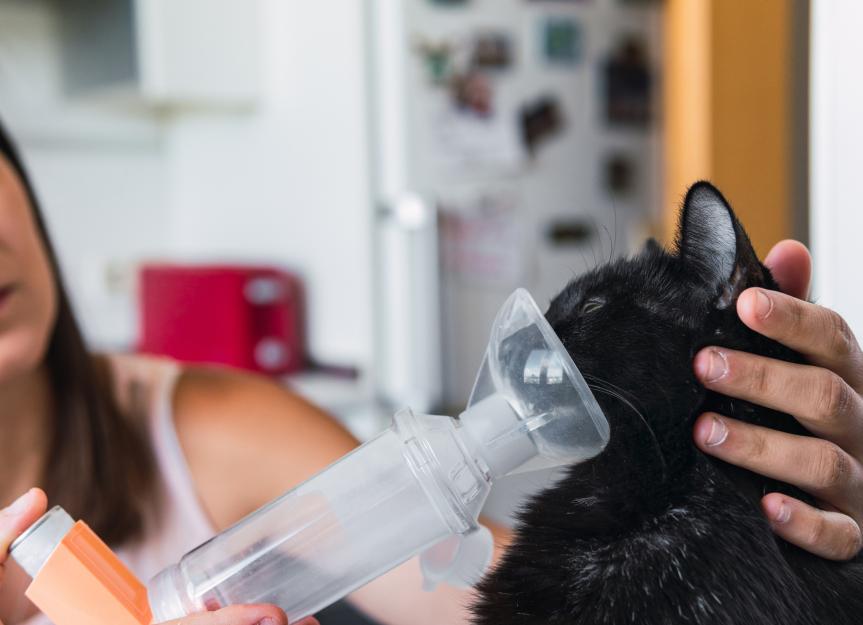
Respiratory treatments with nebulizer-to help loosen secretions. Cats with the flu have mucus in their airways, which can make breathing difficult and often make other cat flu treatments less effective because of the buildup. Using respiratory treatments can significantly improve a cat's flu symptoms.
-
Saline nasal drops– to relieve congestion. Clearing nasal congestion for cats with the flu can help them breathe better. Saline nasal drops are generally available over the counter at local pharmacies and online. Before starting any saline nasal drops intended for human use, check with your veterinarian first.
In severe cases, hospitalization and supportive care with oxygen therapy, nutritional support, and intravenous fluids may be needed.
Recovery from cat flu
Mild symptoms of cat flu may go away on their own within a few days, especially if your cat is still eating and has a normal energy level.
In these cases, it's good to give your cat a quiet, private space to rest and recover. Adding a cool mist humidifier to this space can also help break up mucus.
It is also important that your cat has access to fresh food and fresh, clean water to stay hydrated.
Prevention of cat flu
There are ways to prevent cat flu, especially if you have multiple cats in your home. The steps include:
Vaccinating your cat against feline distemper (FVRCP) is essential to protect them from some of the viruses that can cause cat flu.
This vaccine protects against feline viral rhinotracheitis (FVR), calicivirus and panleukopenia. This vaccine is especially important if you board your cat, due to the close contact with other cats.
Frequently asked questions about cat flu
Can cats get the flu from humans?
Yes, but it's not common.
What is the difference between bird flu and cat flu?
Bird flu is caused by an influenza A virus, while cat flu is most often caused by cat-specific pathogens, such as calicivirus and herpesvirus.
Is cat flu contagious to humans?
Transmission from cats to humans appears to be rare and is not well documented.
Is cat flu contagious to other pets?
Cat flu is highly contagious to other cats, but it is rare for cats to transmit it to dogs.
How long does cat flu last?
The duration varies depending on the severity and the cat's immune system. Most cases resolve within 10–14 days, but severely ill cats may be ill for a month or more.
Can a cat survive the flu?
Yes, most cats survive the flu. However, if the symptoms are severe and left untreated, the disease can be fatal. Prompt veterinary care improves outcomes.