
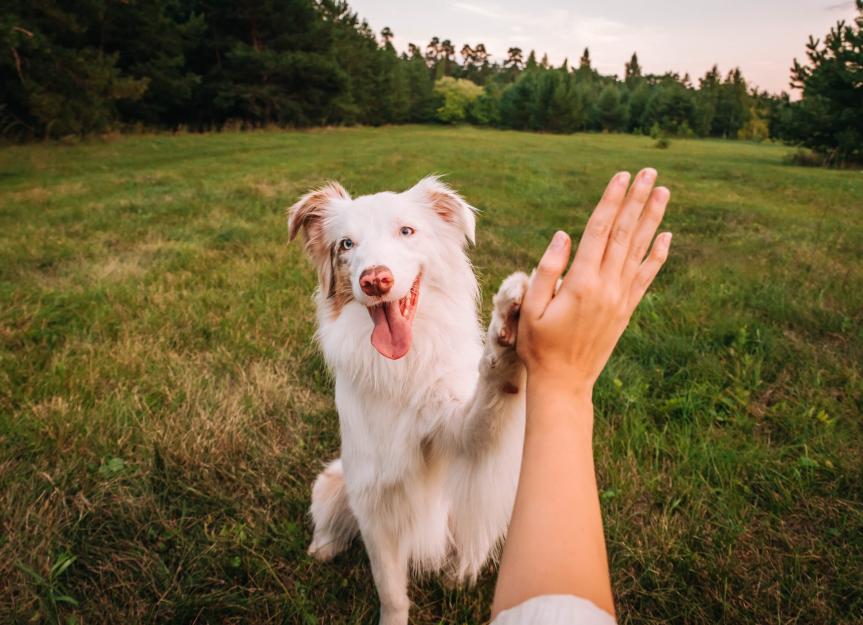
As our four-legged best friends age, it's easy to assume that what you see is what you get. Most of us tackle training when our dogs are young, then cross it off the list for good.
If you and your dog have mastered the basics: sit, down, stay and control, you probably think “mission accomplished.” After all, we've been conditioned by the phrase “you can't teach an old dog new tricks.”
But is this really true? Is it impossible to introduce lessons late in life?
Key takeaways
- Dogs can learn new behaviors and signals at any age, even if they have never been trained before.
- Positive reinforcement training is the most effective method for teaching dogs.
- Short, low-impact training sessions keep senior dogs mentally stimulated without causing fatigue.
- Choose appropriate treats and portions to prevent weight gain in older dogs.
Tips for Training an Older Dog
Although dogs of all ages enjoy learning new tricks, there are some special considerations to make when working with seniors. The following tips will help you get the most out of your workout time.
1. Comfort above all
Active young puppies can exercise almost anywhere, but older dogs may need a few environmental adjustments to ensure they perform at their best.
An older dog may have reduced hearing or vision, so choose a well-lit, distraction-free space.
And keep in mind that those old bones may need some extra traction, especially if you're working on cues that require fancy footwork or getting up and down from the ground. When I train with my senior dog Millie (who still loves training at 15 and a half years old!), I put on rubber padding which gives her lots of grip strength.
2. Consider what is possible
Their spirit may be willing, but an older dog may not have the same pep in their step due to aches and pains.
When planning what you will teach, keep in mind that your older child may not be comfortable dancing on their hind legs or doing other energetic tricks. Try to focus on low-impact behaviors that aren't physically demanding, like a slow spin, jerk, or wave.
That said, Millie learned to jump through a hoop when she was little, and while she was able to jump through it when it was a few feet off the ground, I now only ask her to do it with the hoop a few inches off the ground. She gets the joy of playing an old classic, and I know she doesn't have to try something that's physically uncomfortable for her.
3. Watch the time
Although puppies need short training sessions due to their attention span, senior dogs may also enjoy quick lessons. Working on new skills takes brainpower, so even if you're training something simple, it will still tax your dog's brain in the best possible way.
After training time, give your dog a chance to rest and reset, then schedule another session later in the day.
4. Choose treats wisely
Puppies burn calories in an instant, but older, more sedentary dogs are more likely to gain weight if given too many treats.
When selecting treats for senior dog training, opt for treats that are tempting but not too high in calories.
A great way to split the difference is to make a trail mix of treats that includes a portion of your dog's daily ration combined with a variety of higher value treats.
A mix of kibble and small pieces of cheese or chicken will definitely keep your senior student interested and won't contribute to unwanted weight gain.
5. Keep it fun
At this stage of life, training is less about teaching manners and more about keeping the canine brain active, which means the pressure is off!
My dog, Millie, can't go out and hike like she used to, and she doesn't like to play with her toys, but she does. always game to practice. It doesn't matter if her turns are less than quick or if she's slower to understand my direction, it's more important for her to harness that intelligence and keep trying.
Training a senior dog is a completely different experience than working with a puppy, but the joy of proving that you can teaching an old dog new tricks is worth it.