
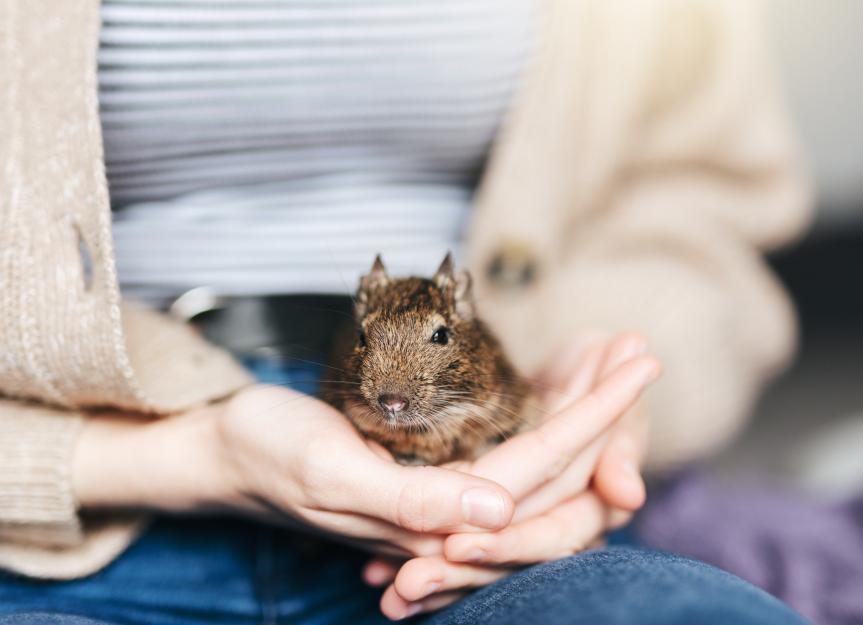
Degus are small, social, intelligent animals that require specialized care, daily interaction, and a low-sugar diet to stay healthy.
While they can be rewarding companions, they are best suited to devoted pet parents who understand their unique needs and can commit to providing adequate housing, enrichment and regular veterinary care.
Key takeaways
- Degus are social, intelligent rodents that need daily interaction, mental enrichment, and companionship to stay healthy and happy.
- A proper diet for degus is high in fiber and low in sugar, with unlimited hay and carefully limited treats to help prevent diabetes and obesity.
- Degus need spacious, secure housing, regular veterinary care, and safe handling to avoid injury and support their 5-9 year lifespan.
What is a degu?
Degus, often called common degus or trumpet-tailed rats, are native to Chile and belong to the family of burrowing rodents, Octodontidae, found in South America. Degus look like a cross between a gerbil and a chinchilla. They typically weigh around 6 to 10 ounces and have soft brown fur, large ears, and a long tail with a fluffy tip.
The typical lifespan of a degu is 5 to 9 years, although many live 8 years or more in captivity.
In the wild, degus live in social groups, spending their time digging, foraging, and socializing with each other. They are highly intelligent and social animals that require daily interaction and mental stimulation.
Activity of the Degu
Degus are very active pets, so providing them with an exercise wheel, digging box, and exploration time helps keep them happy and mentally stimulated.
Most degus are diurnal, meaning they are most active during the day, from morning to early evening.
Degu Behavior and Personality
Degus are social, curious and intelligent rodents.
They communicate through chirps and squeaks and enjoy interacting with both their parents and cage mates. They are often described as playful, alert and energetic.
How to Care for a Degu
Degus require daily care, suitable housing and a specialized diet to stay healthy. Because of their complex needs, they are often best suited to responsible adults or adolescents under parental supervision.
Anyone considering a degu should be willing to learn about exotic pet care and commit to regular veterinary visits to an exotic veterinarian.
Degus are not recommended for young children, as they are delicate and may bite if frightened or mishandled.
Degus also have a defense mechanism in which they can shed skin and the tip of their tail if caught, which can lead to infection.
Never grab or pick up a degu by the tail.
Enclosures
Degus are social animals and are best kept in pairs to avoid loneliness, depression or self-harming behavior. They should not be housed with other species of rodents or small mammals (such as rabbits), as this could spread disease.
For two degus, the minimum enclosure size should be approximately 28″ L x 18″ W x 28″ H, with multiple levels and access to a daily exercise area outside the cage.
Case Tips:
Food
Degus are herbivores. In the wild, they eat herbs, seeds, cactus fruits, tubers and plants.
In captivity, their diet should include high quality, low sugar pellets formulated for degus.
If degu-specific pellets are not available, a temporary mixture of half guinea pig pellets and half chinchilla pellets can be used until degu-specific pellets are available.
Feed approximately 1-2 tablespoons of pellets per degu daily, depending on size and activity level, with hay making up the bulk of their diet.
Avoid sugary and starchy foods, such as fruits, peas, corn and potatoes, as they can contribute to high blood sugar and degus are prone to diabetes.
Water
The Degus should always have access to fresh, clean water.
Clean water bottles or bowls daily with dish soap, rinse thoroughly and refill.
You can offer both a bowl and a bottle to see which your degu prefers.
Treats, vegetables and more
Offer vegetables in small quantities several times a week. Too much can cause digestive upset and bloating.
Safe options include:
Other treats such as timothy hay treats may also be offered occasionally, especially during handling.
Avoid foods high in sugar and fat, as degus can be prone to weight gain and diabetes. These foods include the following: honey, molasses, seeds or fruits, as these foods can increase the risk of obesity and diabetes.
Rodent blocks or enriched pellets along with ad libitum hay generally provide complete nutrition, so additional supplements are generally unnecessary unless recommended by your veterinarian.
Hay
Unlimited access to grass hay, such as timothy, orchard or meadow hay, is essential. Hay provides enough fiber for a healthy intestinal tract and helps wear down continually growing teeth.
Alfalfa hay can be offered in small quantities to young octagons but should not be given regularly as it can contribute to weight gain.
Toys and enrichment
Degus are intelligent and active, requiring lots of mental stimulation and enrichment to prevent boredom.
A sturdy exercise wheel (10 to 12 inches in diameter) is ideal for keeping them active and entertained. They also like to climb, dig and chew; therefore, additional enrichment elements include:
Degus also benefit from dust baths (using chinchilla dust) about twice a week, which should be done outside the cage.
They should also have a safe, supervised exercise area outside the cage. Be sure to “degu-proof” the space by removing cords, poisonous plants, and objects they might chew.
Common health problems among the Degu
Some of the most common health problems of degus include:
When should you take your Degu to an exotic vet?
Degus should be examined by an exotic veterinarian (or a veterinarian with experience with exotic animals) shortly after adoption, annually for routine care, and whenever they appear ill.
See a veterinarian quickly if your degu presents:
Caring for a Degu FAQ
Are degus good pets?
Yes, degus can make excellent pets for those who want to meet their social and environmental needs. They are interactive and intelligent companions.
Do degus like to be held?
Some degus enjoy handling them once they get used to them, while others prefer to interact through play rather than being held for long periods of time.
Do degus bite or scratch?
Degus rarely bite or scratch unless they are frightened, stressed, or mishandled. Good socialization and gentle handling help reduce the risk.
Are degus good pets for children?
Degus are best suited for adults or older children. Their small size and delicate body mean they can be easily injured if not handled properly, and they may bite or scratch if they feel threatened.