
If your guinea pig squints, cries, or suddenly has a cloudy eye, he may have a corneal ulcer, a painful scratch, or injury to the surface of the eye that requires prompt veterinary care.
Prompt treatment is important because even small ulcers can quickly get worse, become infected and threaten your guinea pig's vision.
Key takeaways
- Corneal ulcers in guinea pigs are painful eye injuries that can quickly worsen without veterinary treatment and lead to infection, vision loss, or rupture of the eye.
- Common signs of a corneal ulcer in guinea pigs include squinting, watery or cloudy eyes, redness, pawing at the eyes, and decreased appetite or activity.
- Most guinea pig corneal ulcers heal with prompt veterinary care, appropriate eye medications, and a clean, low-dust habitat that helps protect the eye during recovery.
Summary
A corneal ulcer in guinea pigs is a small defect or lesion of the cornea, which is the surface of the eyeball or the dome-shaped outer layer covering the pupil and iris.
The defect may be as small as a small scratch, or it may be quite large to the point of puncture (a hole) where the internal contents of the eyeball can protrude.
These corneal defects are very painful and the pain will cause excessive tearing and squinting. There is also often redness around the eyes. The eyeball may begin to appear cloudy, blue-white, or red due to the injury and inflammation (swelling).
Sometimes the scratch may be so small that you won't notice any changes to the cornea, but if there is redness, squinting, or excessive tearing, it is very important to have your guinea pig examined, as corneal ulcers can be common in guinea pigs.
An ulcer occurs when the outer layer of the cornea is damaged. This usually occurs as a result of trauma, such as hay getting into the eye, rough bedding stinging the eye, or a scratch from another animal.
Guinea pigs also produce fewer tears than other mammals, which can put them at greater risk of corneal problems.
A corneal ulcer must be treated urgently. They are very painful and can easily become infected. Small ulcers that are left untreated can also become deeper ulcers and cause the eye to rupture or possible permanent vision loss.
Symptoms
Symptoms of corneal ulcers in guinea pigs include:
-
White, cloudy, blue, or gray discoloration of the eye
Causes
The most common cause of corneal ulcers in guinea pigs is injury to the eye.
This could be due to hay, inappropriate bedding, toys, or another guinea pig scratching its eyes. Decreased tear production may also put them at greater risk of corneal damage.
Risk factors may include:
There is no gender or age trend for this problem. But poor environmental conditions can put guinea pigs at higher risk of corneal ulcers.
Diagnosis
Veterinarians diagnose corneal ulcers by examining the eyes and performing special tests.
Pet parents should not start any remaining eye medications during previous visits unless directed to do so by their veterinarian, as this can sometimes make the condition worse.
Steroid eye drops often make ulcers worse. And most eye drops only last about 30 days.
Using them beyond this period puts your pet at risk of infection due to bacterial growth in the bottle.
Your veterinarian can do:
-
Physical examination: To examine general health, hydration, teeth and any other abnormalities
-
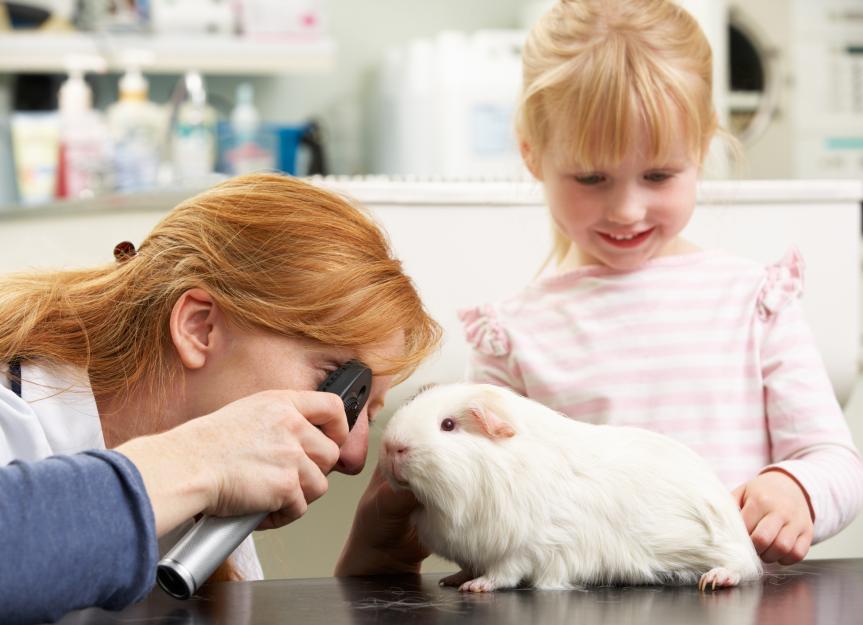
Eye exam: Uses an eyeglass with a bright, magnifying lens to closely examine the eyelids, cornea, conjunctiva, retina and surrounding tissues.
-
Fluorescein staining: A special green dye is applied to the eye, and if there is an ulcer or scratch, the damaged area will absorb the dye, making diagnosis easier.
-
Tear test: Used to assess whether tear production is normal via the Schirmer tear test or phenol red test. Both are placed on the lower eyelid for 15 seconds and the strip or string turns red or blue from the tears produced. If tears reach 20mm on the tape or string in 15 seconds, this is generally a normal number of tears.
Before or during the appointment, tell your veterinarian when the symptoms started, what the eyes have looked like since they appeared, if there have been any changes in appetite or bowel movements, what type of bedding and hay you are using, any medications or supplements you have tried so far to help, and if there have been any fights with cage mates.
Taking pictures of the eye every day and showing them to your veterinarian can be extremely helpful.
Treatment
Treatment depends on the cause and depth of the ulcer, as well as whether there is an infection. Corneal ulcers are often very treatable, but they require veterinary care and close monitoring. Simple ulcers can heal in seven to 14 days; more complex, deep, or infected ulcers may take much longer.
Treatment may include:
Deep, infected, or melting ulcers are often treated by an ophthalmologist and may require surgery and possible 24-hour monitoring in the hospital for treatment with eye drops, depending on their severity.
Recovery and management
A mild, superficial ulcer may heal in about one to two weeks, while deeper, infected, or non-healing ulcers may take several weeks with advanced care.
During recovery, follow these steps:
-
Avoid touching the tip of the medication to your eyes, eyelids, fur, or skin.
-
Monitor appetite, stool production, energy levels and activity.
Contact your veterinarian immediately if the eye appears cloudy, swollen, painful, red, or enlarged. Also call them if your guinea pig stops eating, is less active, or has reduced stool production.
Prevention
Not all corneal ulcers can be prevented; Guinea pigs are at higher risk due to their low tear production in general.
To minimize their risks, use soft, low-dust litter and avoid cedar shavings or dusty litter. Keep the enclosure clean and perform a deep cleaning every week.
Remove any broken toys or sharp areas from the cage. Keep guinea pigs in separate cages if they start fighting. It's also important to schedule annual veterinary exams, especially if your guinea pig has eye discharge or has had corneal ulcers in the past.
FAQs About Corneal Ulcers in Guinea Pigs
How to treat corneal ulceration in guinea pigs?
Treatment for a corneal ulcer in guinea pigs begins with a thorough eye exam by a veterinarian.
Treatment may include prescription antibiotic eye medications, eye lubrication, pain control, and enclosure modifications to reduce any irritation.
Severe cases often require intensive treatment by a veterinary ophthalmologist.