
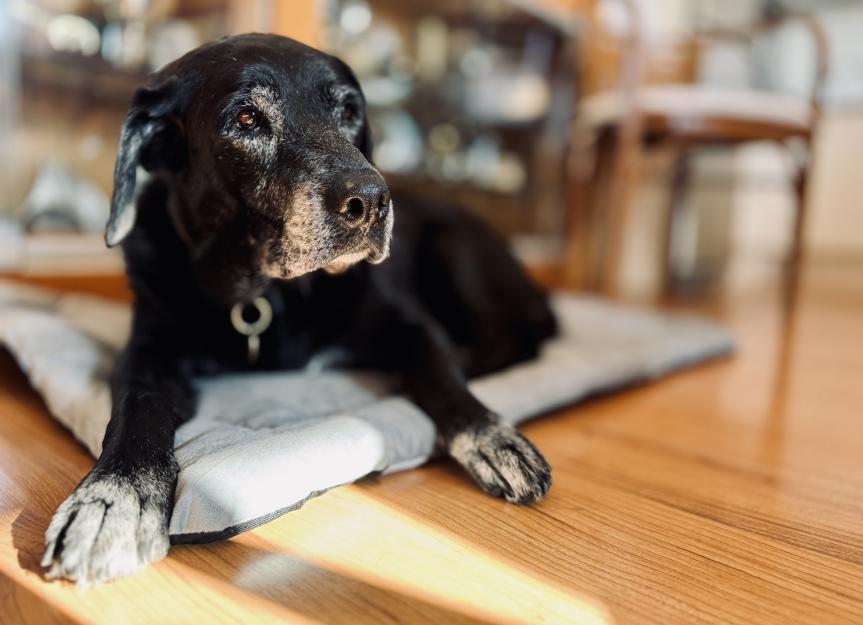
Our attractive canine companions communicate surprisingly well with us. They can interpret our body language and tone of voice, and learn the meaning of certain words and hand gestures.
Dogs “speak” with their postures, facial expressions, vocalizations, and activities to tell us when it's time to eat, go for a walk, or visit a dog park, and when a family member or a pizza delivery is arriving. Such “language” helps pet owners detect when their dog is not feeling well. So, could dogs be able to sense their own impending death? And could they let us know?
Key takeaways
- Dogs probably don't understand death as a concept, but they often exhibit noticeable physical and behavioral changes as their bodies decline toward the end of their lives.
- As the disease progresses, dogs often experience physical, behavioral and emotional changes that signal a decline in health.
- These changes may look like signs of treatable conditions, so a veterinary evaluation is essential.
- Planning ahead with your veterinarian can help ensure a peaceful and comfortable end-of-life experience for your dog.
Can dogs sense their own death?
Dogs can detect many more smells, sounds and movements than humans. These heightened senses and observations help dogs recognize when we are happy, sad, fearful, stressed or angry.
Dogs may also be able to detect storms, fires and earthquakes earlier than humans. They can be trained to find missing people, hidden hazardous materials, disaster survivors and human remains. Dogs have also learned to detect cancer, abnormal blood sugar levels, impending seizures or panic attacks, and infections in humans, as well as certain diseases in other animals.
Because of their acute sense of smell, dogs may even be able to detect biological and chemical changes in the odors of a person or animal that is about to die.
It is not known or scientifically proven whether dogs can detect these signals in their own bodies during their final weeks, days, or hours. However, when dogs are seriously ill or injured – and near death – they experience changes in their physical abilities, comfort level, routine, environment, and their parents' behaviors and emotions.
How do dogs behave when they are about to die?
As a dog's illness progresses and natural death approaches, its personality, behaviors and physical abilities may change. Signs may include:
-
Less interest in activities they previously enjoyed (toys, walks, car rides, belly rubs)
-
Seek more time alone or rest in unusual places, or conversely, seek more attention and closeness with family
-
Discomfort (irritability, panting, pacing, shaking, moaning)
Dogs may also exhibit some of these signs when they have a treatable illness, so it is important to seek an evaluation from a veterinarian.
Making an end-of-life decision for your dog
If possible, develop an end-of-life plan for your dog and discuss it with your family and veterinarian well in advance of when you need it.
Your veterinarian can explain your dog's illnesses and describe hospice and palliative care options, euthanasia services, natural death, and aftercare and memorialization considerations.
Veterinarians help pet owners decide for themselves when it's time to say goodbye. Pet parents and other close family members should agree on when and how to say goodbye, whether through humane euthanasia at home or in a veterinary clinic, or waiting for a natural death.
In all cases, the focus should be on relieving the dog's discomfort and preventing its suffering.
Lap of Love provides canine quality of life assessments and other helpful resources to help you determine if it's time.
How to Comfort a Dying Dog
I hope each dog has a great last day, seeing their family's faces, hearing their voices, and being surrounded by love at the end. Calm, reassuring attention, familiar routines, pain relief, and spending time alone if desired can all help comfort a dog at the end of life.
Whether you have chosen euthanasia in a veterinary clinic or at home, or if your dog is experiencing a natural transition, soothe and reassure your dog. Continue to relieve discomfort and provide:
As a dog's bodily systems fade, hearing tends to persist longer than other sensory abilities. Consider speaking gently to your dog during the euthanasia process and for a few minutes after he dies.
Thank your dog for his company and tell him you love him. Expressing gratitude for your dog's valuable partnership in your life can help you say goodbye and ease your regrets.
Also know that it doesn't matter if you can't bear to be present during your dog's euthanasia, or if bad weather, transportation problems or distance prevent you from being there.
If you want to be there but can't, ask your veterinarian if attending via video (like FaceTime) or speakerphone is an option. Rest assured that your veterinary team will take special care of your dog and share their love with him during his end-of-life experience.
Lap of Love's pet loss support resources can help grieving pet parents cope, reflect, and continue to cherish their dog's life.
Do dogs know when they die? FAQs
How long do dogs know when they are dying?
Dogs exhibit changes in behavior and activity based on their personality and level of discomfort or tolerance. Dogs likely don't know they have a terminal illness, but they often exhibit physical and behavioral changes as their health and cognitive abilities decline.
What do dogs do when they are about to die?
Dogs may exhibit unusual behaviors depending on the type, severity and duration of their illness. Dogs of any age can collapse and die suddenly due to trauma, heart disease or blood clots. Senior or geriatric dogs with long-term health problems may show gradual physical and mental decline over days, weeks, months, or in some cases, longer.
Do dogs say goodbye before they die?
Dogs probably don't say goodbye the way people with a terminal illness consciously do. Dogs who are unwell may become more clingy, anxious or agitated, while others may seek out time alone in unusual places around the house or garden.
Your friends and family may say that you'll know it's time because your dog will give you “the look,” a moment when his expression seems intentional, almost as if he's asking permission to leave. But dogs don't have a built-in “I'm ready” signal.
What families often notice are physical changes due to the disease, such as muscle loss that makes the eyes feel sunken or pain that creates tension in the face. These are medical signs, not a goodbye look.
Dogs are incredibly loyal and will often continue to try to engage even when they are not feeling well. By the time their expression noticeably changes, they are usually already uncomfortable. It's best to talk with your veterinarian and come up with a plan before it gets to this point.
Are dogs afraid when they know they are going to die?
Dogs may show fear late in life if they experience pain, anxiety, confusion, or a stressful situation. They probably don't understand death as a concept, but they have biological mechanisms designed to preserve bodily functions, and fear can arise as part of the dying process.
Dogs can also sense their parents' distress and react accordingly. So try to remain as calm and reassuring as possible. During euthanasia, dogs are first given a sedative to provide comfort and rest before the final medication is administered, helping to ensure a peaceful death.