
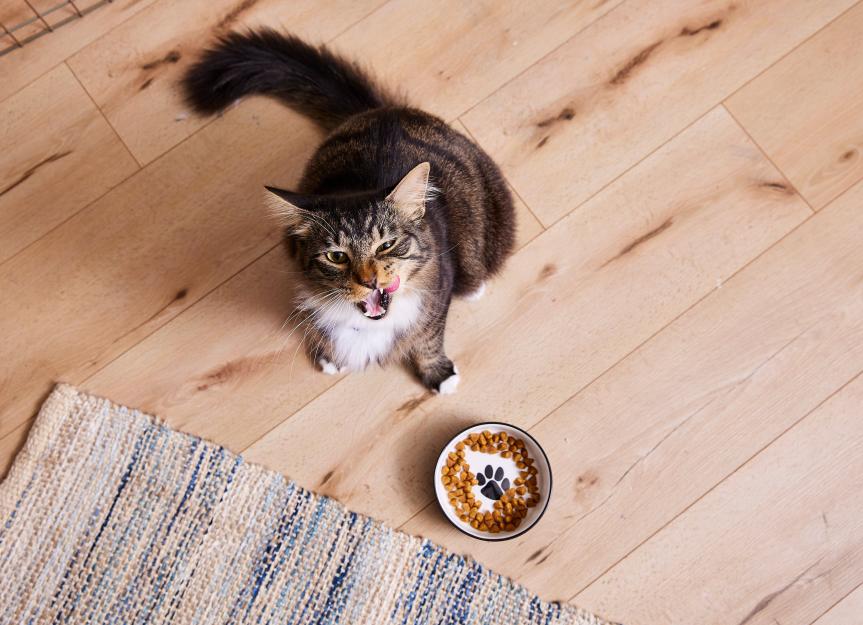
Changing cat food seems simple enough, but there is a right way to do it. You should always consult your veterinarian before making any changes.
Here's how to gradually adjust your cat's food over several days to give their digestive system time to adapt.
Key takeaways
- Always consult your veterinarian before changing your cat's food, as the right diet depends on their age, health and weight.
- Gradual transition over seven to ten days, increasing new food each day while decreasing old food.
- When switching from a wet food to a dry food, adjust portion sizes based on caloric differences: dry foods are more calorie dense and wet foods contain more water.
- Watch for signs of digestive upset, such as vomiting, diarrhea, or loss of appetite, and contact your veterinarian if symptoms appear.
How to change cat food
Your situation will be unique to your cat, so always follow your veterinarian's instructions when determining how to transition cat food.
Usually, a slow, gradual change is best to avoid digestive upset. However, sometimes your veterinarian may recommend changing cat foods more quickly to manage a health problem.
When changing cat food, follow these steps:
-
Talk to your cat's veterinarian about your cat's current diet and which diet you should switch to.
-
Choose a quiet feeding area in your home that your cat can easily access and that will remain the same throughout the transition.
-
Refer to the new diet's feeding instructions on the back of the package to determine how much to feed each day (or follow your veterinarian's instructions, if they differ).
-
Use the chart below to gradually transition each day, starting with 75% of the old diet and slowly decreasing over time until you are completely feeding the new cat food.
| Days 1 to 2 | 75% | 25% |
| Days 3 to 4 | 50% | 50% |
| Days 5 to 6 | 25% | 75% |
| Day 7+ | 0% | 100% |
How to Switch From Dry to Wet Cat Food
Switching from dry to wet food requires a gradual transition following the chart above.
However, wet food is mostly water, so you'll need a larger volume of it to maintain the same amount of calories as your cat was getting with dry food. Confirm this with your veterinarian and seek advice on the specific amount to feed now.
How to Switch from Wet to Dry Cat Food
Switching from wet to dry cat food also requires a gradual transition using the chart above.
However, dry food is more calorie dense, so your cat will likely need to receive less food to avoid gaining weight. Confirm this with your veterinarian and seek advice on the specific amount to feed now.
If your cat doesn't like the texture of dry cat food when you transition, you can mix the two so that the wet food covers the dry kibble. Bone broth is usually a good idea, if your veterinarian agrees.
How to transition a kitten to adult food
Once your kitten is about a year old, he or she is entering adulthood and is ready to transition to an adult diet.
When switching from kitten food to adult cat food:
-
Talk to your cat's veterinarian about the best time to switch from kitten food to adult food.
-
Choose a high-quality adult cat food, such as Hill's Science Diet Adult Indoor Chicken Recipe dry cat food.
-
Use this feeding chart to gradually transition your kitten to the new diet.
| Days 1 to 2 | 75% | 25% |
| Days 3 to 4 | 50% | 50% |
| Days 5 to 6 | 25% | 75% |
| Day 7+ | 0% | 100% |
Common Reasons to Change Your Cat's Food
There are many reasons why your veterinarian might suggest changing your cat's food.
Age
Kittens, adults, and senior cats all benefit from different types of foods.
-
Older cats can benefit from a senior diet formulated to support muscle mass, healthy weight and joint health.
Underlying disease
Veterinary diets may be recommended for cats diagnosed with a health problem. For example:
Food allergy
Cats with food allergies are usually sensitive to a particular protein in their diet, such as chicken or beef. If a food allergy is suspected, a cat can be switched to a veterinary diet that does not contain this protein as an ingredient.
Vets often suggest switching to a formula like Royal Canin Adult Hydrolyzed Protein food for eight to 12 weeks to see if symptoms, such as itchy skin, improve.
What to do if changing cat food causes digestive upset
Sometimes a change in food can cause digestive problems in cats.
Pay attention to the following signs:
These symptoms may suggest that the transition is not working and you will need to determine the next steps as soon as possible.
Your veterinarian will likely advise feeding your cat a bland diet for a few days, such as boiled chicken and rice, before reintroducing the new food more slowly.
Your veterinarian may also prescribe an anti-nausea medication, such as Cerenia, to temporarily relieve your cat's digestive problems.
Cat-friendly pumpkin products may be good for a cat's gastrointestinal system, so your veterinarian may also suggest adding a spoonful to their food. Make sure they approve the product before giving it to your cat.
When to call the vet
Call your veterinarian if you notice any symptoms. Generally, if your cat is still eating, drinking, and behaving normally, you can wait to see if symptoms improve as your cat gets used to the new diet. However, if they are vomiting persistently or have diarrhea, haven't eaten in 24 hours, or seem unusually lethargic, call your veterinarian immediately.
Do not add any supplements or change your diet to a different diet, as this may make symptoms worse.
FAQ on How to Change Cat Food
How long does it take to change cat food?
It usually takes seven to ten days to change cat food. Some cats may need a longer transition period if they show signs of digestive upset, such as vomiting or diarrhea.
What happens if you change cat food too quickly?
If you suddenly change your cat food, your cat will likely suffer from digestive problems. Pet parents may notice vomiting, diarrhea, lethargy, and refusal to eat.
Is it OK to change cat food brands regularly?
Not usually. Unless your veterinarian has advised you to change your diet, it is generally best to keep your cat on the same diet long term.
How much should a 1 year old cat eat?
It depends. The amount of food depends on your cat's weight, physical condition and the calorie content of the food. Always follow the feeding directions on the package and the advice of your veterinarian.