Cleaning your dog's ears is an important part of their overall health and can help prevent infections and other ear problems.
However, cleaning your ears can be difficult, especially if you've never done it before.
Your veterinarian can recommend how often your dog's ears should be cleaned based on their breed, lifestyle, and health status. In some cases, more frequent cleaning may be necessary if your dog develops an ear infection.
Because good ear care is essential when caring for your beloved pup, it is important to clean your dog's ears properly to avoid injury or irritation.
Download PetMD's step-by-step guide to cleaning dog ears: How to Clean Your Dog's Ears. A Spanish version of the guide is also available.
Key takeaways
- Cleaning your dog's ears is an important part of their grooming and health routine.
- Always use veterinarian-approved ear cleaners and avoid harmful substances like alcohol or hydrogen peroxide.
- Proper technique (gentle handling, rinsing and wiping) helps prevent injury.
- If you notice signs of infection such as redness or odor, stop cleaning and contact your veterinarian.
What dog ear cleaner should I use?
Always use a veterinarian-approved ear cleaner specifically formulated for dogs.
Using the wrong products can irritate your dog's ears or cause damage.
When cleaning your dog's ears, use the following:
What to avoid
Do not use alcohol, hydrogen peroxide, or essential oils to clean your dog's ears. These substances can irritate the ear canal and increase the risk of infection or injury.
You should also never use cotton swabs in your dog's ears. They can push earwax deeper into the ear canal and even damage the eardrum.
How to Clean Your Dog's Ears
Cleaning your dog's ears safely requires preparation, gentle handling and the right technique.
Step 1: Gather Supplies
Before you start, have everything at hand:
- Vet approved ear cleaner
- Cotton balls or wipes
- Towel (optional, for cleaning)
Step 2: Position and support your dog
If your dog is not used to ear cleaning, have someone help you hold them.
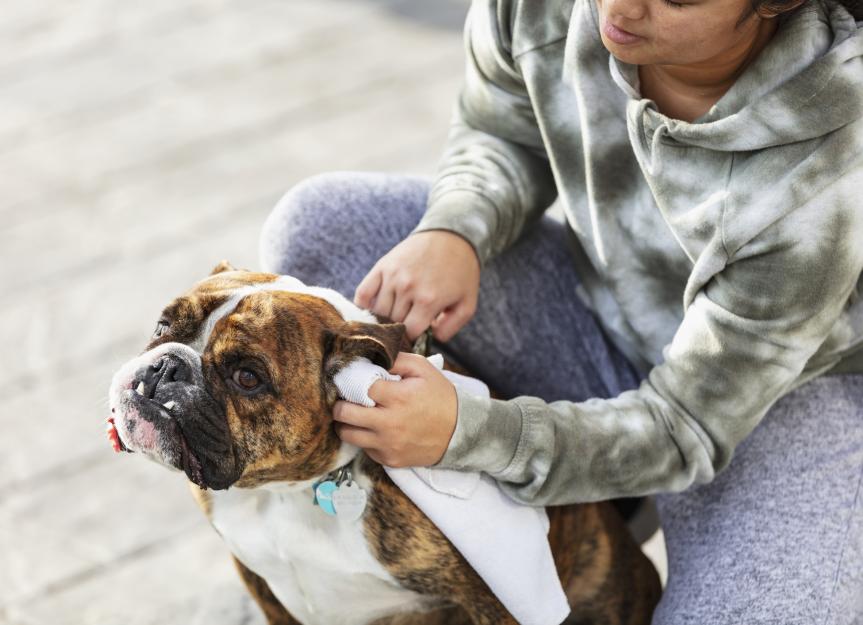
Gently place an arm around your dog's neck to avoid any sudden movements. Use your other hand to stabilize their head or body.
Step 3: Choose the Right Location
Ear cleaning can be complicated, especially at first.
Until you know how much your dog will fight or squirm, clean your dog's ears outside or in an easy-to-clean area. If necessary, use a towel to keep the rest of his body clean.
Step 4: Handle the ear gently
Carefully hold the outer ear (pinna), which includes the skin, cartilage and blood vessels. This allows safe access to the ear canal.
Step 5: Apply Ear Cleaner
Fill the ear canal with your veterinarian-approved cleanser. ensuring that the solution reaches both the horizontal and vertical channel. Gently massage the base of the ear, moving up to distribute the cleanser.
Step 6: Let your dog shake
Let your dog shake his head. This helps to naturally remove loose wax and debris.
Step 7: Wipe the ear
Use a clean cotton ball to wipe the visible part of the ear canal. Do not insert anything deep into the ear, as this may cause injury.
Repeat the rinsing and wiping process until the cotton ball comes out clean and no visible debris remains. If there is significant buildup, you may need to repeat this process three to four times.
How often should I clean my dog's ears?
There is no one-size-fits-all program for cleaning your dog's ears.
Instead of following a strict routine, ear cleaning should be based on your dog's individual needs. A good rule of thumb is to clean your dog's ears when you notice a buildup of wax or debris.
Some dogs benefit from regular ear cleaning, including those who:
- Swim or bathe frequently
- Having long, drooping, or hairy ears
- Having a lot of earwax
- Play in dirt or outdoor environments
- have allergies or a history of ear infections
Regular cleaning can help prevent infections or reduce their frequency.
How often should you check your dog's ears?
Even if your dog doesn't need frequent cleaning, it's important to check his ears about once a month.
Bath time is a great opportunity to inspect your dog's ears. You can also observe them when you brush your dog or trim their nails.
Your groomer may also check your dog's ears during routine visits.
When Not to Clean Your Dog's Ears
In some cases, cleaning your ears at home may not be recommended.
Avoid cleaning your dog's ears if he has:
- A damaged eardrum
- An inflamed or painful ear canal
- Ear trauma or active infection
These dogs may require professional cleaning by a veterinarian to prevent further injury. This service can also be helpful if you are not comfortable cleaning your dog's ears at home.
When to Call Your Vet
Contact your veterinarian immediately if your dog shows signs of an ear problem.
Signs that may indicate an ear infection or other problem include:
If you notice any of these symptoms, do not try to clean your dog's ears, as this may make his condition worse.
Ear infections can range from mild to severe, and early treatment is important to prevent complications. Your veterinarian will determine appropriate treatment and provide advice on follow-up care.
FAQs on How to Clean Dog Ears
What is the safest way to clean a dog's ears?
The safest way is to use a veterinarian-approved ear cleaner, gently massage the ear, and wipe away debris with a cotton ball.
Never insert anything deep into the ear canal and avoid using cotton swabs.
Can I use hydrogen peroxide or alcohol to clean my dog's ears?
No, you should not use hydrogen peroxide, alcohol or essential oils.
These can irritate the ear canal and cause damage or increase the risk of infection.
How do I know if my dog has an ear infection?
Signs of an ear infection include redness, odor, pain, excess debris, and tenderness.
If you notice these symptoms, do not clean the ears; contact your veterinarian immediately.
Why does my dog shake his head after cleaning his ears?
It is normal to shake your head after cleaning your ears.
It helps your dog remove excess cleaner and loose debris from the ear canal.