
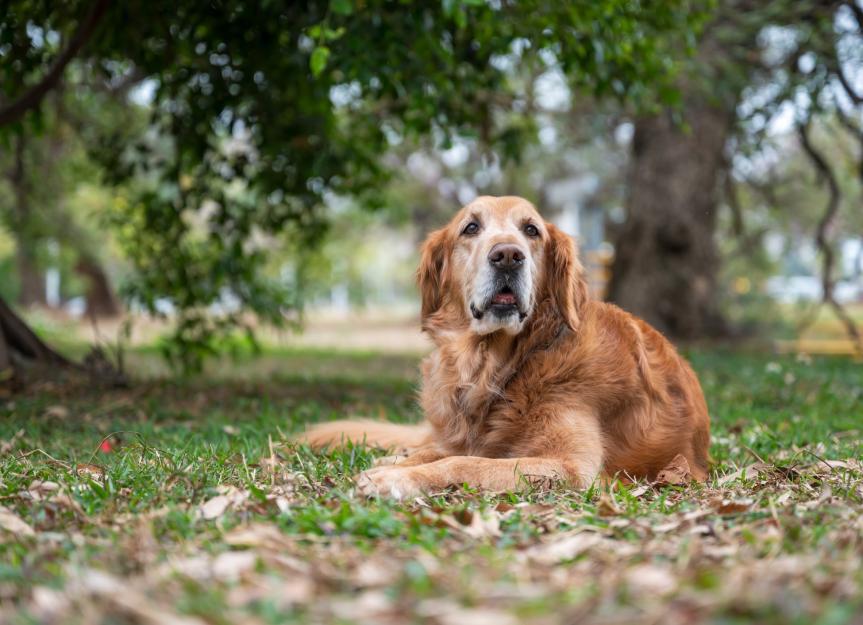
Hearing loss is common as people age, and the same is true for dogs. Although hearing aids for dogs aren't common (yet), pet parents can still do a lot to help senior dogs with hearing loss.
Most dogs adapt remarkably well. With a few adjustments, you can continue to provide your aging puppy with a comfortable and happy life.
Key takeaways
- Hearing loss is common in older dogs and usually progresses gradually.
- Signs of hearing loss in dogs may include ignoring familiar sounds, being startled easily, and not responding to their name.
- Veterinarians can perform basic hearing tests and recommend a BAER test for diagnosis.
- Adapting the way you communicate can help dogs adapt to hearing loss and maintain a good quality of life.
Is it normal for older dogs to lose their hearing?
Yes, hearing loss is a very common age-related change in older dogs.
This condition is called presbycusis, which simply means age-related hearing loss. It usually develops during the last third of a dog's expected lifespan and gets progressively worse over time. This may or may not lead to complete deafness.
Presbycusis usually affects both ears. The ability to hear mid- to high-frequency sounds (a whistle, for example) is usually lost first, but dogs eventually have difficulty hearing all frequencies.
The most common form of presbycusis in dogs involves degeneration of inner ear structures, including hair cells and the organ of Corti, which respond to sound vibrations. Age-related brain changes may also play a role.
Signs Your Senior Dog Is Losing Hearing
Because age-related hearing loss occurs slowly, many dogs compensate extremely well at first. As a result, pet owners may think their dog has suddenly gone deaf, even if the process has taken place over months or years.
Common signs include:
-
Does not respond to sounds: Your dog may stop responding to familiar noises, like thunder or the garage door opening.
-
Behavioral changes: Some dogs become more withdrawn or less active due to reduced environmental stimulation. Others may appear nervous, clingy, confused, disoriented, or even aggressive. It's common to be easily startled, especially when approached from behind.
-
Barking changes: Some dogs bark less because they no longer hear what was triggering them. But others might bark louder and louder, perhaps because they can't hear each other as well as they used to.
How do veterinarians check for hearing loss in dogs?
Make an appointment with your veterinarian if you think your dog might be losing his hearing. Ear infections, canine cognitive dysfunction, and other health problems can cause symptoms similar to those seen with age-related hearing loss in dogs.
Your veterinarian will take a complete medical history and perform a physical examination, including a careful examination of the inside of your dog's ears.
They may also perform basic hearing tests, such as clapping their hands while your dog faces or using a tuning fork near each ear to observe his response. These tests aren't perfect, but they can give you an idea if your dog is suffering from hearing loss.
The only definitive way to check a dog's hearing is to perform a brainstem auditory evoked response (BAER) test. This painless neurological test measures the brain's electrical activity in response to sound.
It only takes a few minutes, but BAER tests usually require a referral to a specialist veterinary hospital or veterinary school and are not commonly used in cases where a dog is thought to be suffering from age-related hearing loss.
How to Help a Senior Dog with Hearing Loss
Hearing loss in older dogs can be stressful for you and your pet. But with a few adjustments, your old dog can still thrive.
1. Adapt communication
Verbal signals will become less and less effective as your dog's hearing deteriorates. If possible, start teaching your dog hand signals for important behaviors like “sit,” “stay” and “come” while he still has some hearing by combining your current voice signal with a unique hand gesture. But dogs can still learn new hand signals even if they are completely deaf.
2. Find new ways to get your dog's attention
Deaf dogs can feel vibrations. So, if your dog is lying on the ground but is unaware of your presence, try tapping his foot.
Collars that deliver a gentle vibration (not a shock!) like the Bousnic 3350FT Remote Vibration Dog Training Collar are a great training tool for teaching dogs when to search your way for a hand signal.
3. Avoid surprising your dog
Never sneak up on a hearing-impaired dog. Startled dogs may injure themselves or be frightened enough to bite. Remind visitors, especially children, to only approach when your dog is looking directly at them.
4. Prioritize safety
Dogs who don't hear well are at greater risk of injury, such as being hit by a car. Keep your dog in a well-fenced yard or on a leash when outside.
Talk to your veterinarian if your dog seems to be having trouble adjusting to his hearing loss. A small study highlights a possible link between a dog's hearing, cognitive function and quality of life. So the sooner your dog gets the support he needs, the better.