
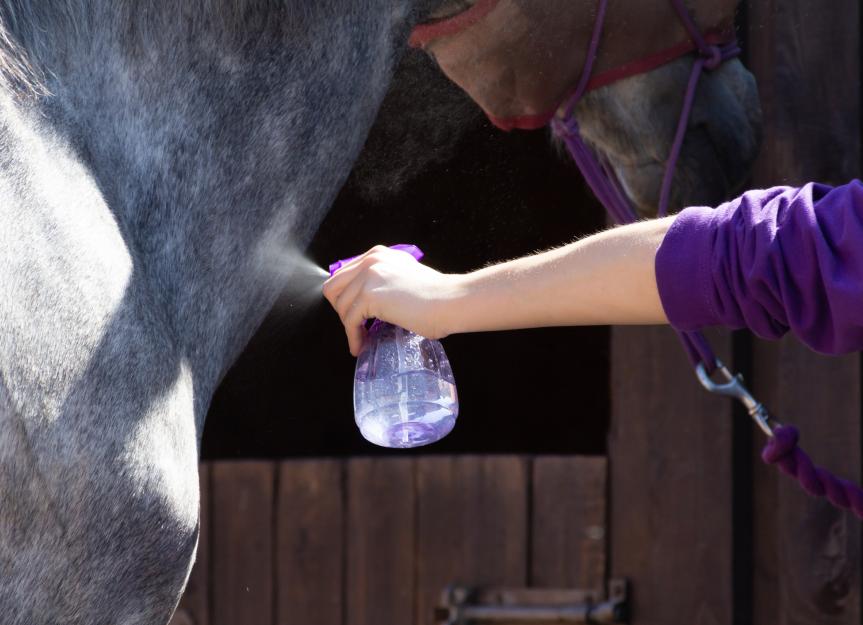
Although chemical fly sprays are effective, not everyone wants to handle these powerful ingredients or have them in the barn. Fortunately, there are many safe and effective natural alternatives. You can even make your own horse fly spray.
Key takeaways
- Natural fly sprays offer a good option for horse owners who want their horse's care to be as natural as possible.
- Synthetic fly sprays are more powerful than natural fly sprays, which must be applied more frequently throughout the day.
- You can make a DIY fly spray for horses using natural ingredients.
Why flies are a serious problem for horses
Biting flies that affect horses include:
Flies are a nuisance to horses and humans. Fly bites can cause welts and skin irritations as well as stress and reflex behaviors, such as side biting, kicking, and lunging. If a horse steps on flies, they can also cause damage to the hooves.
Flies can also cause infections, allergic reactions and transmit diseases. Horseflies, in particular, can transmit the virus responsible for equine infectious anemia.
Benefits of Using a Natural Fly Spray for Horses
If you are trying to reduce exposure to harsh chemicals like Permethrin or Pyrethrins, a chemical-free fly spray for horses may be an ideal solution.
These options are safer for horses and foals with sensitive skin and may be less hazardous to riders, stable staff and the environment.
The strong odors of synthetic fly sprays can be off-putting, while natural horsefly repellents, especially those containing essential oils, often have a pleasant or mild scent.
Common Ingredients in Natural Horse Fly Sprays
Here are some ingredients you can find in a natural horsefly spray.
Horse-Safe Essential Oils
-
tea tree: Australian tea tree oil, Melaleuca alternifoliais antiparasitic and can suppress the growth of parasites. However, 100% pure tea tree oil should never be used on animals due to its potential toxicity.
Natural basic ingredients
-
Witch hazel: This extract has anti-inflammatory, antimicrobial, astringent and moisturizing properties when applied to the skin.
Ingredients to avoid
-
Undiluted essential oils: Animals, including horses, dogs and cats, can easily absorb essential oils through their gastrointestinal tract, skin, lungs and mucous membranes, and higher concentrations of oils may pose a risk of toxicity to horses.
-
Citrus oils in high concentrations: Lemon, orange and tangerine oils are photosensitizing (increase sensitivity to UV rays), and should not be used in high concentrations to avoid irritating or burning your horse's skin.
How to Make Homemade Natural Fly Spray for Horses
DIY fly spray for horses
Courtesy of Doug Thal DVM Dipl. ABVP
Ingredients:
Mix the ingredients and use in a spray bottle.
Note: Dr. Thal recommends combining a natural fly spray with other fly control methods, including a proper manure management program, for best results.
Before spraying it all over your horse, apply it to a small patch on your horse's skin to make sure he doesn't have an allergic reaction.
How effective are natural fly sprays?
Natural fly sprays are most effective when you apply them quickly and reapply frequently. Exposure to sunlight and oxygen destroys the effectiveness of the natural ingredients in fly spray. And these products don't kill insects, they just deter them from landing on your horse.
For best results, combine your natural fly spray with the use of a fly mask, fly sheet and fly boots.
Barn management techniques can also reduce the fly population, such as:
Safety Tips When Using Natural Fly Spray on Horses
Be sure to test on a small area of your horse before applying to a larger area, and watch for marks or irritation.
Avoid applying to eyes, nostrils and open wounds.
If your horse is particularly sensitive, pay close attention to signs of irritation caused by the fly spray, such as welts, hives, swelling or itching.
If you are unsure whether a product is a safe fly spray for horses, consult your veterinarian for advice.
Natural fly spray vs. commercial fly spray
Typically, a synthetic fly spray provides longer-lasting protection because it degrades more slowly. Natural repellents last shorter and break down more quickly under UV light and oxygen, requiring more frequent reapplication.
If you have a high fly population, need to protect horses on pasture, or have horses outside for an extended period of time, synthetic fly sprays are the best option.
But for sensitive animals, lighter fly infestations, or a more environmentally friendly barn management strategy, natural fly sprays are a great option. Many homeowners have better luck alternating between the two products to balance the benefits of each.
FAQs on Natural Fly Sprays for Horses
What is the best homemade fly spray for horses?
A natural fly spray should contain essential oils, such as lemongrass, eucalyptus, lavender, peppermint, and tea tree oil; a base ingredient for diluting oils, such as mineral oil or aloe vera; and water.
Does apple cider vinegar keep flies away from horses?
Apple cider vinegar attracts fruit flies to the traps, but repels other types of flies.
Does Old Spice work to keep flies away from horses?
No. Although it has a strong scent, its ingredients are not designed to repel insects. Veterinarians strongly advise against using Old Spice deodorant as a fly repellent because it can cause serious skin reactions, including chemical burns.