
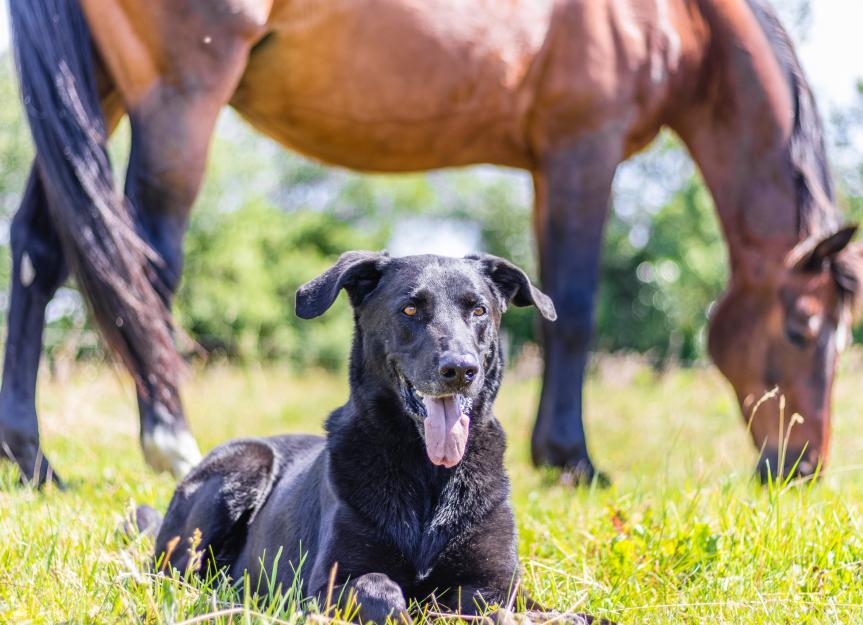
Neosporosis in dogs is caused by a rare parasite that can cause neurological problems.
Affected dogs may show no signs or have severe neurological changes. Puppies can even become infected while in the womb and develop stiff, paralyzed hind legs weeks after birth.
Farm life with exposure to livestock and coyotes can increase the risk of neosporosis in dogs.
Key takeaways
- Neosporosis in dogs is a rare parasitic disease that can cause serious neurological symptoms, including hind leg weakness, stiffness, paralysis, and gait changes, especially in puppies infected before birth.
- Dogs commonly contract neosporosis by eating raw meat, placental tissue, or remains of infected animals, especially those from cattle, deer, or other ruminants. Rural dogs and dogs with access to livestock are at higher risk of exposure.
- Early veterinary treatment is essential for dogs with neosporosis, as the disease can be fatal without intervention. Although there is no cure, medications can help reduce symptoms and, when started early, can improve quality of life.
Summary
Neosporosis is the name of the disease caused by the consumption of neospora parasite.
Neospora caninum is a microscopic coccidia-like parasite that is spread by eating raw meat from other infected animals, such as cattle, sheep or deer.
Neosporosis can be subclinical in dogs, meaning they show no symptoms, or it can lead to neuromuscular disease when the parasite enters the tissues, causing inflammation (swelling) and changes in the dog's way of walking and balance (ataxia).
Neosporosis in dogs is a veterinary emergency. Additionally, there are many dangerous conditions that can resemble neosporosis, all of which need to be treated urgently.
If you notice symptoms of a neospora infection, seek care for your puppy as soon as possible.
Symptoms
While some dogs will not show any symptoms, others will. Common signs of neosporosis in dogs include:
Causes
Neosporosis in dogs is caused by ingestion of the N parasite. caninum.
Ruminants (cattle, sheep, goats, horses and deer) are considered intermediate hosts of neospora. This means that they are part of the parasite's life cycle. Dogs most often contract neosporosis by eating the raw meat of these animals.
They can also contract the disease by eating placenta. If a cow calves in a field and the placenta remains there, a dog can eat the placenta and become infected. Or a dog may find a dead animal, eat part of it and contract the disease.
The parasite reproduces in the dog's body and its eggs pass through its feces. Wild canines, such as coyotes, can also contract the disease and spread it. neospora in their excrement. Ruminants unknowingly eat the eggs as they graze on pastures, and the life cycle continues.
Neospora can easily be passed from an infected mother to her unborn puppies through the placenta. These puppies are then born with neosporosis.
Rural dogs that roam near livestock are at increased risk of contracting neosporosis. These dogs are more likely to encounter dead ruminants or placental tissue that they may eat.
Neosporosis is more common in the following breeds:
Diagnosis
To diagnose neosporosis in dogs, your veterinarian will start with a complete physical exam to look for symptoms. They will likely recommend blood tests and/or x-rays to rule out several more common illnesses.
If you have noticed that your dog is walking with an unusual gait at home, it can be very helpful to film him moving. Inform your veterinary team how long the symptoms have been present, in what order they appeared, and if your puppy has been exposed to livestock, deer, or other ruminants.
If your veterinarian suspects neospora, he or she may recommend several tests, including:
-
Muscle biopsy: This procedure involves taking a small sample of the affected muscle to look for the parasite under a microscope. This test is considered the best way to obtain a definitive diagnosis of neosporosis, but it is the most invasive route. Your dog will be placed under anesthesia for this procedure.
Talk to your veterinarian before the appointment to determine whether you should withhold food and water from your dog 6 to 8 hours before, in case light sedation is needed for testing.
Treatment
There is no real cure for neosporosis in dogs.
Treatment aims to reduce symptoms and dogs respond best to treatment when it is started early in the course of the disease.
Untreated dogs will die from the disease.
Neosporosis is treated with a combination of medications including clindamycin, trimethoprim sulfonamide, and pyrimethamine.
Occasionally, ReBalance, a sulfadiazine/pyrimethamine drug approved for horses, will be prescribed off-label for the management of neosporosis in dogs.
Treatment often takes four to six weeks, with medications continued until symptoms stabilize for two weeks.
If a puppy is diagnosed with neosporosis, treatment is often recommended for their littermates, even if they have no symptoms.
Recovery and management
Although there is no cure for neosporosis, some dogs may improve with treatment and recover from the worst of the infection. Recovery often takes months.
It is not uncommon for the infection to return. Neospora eggs transmitted through stool can live in the environment for months.
If possible, avoid exposing new dogs to an environment where there was a known infection. Wear gloves and pick up all the stools for disposal.
Some affected puppies will benefit from physical therapy. Passive range-of-motion exercises (such as slowly moving their back legs as if pedaling a bicycle) can help maintain joint flexibility and reduce muscle wasting.
Consider Dr. Buzby's ToeGrips to help your dog get more traction if he is weak in his back legs.
Anti-slip pads can also be a useful addition in homes with hardwood or other smooth flooring.
Prevention
Ways to help prevent neosporosis in dogs include:
-
Avoid allowing your dog to have access to aborted fetuses or placental tissue from cows.
-
Eliminate your dog's exposure to raw meat.
-
If you have livestock, store their food in a safe place to avoid contamination from dog feces.
-
If you have a dog who has had neosporado not reproduce it.
Neosporosis in Dogs FAQs
What are the causes of neosporosis in dogs?
Neosporosis in dogs is caused by consuming the parasite in raw meat tissues (such as dead cattle, aborted cow fetuses, or deer).
How to treat neosporosis in dogs?
Neosporosis is managed rather than cured. It is treated with a combination of prescription antibiotics and antiparasitic medications.
Is canine neosporosis contagious to humans?
Neosporosis is not contagious to humans, but it is contagious to ruminants and is a leading cause of miscarriages in cattle.
What is the life cycle of neospora in dogs?
Neospora is eaten in egg form by a cow or other ruminant.
It develops in cows and forms cysts in muscle tissue.
When the ruminant dies (or if it has an aborted fetus), the neospora is still in their muscles. The dog gets neospora by eating the raw meat of the infected ruminant. They then expel their eggs in their feces and the cycle repeats.