
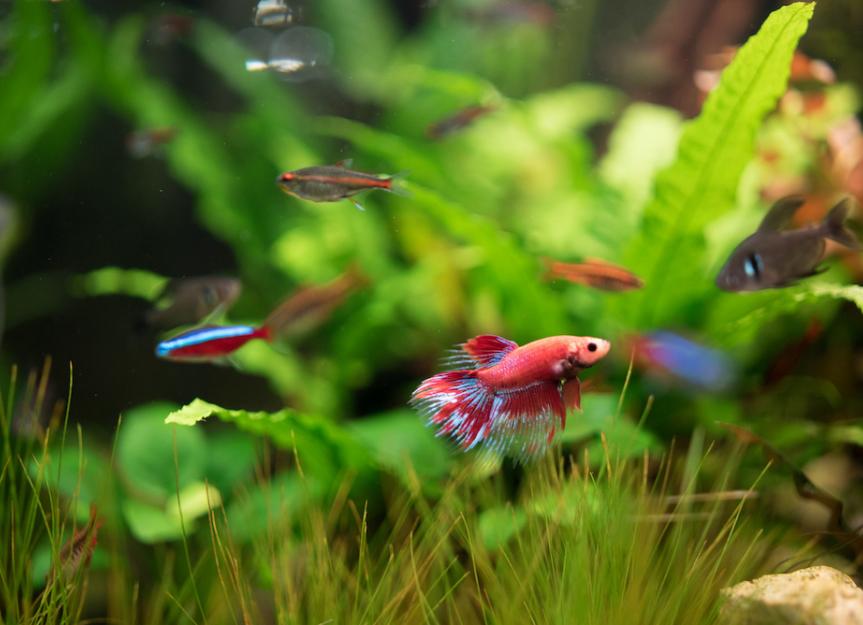
Setting up a freshwater aquarium is a rewarding way to raise fish and create a calming and visually appealing environment in your home.
Freshwater tanks are often ideal for beginners, providing a manageable introduction to fish farming while still allowing for beautiful waterscapes.
With proper setup and care, your aquarium can provide a healthy fish habitat and an engaging learning experience.
Key takeaways
- Setting up a freshwater aquarium requires proper equipment, water preparation, and patience during the cycling process.
- A properly cycled aquarium is essential before adding fish to avoid toxic conditions.
- With proper setup and care, freshwater aquariums can provide a stable and healthy environment for fish.
What do you need for a freshwater aquarium?
Setting up a freshwater aquarium requires the right equipment to maintain water quality, temperature and fish health.
Essential supplies include:
Choosing the right tank size is particularly important. Larger tanks are generally more stable and easier to maintain than smaller ones.
Choosing the right aquarium
When selecting an aquarium, consider:
- The space available in your home
- The quantity and type of freshwater fish desired
- Adult size and lifespan of these species
Most fish do best in horizontal tanks, which provide more surface area for oxygen exchange. This helps improve water quality and fish health.
Where should you place your aquarium?
The location of your aquarium plays a major role in maintaining a stable environment.
Choose a location that:
- Is protected from direct sunlight (to prevent algae growth)
- Is not near windows, doors, vents or air conditioners
- At a stable temperature
- Can bear the weight
- Has access to electrical outlets
It is essential to avoid sudden changes in temperature, as they can stress fish and lead to illness.
Prepare the water for your aquarium
Tap water should be treated before adding it to an aquarium.
Municipal water often contains chlorine or chloramine, which is safe for humans but toxic to fish. Always use a water conditioner to neutralize these chemicals.
Maintaining adequate conditions also requires:
- A radiator to regulate the temperature
- A thermometer to monitor it
- A filter to maintain oxygen levels and circulation
An aerator can be added for additional water movement if needed.
Decorating your freshwater aquarium
Decorating your aquarium helps create a more natural and enriching environment for your fish.
Common options include:
- Gravel, sand or pebbles as substrate
- Rocks, driftwood or caves to hide in
- Artificial or live plants
Live plants can improve water quality and aesthetics, but they require more care. Artificial plants are easier to maintain while still providing shelter.
How to Set Up Your Freshwater Aquarium
Properly setting up your aquarium is essential for long-term success.
Step 1: Choose a location
Place the tank on a flat surface that can support its weight and has access to electricity. Make sure there is space between the wall and the aquarium to install survival items, such as filters and cords.
Step 2: Prepare the Tank
Rinse the aquarium and inspect it for cracks. Add a bottom if desired and partially fill the tank to check for leaks.
Step 3: Add Substrate and Decorations
Place the substrate in the tank. Rinse non-bioactive gravel before use. Add decorations and organize your waterscape.
Step 4: Install the Equipment
Install the filter, heater, thermometer and lighting according to the manufacturer's instructions. Do not turn on the equipment until the tank is filled with water.
Step 5: Fill and Condition the Water
Fill the tank and add water conditioner to remove harmful chemicals.
Step 6: Adjust the temperature
Turn on the heat and allow the tank to reach the correct temperature (usually 72 to 82 F, depending on the species).
Step 7: Plug in the Equipment
Make sure cords wrap downward before reaching outlets to prevent water from entering electrical outlets.
Establish the biofilter (operate the tank)
Before adding fish, your aquarium must go through a process called cycling.
Cycling allows beneficial bacteria to grow and break down toxic waste.
During this period:
- Test the water daily for ammonia, nitrite and nitrate
- Add beneficial bacteria to speed up the process
A fully recycled tank will have:
- Stable temperature and pH
- No ammonia or nitrite
- Low nitrate levels
Freshwater Aquarium FAQs
How long should you wait to put fish in a new aquarium?
Fish should only be added once the aquarium is completely recycled.
This usually takes four to six weeks naturally, or a few days with beneficial bacterial products.
Adding fish too soon can result in “new tank syndrome,” which causes ammonia or nitrite toxicity and can be fatal.
How do I know when my aquarium is ready for fish?
Your tank is ready when ammonia and nitrite levels are zero and temperature and pH are stable. You'll want to add fish soon after, otherwise the starter bacteria you added won't have anything left to feed on.
How long does it take to create a freshwater aquarium?
It typically takes four to six weeks to fully cycle a tank, although this can be shortened with beneficial bacterial products.
Can you set up an aquarium and put fish in it the same day?
No, it is not recommended to add fish immediately. The tank needs time to establish a biological filter.
What happens if you put fish in a new tank too soon?
Fish can suffer from ammonia or nitrite poisoning, which can be fatal.