
Swim bladder disease is a condition that affects a fish's ability to control its buoyancy, making it difficult to swim normally or maintain position in the water.
The swim bladder is a gas-filled organ that helps fish stay balanced at different depths. When it is not working properly, fish may float, sink or swim abnormally.
Key takeaways
- Swim bladder disease affects a fish's ability to stay balanced in the water.
- Poor water quality is one of the most common causes and should be checked first.
- Symptoms include abnormal floating, sinking and swimming behavior.
- With proper care and adjustments, many fish can continue to live healthy lives.
What is a swim bladder?
The swim bladder is an internal organ that helps fish maintain neutral buoyancy.
It works by trapping gases that allow fish to stay suspended in water without constantly swimming. This helps save energy and maintain good posture.
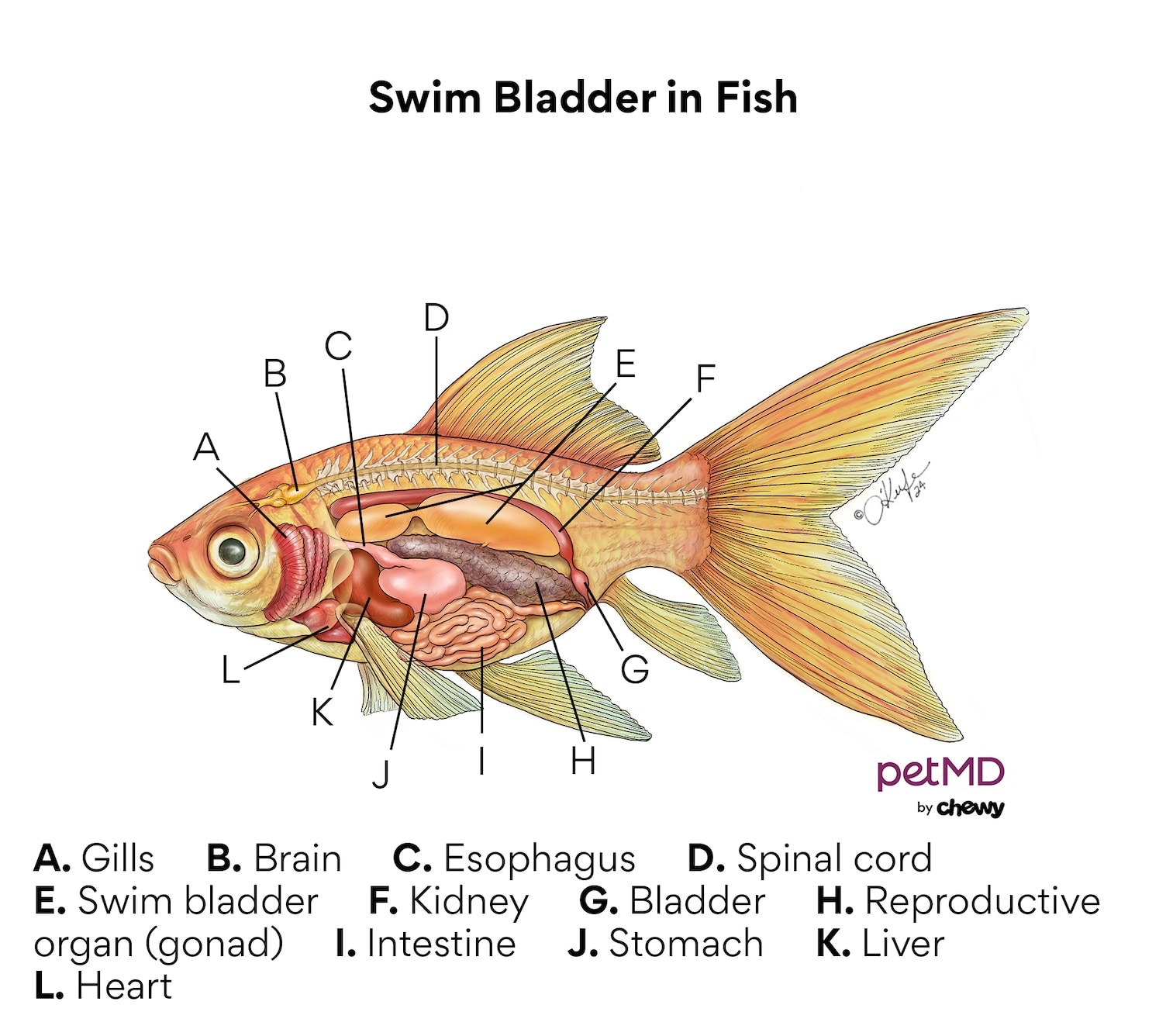
Download a PDF of this swim bladder diagram.
Fish can be grouped based on how their swim bladder works:
- Physostome fish fill their swim bladder by swallowing air at the surface, which passes through a tube to the organ
- Physicist fish regulate gas levels internally using a specialized gland connected to their bloodstream
The swim bladder is located just below the spine in the body cavity and is protected by a durable outer membrane.
In addition to facilitating swimming and posture, some fish use the swim bladder for sound production and detection, making it an important organ for both movement and communication.
Because of its role in maintaining balance and function, any disruption to the swim bladder can significantly affect a fish's health.
What causes swim bladder problems?
Swim bladder disorders are most often caused by stress, environmental issues, or underlying health conditions that affect a fish's ability to regulate its buoyancy.
One of the most common and overlooked causes is poor water quality. When water conditions are unstable, fish experience stress that disrupts their body's normal functions and can interfere with swim bladder function.
Other contributing factors may include:
- Eating problems (such as excessive air intake or improper eating)
- Infection or inflammation
- Organ dysfunction
- Physical defects or injuries
If your fish shows signs of abnormal swimming or floating, testing the water conditions and correcting them if necessary should be your first step.
What do swim bladder disorders look like?
Swim bladder disorders are most often recognized by changes in the way a fish swims or maintains its position in the water.
Healthy fish have neutral buoyancymeaning they can easily move up and down in the water column without floating or sinking.
When the swim bladder is not functioning properly, fish can have positive or negative buoyancy.
- Positively buoyant fish tend to float at the surface and have difficulty swimming downward.. They may also display abnormal posture, such as floating upside down or on their side.
- Negatively buoyant fish stay near the bottom of the tank and have difficulty moving up.. They may also lie on their side or appear unbalanced.
In either case, affected fish often exhibit poor movement control and unusual body position, which are key signs of a buoyancy disorder.
How Veterinarians Diagnose Swim Bladder Disorders in Fish
Swim bladder disorders are usually diagnosed using imaging and an examination of the fish's environment and symptoms.
If your fish needs veterinary care, it is important to work with a veterinarian experienced in aquatic animals. Specialized organizations, such as the American Association of Fish Veterinarians or the World Aquatic Veterinary Medical Association, can help you find qualified professionals.
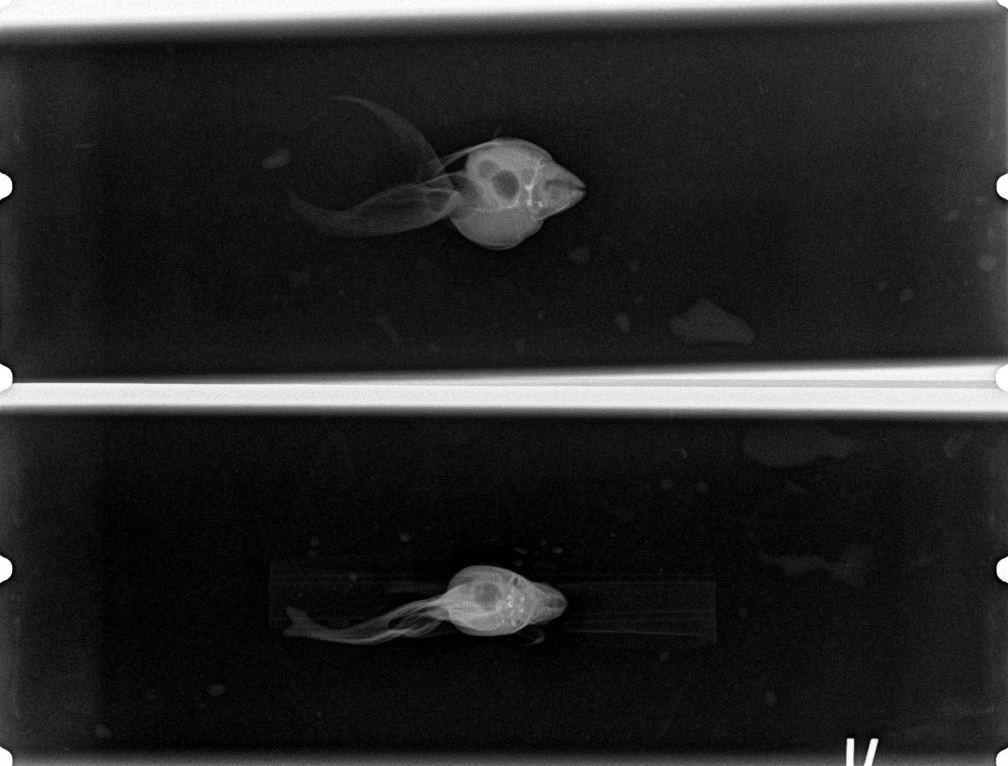
The most effective way to evaluate the swim bladder is with x-rays. Imaging allows veterinarians to clearly assess:
- The size and shape of the swim bladder
- Its position in the body
- The presence of abnormal fluid or displacement
These results help determine whether the problem is caused by structural changes, infection, or another underlying condition.
Swim bladder disorders in different fish
Goldfish
Swim bladder disorders are particularly common in goldfish, especially in the “fancy” varieties with rounded bodies and curved spines. These structural features can put pressure on the swim bladder, making buoyancy problems more likely.
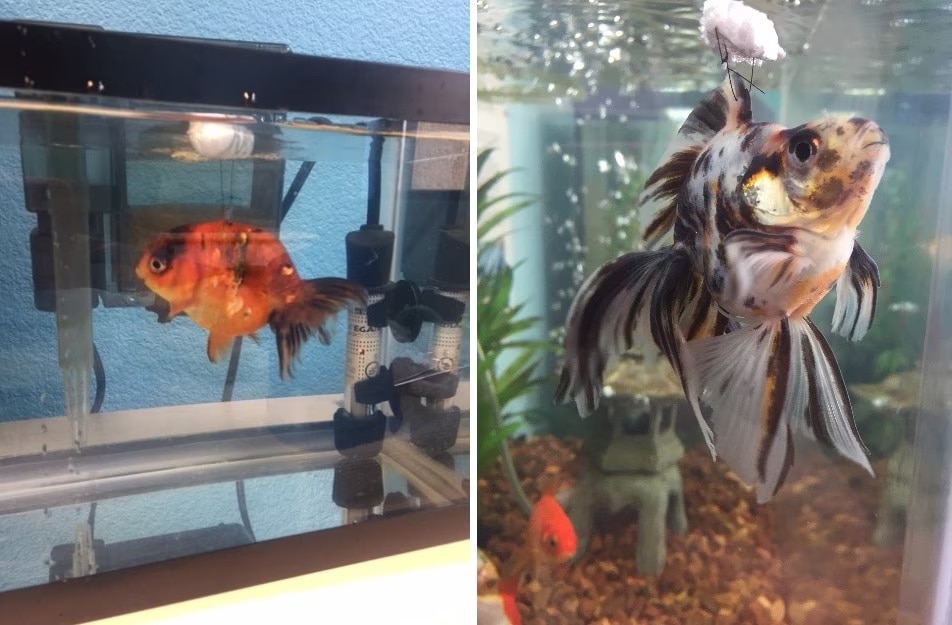
Goldfish are physostome fish, which means their swim bladder is connected to the digestive tract. This allows excess air swallowed during feeding to enter the swim bladder, sometimes leading to buoyancy problems.
In mild cases, switching to a descending or neutrally buoyant diet can help reduce excessive air intake. However, not all cases improve with diet changes alone.
Avoid using floats, weights or other devices unless directed by a veterinarian, as they can damage the fish's skin and protective mucus layer.
Koi
Koi are also susceptible to swim bladder problems, especially when affected by spinal deformities or neurological problems.
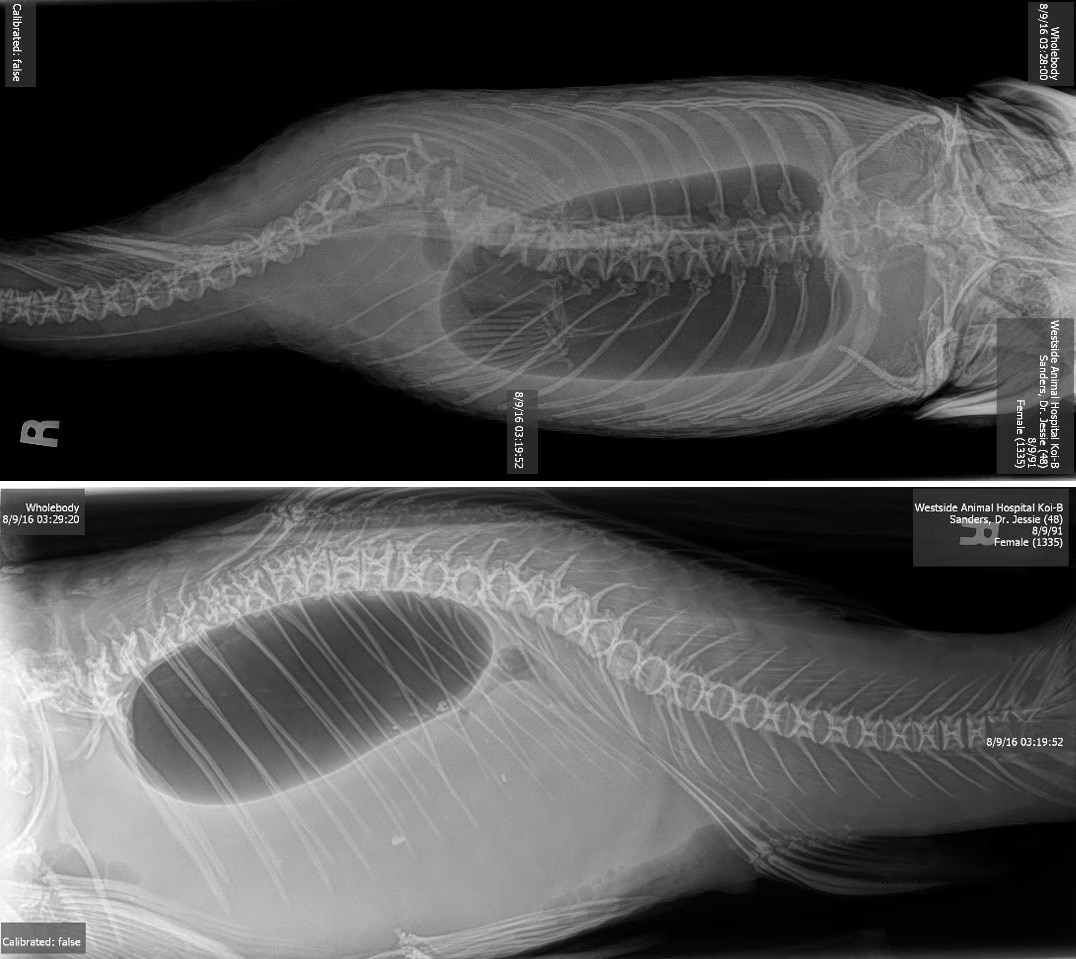
Over time, the swim bladder may change size or shape to compensate for reduced mobility. These adaptations can help fish survive but are often permanent.
Cichlids
Cichlids can suffer from both positive and negative buoyancy disorders, depending on the underlying cause.
As with other species, proper diagnosis, including imaging and environmental assessment, is important to determine the cause and guide treatment.
Swim Bladder Treatment
Treatment for swim bladder disease depends on the underlying cause and whether the condition is temporary or permanent.
Management generally focuses on supporting the fish's buoyancy and improving its environment, with adjustments depending on whether the fish floats or sinks.
Positively buoyant fish
Fish that float on the surface may have parts of their bodies exposed to the air, which can lead to drying and irritation.
To help you manage this:
- Maintain stable and clean water conditions
- Avoid dropping oxygen levels – do not cover the aquarium to force fish underwater
- Consult your veterinarian for safe ways to protect exposed skin.
Negatively buoyant fish
Fish that sink to the bottom often have difficulty moving and may rest on their sides or stomachs.
To reduce injuries and stress:
- Use a smooth, non-abrasive substrate (like glass stones)
- Maintain excellent water quality
- Make sure the tank remains particularly clean
Since treatment varies greatly depending on the cause, working with a veterinarian is the best way to develop an effective care plan.
Preventing swim bladder disorders
Preventing swim bladder disorders starts with maintaining a stable, stress-free environment for your fish.
Since these conditions are often linked to environmental factors, the first and most important step is to monitor and maintain good water quality. Poor water conditions are one of the most common and overlooked causes of buoyancy problems.
For species prone to swallowing excess air, such as physostome fish, a sinking or neutrally buoyant diet can help reduce the risk of swim bladder problems.
If your fish begins to show signs of abnormal swimming, address the water conditions immediately and monitor them closely. If symptoms persist, consult an aquatic veterinarian for further evaluation, which may include imaging such as x-rays.
Although some swim bladder disorders cannot be completely reversed, many fish can continue to live healthy lives with proper care and adjustments to their environment.
FAQs About Swim Bladder Disorders in Fish
How to feed a fish with swim bladder disorder?
Fish with compromised swimming ability will need help eating. In case of buoyancy disorder, you will need to introduce manual power. Be patient and try some tasty treats, like small pieces of shrimp, to entice your fish to eat from your hand.
When hand feeding, don't grab your fish! Bring them the food in the position that suits them best.
Once they get the idea of hand feeding, go back to their regular feeding. Fish are intelligent and will adapt quickly to the new routine.
How long can a fish live with swim bladder disease?
Fish with swim bladder disease can often live long, healthy lives with proper care.
If the illness is temporary and treatable, recovery may occur quickly. In cases where the disorder is permanent, fish can still thrive with environmental adjustments and supportive care, such as maintaining ideal water conditions and adapting feeding methods.