
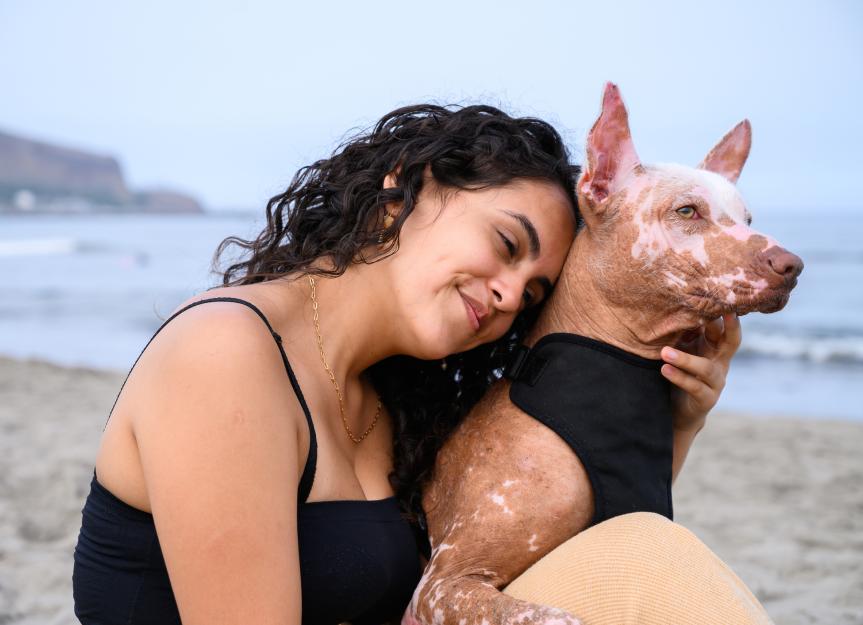
Vitiligo in dogs is a rare skin condition that causes loss of pigment, leading to the appearance of white or light spots on the nose, lips, skin or coat.
Although the change in appearance may be surprising, vitiligo is usually cosmetic and does not cause pain or illness.
If you've noticed light spots appearing on your dog's face or body, here's what to know about vitiligo, why it happens, and when to talk to your vet.
Key takeaways
- Vitiligo in dogs is a rare, usually harmless disease that causes loss of pigment in the coat and skin, most commonly on the face and head.
- The disease is thought to be autoimmune and genetic, with certain breeds being more predisposed.
- Vitiligo is usually cosmetic and does not require treatment, but dogs may need sun protection for depigmented areas.
What is vitiligo in dogs?
Vitiligo in dogs is a condition in which the skin loses its natural pigments (depigmentation).
The affected skin will turn white or light pink, and the hair growing in this area may also turn white. Besides the color change, the skin should appear normal.
When an animal suffers from vitiligo, cells called melanocytes are destroyed. Melanocytes are found in the skin, eyes and pink tissues of the mouth. These cells create pigments, including melanin, which give the color to the dog's skin and coat.
When a dog suffers from vitiligo, the melanocytes in the skin, lips and mouth can be destroyed. The eyes and other areas are not affected.
Vitiligo in dogs is generally considered harmless, although it can resemble other autoimmune diseases like uveodermatologic syndrome, which affects the skin and eyes.
Although vitiligo is not an emergency, it is worth contacting your veterinarian to make an appointment if you notice any changes in the color of your dog's skin or coat.
Vitiligo is considered rare in dogs, although it is possible that this disease is underestimated because it is primarily a cosmetic problem.
Vitiligo Symptoms in Dogs
When a dog suffers from vitiligo, its skin loses its pigment, usually in patches on the face and head. The fur in these areas may also turn white. Aside from the change in skin and coat color, the skin should appear normal.
Vitiligo usually affects specific areas of the dog's body, including:
In most dogs, depigmentation only affects the head, but depigmentation has also been seen on the footpads, paws, paws, scrotum, neck, trunk, and rump.
Color is usually lost in several spots. These spots can be somewhat symmetrical on each half of the body, but not always.
Causes of Vitiligo in Dogs
Although vitiligo in dogs is thought to be an autoimmune disease, the exact cause is not yet well understood.
Genetics likely play a role, with certain breeds being predisposed to vitiligo. These breeds include:
The disease is most likely to develop when a dog is around 2 years old, although it can certainly be younger or older.
Why these specific dogs suffer from vitiligo is not well understood, other than that they potentially inherit a predisposition to this disease.
How Vets Diagnose Vitiligo in Dogs
Veterinarians can diagnose vitiligo in dogs simply by knowing the animal's medical history and performing a complete physical exam, including examining the affected skin.
If the skin shows other changes, such as peeling, sores, or loss of normal skin texture, other conditions should be considered. If necessary, skin biopsies can help confirm vitiligo and rule out other conditions that may affect the skin.
Vitiligo must be differentiated from uveodermatologic syndrome, which affects both the skin and eyes. Although dogs with uveodermatologic syndrome may have depigmented areas on their face and body, they will also have changes in their eyes.
Untreated dogs with uveodermatologic syndrome experience worsening vision loss, eye discharge, excessive blinking or squinting, bloodshot eyes, and other eye changes.
Inflammation (swelling) of the eyes can be very uncomfortable and lead to permanent eye damage and vision loss.
Treatment of Vitiligo in Dogs
Vitiligo in dogs generally does not require treatment.
Pet parents should keep in mind that depigmented areas may be at increased risk of sun damage, so pet-safe sunscreen might be considered to protect the pet's skin.
Options include the Petkin Doggy Sun Stick and Gentle Creatures Pet Sunscreen.
If the pet owner would like to try treatment, they can discuss topical immunosuppressive medications (such as tacrolimus), L-phenylalanine, and UV light therapy with their veterinarian.
Recovery and Management of Vitiligo in Dogs
A dog with vitiligo is expected to live a normal life.
Their skin can be very susceptible to sun damage, so pet parents may want to consider applying a pet-safe sunscreen to depigmented areas.
Vitiligo is a lifelong disease. Some dogs will continue to lose pigment in more areas, and others will gain pigment suddenly.
Prevention of Vitiligo in Dogs
Vitiligo in dogs is generally not preventable. To avoid the risk of transmitting vitiligo, you can have your affected dog spayed or neutered.
FAQs About Vitiligo in Dogs
What causes vitiligo in dogs?
The exact cause of vitiligo in dogs is not known, although it is thought to be related to genetics and autoimmune destruction of melanocytes, the pigment-producing cells of the skin.
What dog breeds are prone to vitiligo?
Examples of dog breeds that may be prone to vitiligo include Rottweilers, Doberman Pinschers, Belgian Tervurens, Labrador Retrievers, German Shepherds, German Shorthaired Pointers, Dachshunds, and Collies.
How to treat vitiligo in dogs?
Most cases of vitiligo go untreated. The condition is considered cosmetic. Pet parents can talk with their veterinarian about whether immunosuppressive medications, L-phenylalanine, or UV light therapy might help their dog.
Can vitiligo in dogs go away?
Vitiligo is usually permanent, although some dogs sometimes experience repigmentation of the affected areas over time. The disease may also stabilize or stop progressing.