
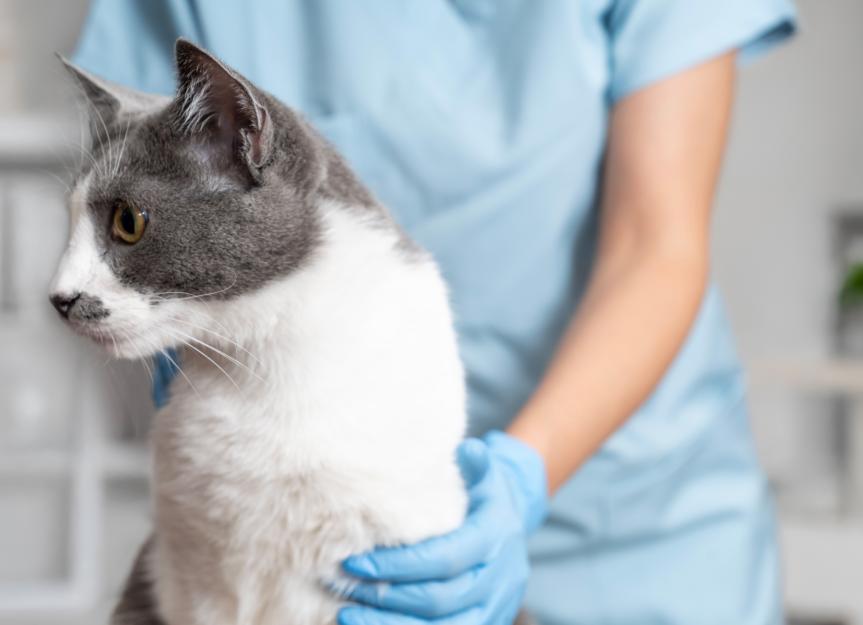
Collapsed trachea in cats is a rare but potentially fatal condition that causes difficulty breathing due to narrowing of the airways. It requires veterinary diagnosis and treatment to manage the symptoms.
Here's everything you need to know about tracheal collapse and how to best support your cat if it's diagnosed.
Key takeaways
- Collapsed trachea in cats is a rare but serious condition that narrows the airways, causing symptoms such as coughing, wheezing, and difficulty breathing that require prompt veterinary attention.
- Veterinarians diagnose tracheal collapse by giving the cat a complete examination and ordering imaging. Treatment focuses on lifelong symptom management with medications, weight control, and reduction of airway irritants.
- Cats with severe tracheal collapse may experience life-threatening respiratory distress. Emergency veterinary care is therefore necessary if a cat has blue gums, collapses or has difficulty breathing.
Summary
The trachea is a tube that runs from the neck to the chest and allows air to flow to and from the lungs. The trachea is supported by a thick ring of cartilage. When this cartilage weakens, the trachea becomes flatter and collapses, blocking airflow. This can cause coughing and difficulty breathing in affected cats.
Tracheal collapse is rare in cats, but it can be life-threatening without prompt treatment.
If your cat is having trouble breathing, has blue gums, or has collapsed, take him to an emergency veterinarian immediately.
Symptoms
The most common symptoms of collapsed trachea in cats include:
Symptoms worsen during times of stress and excitement, during exercise, and in hot weather due to increased pressure placed on the already weakened tracheal cartilage.
Causes
The exact cause of tracheal collapse is unknown. However, it is believed that there may be several contributing factors, such as:
-
Chronic respiratory conditions, such as asthma, leading to increased tracheal pressure
-
Breathing in irritants, such as smoke or allergens, which cause chronic inflammation (swelling)
Tracheal collapse can occur in cats of any age. However, cats that are middle-aged or older are more likely to suffer from tracheal collapse due to the progressive weakening of their cartilage.
Brachycephalic breeds, such as Persians and Himalayans, may be at increased risk of tracheal collapse due to airway abnormalities.
Cats with underlying health conditions, such as obesity or chronic respiratory disease, are also at increased risk.
Diagnosis
Veterinarians will diagnose tracheal collapse through a combination of a physical exam, your cat's medical history, and diagnostic tests. A veterinarian will listen to your cat's heart and lungs and palpate the windpipe to see if she is coughing.
Pet parents should tell the veterinarian when symptoms started and if anything makes these symptoms worse, such as exercise or excitement. It's also helpful if you can bring a video of your cat's cough for the vet to watch.
If tracheal collapse is suspected, diagnostic tests may be performed, including:
Treatment
Unfortunately, tracheal collapse in cats is a progressive disease, meaning it will continue to get worse as the cartilage continues to weaken. It is therefore not curable.
Treatment aims to reduce symptoms and improve the cat's quality of life.
Medications that may be prescribed for symptoms of tracheal collapse include:
-
Corticosteroids, such as prednisolone, to reduce airway inflammation
-
Bronchodilators, such as terbutaline, to open the airways
-
Antibiotics, such as Clavamox, to treat secondary bacterial respiratory tract infections
Hospitalization and supportive care with oxygen therapy may be necessary for cats with severe symptoms.
If symptoms are not well managed with medications, surgery may be performed to place tracheal stents, although this is rare.
Recovery and management
Tracheal collapse in cats is a chronic and progressive disease that requires lifelong management after diagnosis.
In addition to managing symptoms with medication, pet owners can take the following steps to keep their cat comfortable:
-
Eliminate respiratory irritants, such as perfumes and smoke, from the home.
Prevention
Although some cases of tracheal collapse in cats are not preventable, pet owners can take the following steps to reduce the risk to their cat:
FAQs About Collapsed Trachea in Cats
Can a cat live with a collapsed trachea?
A cat can live with a collapsed trachea if it is medically managed. It is a chronic and progressive disease that requires lifelong care.
If the tracheal collapse is severe, it can cause significant difficulty breathing, which can shorten the cat's lifespan.
What can veterinarians do if the trachea collapses?
Veterinarians prescribe medications to reduce a cat's symptoms.
These include medications that open the airways, reduce coughing and inflammation, and treat any secondary bacterial infections.
Can tracheal collapse cause sudden death?
Tracheal collapse can be fatal if airway narrowing is severe.
When this happens, a cat may not be able to absorb enough oxygen, leading to sudden respiratory distress and collapse.
If you notice that your cat is having trouble breathing, he should be taken to an emergency veterinarian immediately.