
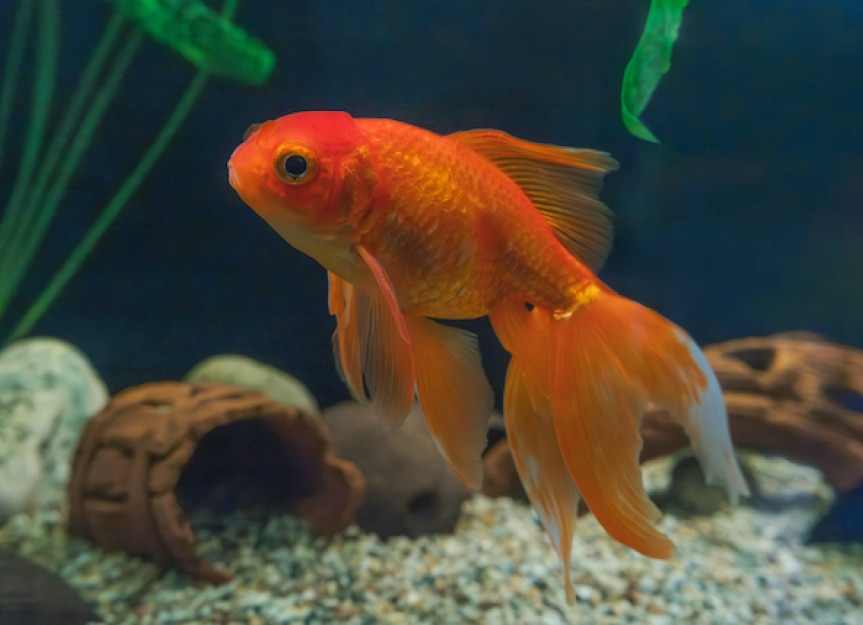
Goldfish sleep, although their sleeping habits are very different from humans.
Goldfish are popular pets often kept in aquariums and outdoor ponds. And even though they don't have eyelids and can't close their eyes, goldfish still experience periods of rest and reduced activity.
Here's what you need to know about goldfish sleeping behavior and how to recognize it.
Key takeaways
- Goldfish sleep by becoming less active and hovering in place.
- Goldfish sleep best in dark, quiet environments.
- Lack of sleep can weaken the goldfish's immune system and metabolism.
- A sideways or upside down fish is probably sick and not sleeping.
What do goldfish look like when they sleep?
Sleeping goldfish become less active and often hover motionless near the bottom of the aquarium or pond.
Unlike humans, goldfish do not lie down when resting. Instead, they stand, hover in place, and move slowly to maintain balance. Sleeping goldfish typically lie low in the water, often an inch or two above the bottom, with their heads pointed slightly downward.
Their color may appear slightly faded when resting and return to normal once awakened. This temporary color change can help protect them from predators.
Goldfish also do not experience deep REM sleep, and their brain activity does not change significantly while resting.
When do goldfish sleep?
Goldfish sleep best in dark, quiet environments and often rest at night when the aquarium lights are turned off.
Although goldfish do not follow the same sleep cycle as humans, many become less active at night when their environment becomes darker and quieter.
Maintaining a consistent lighting schedule can help encourage goldfish to rest at night and remain active during the day. Aquarium lights should not be left on for more than 12 hours per day, as goldfish need periods of darkness to rest properly.
If the aquarium is too bright, goldfish may hide among plants or decorations to find darker areas to rest. Loud noises and sudden disturbances can also easily wake a resting goldfish.
What happens when goldfish don't get enough sleep?
Goldfish need regular rest to support healthy metabolism, energy levels and immune function.
Like humans, fish need periods of rest to regain energy and maintain normal bodily functions. Without enough sleep, goldfish can become more vulnerable to illness and experience reduced activity levels.
Sleep needs can vary from fish to fish. Some goldfish may rest periodically during the day, while others remain active until nighttime. Consistent light and dark cycles are important to help goldfish maintain healthy sleeping patterns.
Although fish may appear to “yawn,” this behavior is not a sign of fatigue. Instead, fish open and close their mouths to circulate water through their gills in order to breathe.
How do you know if a goldfish is sleeping or sick?
Sleeping goldfish usually stay upright and hover calmly, while sick fish may float sideways, upside down, or have difficulty swimming normally.
Swim bladder disease usually leads to buoyancy problems and abnormal swimming behavior. Floating sideways can also be a sign of a bacterial infection or dangerous levels of ammonia or nitrite in the water.
If a goldfish floats on its side or upside down for prolonged periods of time, contact a veterinarian as soon as possible.
Goldfish that hover calmly near the bottom of the aquarium and appear slightly pale are often simply resting.
Goldfish Sleep FAQ
Do goldfish sleep with their eyes open?
Yes, goldfish sleep with their eyes open because they don't have eyelids.
How do you know if a goldfish is sleeping?
Sleeping goldfish usually hover in one place, move slowly, and may appear slightly paler.
Do goldfish sleep at night?
Goldfish often sleep at night when it is dark and quiet, although they do not follow the same sleep cycle as humans.
Does a sideways goldfish sleep?
No, a goldfish floating on its side or upside down is usually sick and may require veterinary attention.