
“Does my horse really need shoes?
This is a common question but lacks a simple yes or no answer. The choice between going barefoot and shoeing must be made taking into account the needs of each horse.
Let's take a look at three reasons why horses wear shoes, what to consider when choosing between horse shoes and going barefoot, how often your horse should see the farrier, and how to tell if the condition of your horse's hooves is improving or deteriorating.
Key takeaways
- Horses wear shoes primarily for traction, protection and support, depending on their work and the health of their hooves.
- Many horses do well barefoot with good hoof care and protection if necessary, such as hoof shoes.
- Horseshoes do not numb a hoof, but poor fit or neglected hoof care can lead to pain and lameness. Routine farrier care is essential.
- A typical trimming/reshoeing program is often done every 6 to 8 weeks in the summer and every 6 to 12 weeks in the winter, but it varies depending on each horse's hoof growth rate.
First, do horses smell their hooves?
Yes! Horses' hooves are an integral part of their body. Some researchers even think that the horse's hoof should be classified as a “neurosensory organ”.
What the Clog is Made of (And Why It's Important)
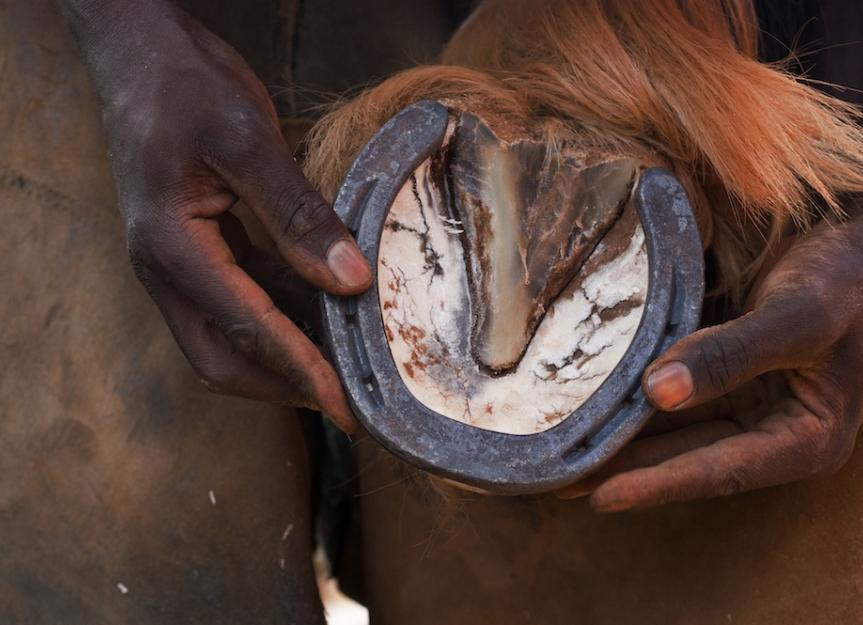
A person could spend a lifetime studying the anatomy of the equine hoof, but we'll start with the essential basics, including what a horse's hoof is made of:
-
THE hoof wall is the hard, weight-bearing outer edge of the hoof. It is primarily composed of alpha-keratin, the same protein found in human nails, cat claws and animal fur.
-
THE frog is a large triangular structure located under a horse's hoof that acts as a shock absorber. This also helps get blood up and out of the hoof. It is made of keratin, just like the hoof wall, but it contains more moisture, as well as blood vessels and nerve endings.
-
Inside the shoe are the bladeswhich are folded, gill-like layers of tissue that attach the hoof wall to the coffin bonesthe main bone inside the hoof. The sensitive laminae are filled with tiny blood vessels.
-
THE digital cushioninside the horse's heel, acts as an additional shock absorber. It is composed of adipose tissue (fat), collagen and fibrous tissue.
These aren't all the hoof structures, but considering these basics of hoof anatomy can help you decide whether or not your horse needs shoes. The decision to shoe or not should aim to help the hooves function optimally for strength and comfort.
The Top 3 Reasons Horses Wear Shoes
Horses are often shod for traction, protection and support/correction.
1) Traction: helping horses to grip the ground
Free-roaming horses avoid falling on slippery feet by adjusting their gait, gait or route. When humans ride horses, We choose all three, so it's up to us to keep them balanced and safe.
Shoes can help. For example, horses living in snowy and icy climates often wear shoes with tungsten carbide studs to provide traction during the winter.
2) Protection: Prevent excessive wear and bruising
Hoof wear from movement is natural and healthy, but barefoot horses ridden on hard, abrasive surfaces or over long distances can wear out their hooves faster than they grow.
Horseshoes are a way to protect hooves from excessive wear. Shoing also reduces the risk of “corns” in horses, which are a specific type of bruise on the sole of the horse's foot. For horses with particularly sensitive soles or those ridden on hard terrain, protective pads can be added to horseshoes.
3) Support: Helps with hoof balance, weight bearing or certain conditions
Some horses wear shoes either to treat a health problem or to compensate for past damage, including navicular syndrome, fractured coffin bones, or laminitis. If your horse needs therapeutic or corrective shoeing, your equine veterinarian and farrier should work together to develop a plan.
Barefoot horses or shod horses: how to think about the decision
You don't have to settle the shod versus barefoot debate for everyone. You just need to decide what is best for your horse – and you can always change your mind later.
When walking barefoot can work well
Most healthy horses with strong hooves do well barefoot, with a light to moderate workload, primarily on soft feet.
There are also many high performance barefoot horses, including in the Olympics, Grand Prix dressage and the Tevis Cup. A small study showed that horses' hooves expand and contract 50% more during barefoot work, which could improve performance.
The more you expect from a barefoot horse, the more he needs your support in terms of maintenance. Competitive riders often adjust their barefoot horses' hooves with a rasp between professional trims, use multiple types of hooves, and even redesign their paddocks for ideal hoof wear.
When shoes may be the best option
Horses with a heavy workload, particularly on hard and/or abrasive terrain, generally need hoof protection. Shoes are the simplest, lowest maintenance and most durable option. People have been shoeing horses for over 1,000 years.
Some breeds such as Thoroughbreds tend to have softer, more delicate hooves (because that's how we have bred them over many generations) and do very poorly without shoes.
A recent study of trotting racehorses in Europe, where many trotters go barefoot, found that the racing careers of shod horses lasted longer than those of their barefoot peers.
If your horse is prone to stone-related bruising, hoof abscesses, or concussive laminitis (“road caster”), your veterinarian may advise you to keep him shod. Shoeing may also be part of a veterinarian-led hoof rehabilitation plan if the horse is suffering from laminitis or white line disease.
A Useful “Decision Checklist” for Horse Owners
Consider the following factors when deciding how to protect your horse's hooves.
-
What does your farrier mention during trimming (e.g. hoof angles, hoof quality, thin soles, uneven wear)?
Do horseshoes hurt horses?
The shoeing process can seem intense, especially with hot shoeing, where farriers heat a horseshoe and briefly apply it to the horse's hoof for a custom fit. But the hoof wall contains no nerve endings or blood vessels, so shoeing is painless. Well-trained horses stand calmly for shoeing.
However, poorly fitted horseshoes can cause painful hoof problems, as can shoes left on too long without being reset.
What a “good shoe” should look like
A good farrier will ensure that your horse has:
Hoof care can make a horse happier after each visit from the farrier, as in this study, which found that horses moved more and spent more time resting after a trim and reshoe.
Signs that something is wrong (call your farrier or veterinarian)
If you notice any of the following, it's time to get your veterinarian's opinion and ask your farrier to make changes.
-
New cracks, collapsed hoof wall, or foul odor (all signs of a possible infection, such as thrush)
How often do horses need shoes or fittings?
Horse hoof growth varies by season, by individual, and by your horse's workload. However, there are some general guidelines to follow.
Typical Farrier Deadlines
Many people schedule their appointments with the farrier 6 to 8 weeks separated in summer, when the hooves grow faster, and each 6 to 12 weeks in winter. Some horses may need to see the farrier or trimmer every day. 4 to 5 weeksespecially if they have long toes or tend to lose their shoes.
Why regular hoof maintenance is important even if your horse is barefoot
Even though your barefoot horse naturally wears out his hooves, don't spend too much time between trimmings. Trimming is a chance to remove frog and false sole buildup, pull the toes back to support heel growth, and reduce the risk of problems like thrush and white line disease.
Not all horses need horseshoes, but many horses benefit from wearing horseshoes. Barefoot horses can also be comfortable and perform well. The decision between shoeing or going barefoot should be made based on what is right for each individual horse.
If you're having trouble making this choice for your horse, especially if you've had problems with lameness or hooves in the past, consult your veterinarian and farrier for advice and suggestions.
Horseshoe FAQs
Why do horses wear shoes?
Horses typically wear shoes to protect their hooves, add traction on slippery surfaces, and/or to aid in recovery from lameness or conformation defects.
Do all horses need shoes?
No. Many horses do very well barefoot, even in high-level competitions, with careful hoof care.
Do horseshoes hurt horses?
Not when they are properly installed and applied! An ill-fitting shoe is uncomfortable, but the shoeing process itself is painless.
How often should you refer a horse?
Most people schedule their shoeing appointments 6 to 8 weeks apart, sometimes extending up to 12 weeks during the winter.
What is the difference between trimming and shoeing?
Regular hoof trimming is necessary for hoof health, whether the horse is shod or not. Shoeing is an optional step after trimming that adds a metal or composite hoof to the hoof.
Can shoes help with hoof problems?
Yes, or they can make hoof problems worse, depending on the horse, the shoe and the problem. Your veterinarian and farrier should work together to develop a plan to resolve hoof problems.